




01. Edit your form online
Type text, add images, blackout confidential details, add comments, highlights and more.

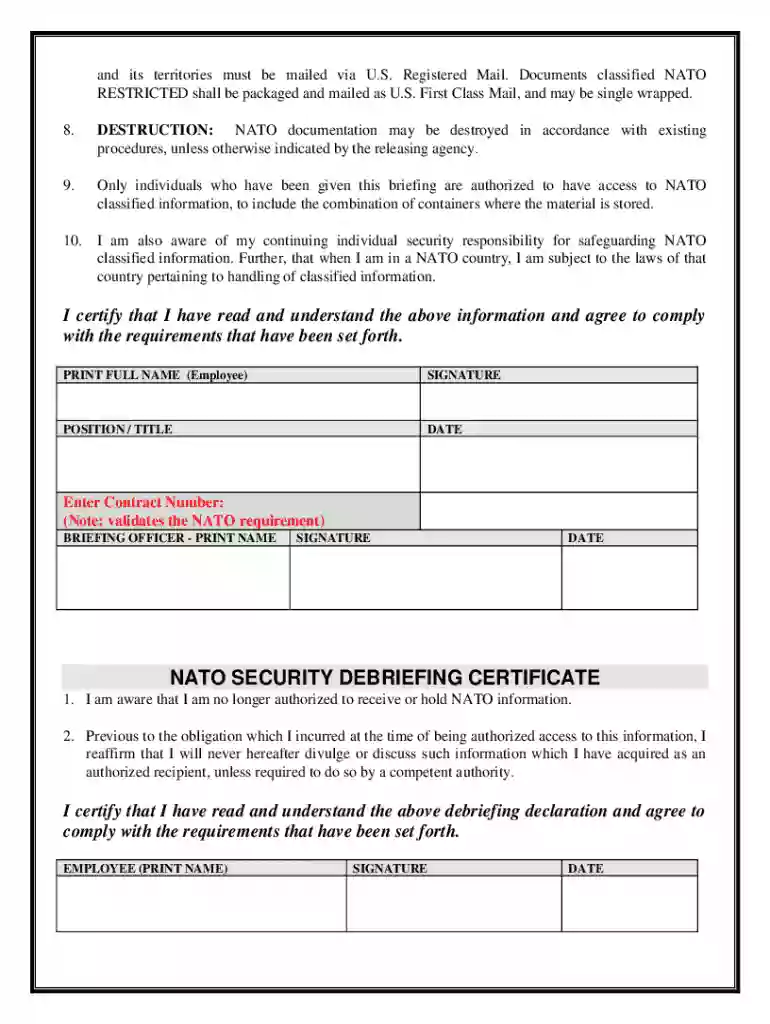
Type text, add images, blackout confidential details, add comments, highlights and more.

Draw your signature, type it, upload its image, or use your mobile device as a signature pad.

Send it via email, link, or fax. You can also download it, export it or print it out.
The North Atlantic Treaty Organization (NATO) is a military alliance established in 1949 through the North Atlantic Treaty, primarily to provide collective security against aggression. It includes member countries from North America and Europe, committed to mutual defense in response to an armed attack against any member. NATO serves as a forum for political and military cooperation, promoting stability and cooperation on defense matters.
NATO is primarily utilized by its member countries to maintain collective security and manage international crises. Member states collaborate on defense planning, military operations, and policy development. For individuals or entities involved in defense and security sectors, understanding NATO's protocols and requirements is crucial for compliance and participation in joint exercises and operations.
Understand NATO Classifications: Familiarize yourself with the classification levels of NATO information: unclassified, confidential, secret, and top secret.
Security Clearance: Ensure relevant personnel possess the necessary security clearance as per NATO guidelines.
Training Requirements: Attend mandatory security briefings and debriefings to comprehend the protocols for handling classified information.
Document Handling and Storage: Implement protocols for the proper marking, storing, and safeguarding of NATO materials.
Transmission Protocols: Follow the established methods for transmitting classified documents, ensuring secure channels are used to prevent unauthorized access.
Destruction Procedures: Establish and adhere to procedures for the destruction of NATO documents to prevent data breaches.
Compliance with NATO protocols is imperative for member nations and associated organizations to maintain robust security measures and ensure operational effectiveness. It enhances trust among allies and provides access to shared military planning resources and intelligence. Non-compliance can result in compromised security, potential espionage, and breakdowns in international alliances.
NATO documents must be used in accordance with international law and treaties. Members are legally bound to protect classified information and collaborate on legal frameworks for military cooperation. Misuse or mishandling of NATO documents can lead to legal penalties, including criminal charges for espionage or negligence.
While NATO provides overarching guidelines, implementation can vary by state due to domestic laws and security protocols. Member countries might have specific rules for handling classified information or different security clearance processes. Understanding how NATO's directives align with national regulations is crucial for compliance.
Peacekeeping Operations: NATO's presence in conflict zones like the Balkans, where member states contribute troops for stability missions.
Cyber Defense Collaboration: Joint efforts to improve cybersecurity measures among allies, protecting against digital threats.
Joint Air Policing: NATO's air patrols over Baltic countries, showcasing collective defense prowess and quick response capabilities.
Each block has been strategically selected to offer a comprehensive understanding of NATO's significance, operational framework, compliance requirements, and practical applications, particularly in U.S. contexts.
We've got more versions of the NORTH ATLANTIC TREATY ORGANIZATION (NATO) form. Select the right NORTH ATLANTIC TREATY ORGANIZATION (NATO) version from the list and start editing it straight away!
At DocHub, your data security is our priority. We follow HIPAA, SOC2, GDPR, and other standards, so you can work on your documents with confidence.







They seek to promote stability and well-being in the North Atlantic area. international peace and security.
Signing of the NATO Treaty NATO was the first peacetime military alliance the United States entered into outside of the Western Hemisphere.


