






Definition and Meaning
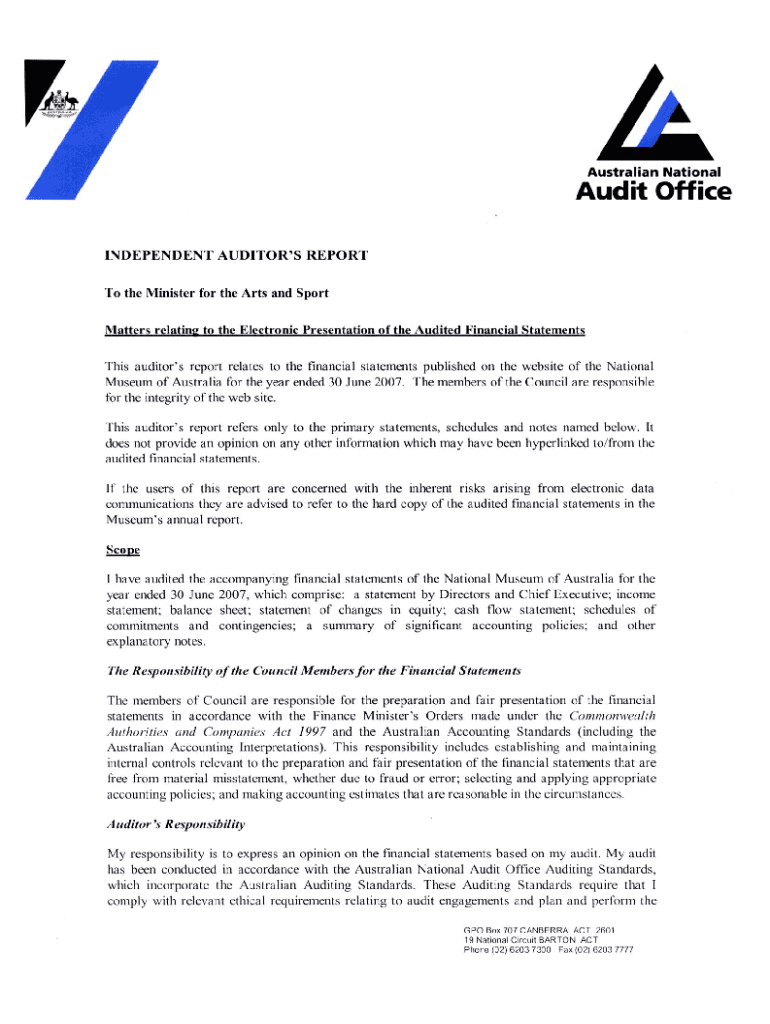
Audited financial statements provide a thorough assessment of a company's or institution's financial records. In the context of the National Museum of Australia, these statements offer a detailed analysis of the museum's financial activities, illustrating its fiscal health and compliance with regulatory standards. Audited financial statements typically include four key reports: the Income Statement, Balance Sheet, Statement of Changes in Equity, and Cash Flow Statement. These documents are essential for stakeholders to understand the museum's financial performance and sustainability over a fiscal year.
How to Use the Part Four: Audited Financial Statements - National Museum of Australia
To effectively utilize the audited financial statements for the National Museum of Australia, stakeholders should focus on analyzing each component. The Income Statement will reveal the museum's revenue streams and expenses, while the Balance Sheet provides a snapshot of its assets and liabilities. The Statement of Changes in Equity shows how the organization’s equity has shifted over the reporting period, and the Cash Flow Statement details cash inflows and outflows. Reviewing these documents comprehensively can assist in identifying trends, making informed decisions, and planning for future financial strategies.
Steps to Complete the Part Four: Audited Financial Statements - National Museum of Australia
- Gather Financial Data: Collect all necessary financial information from the fiscal year, including revenue, expenses, assets, and liabilities.
- Prepare Preliminary Statements: Draft the initial versions of each financial statement, ensuring all entries are accurate and complete.
- Conduct Internal Review: Have internal finance personnel review the statements for accuracy and compliance with accounting standards.
- Engage an External Auditor: Hire a certified auditor to examine the preliminary statements, validate the accuracy of the data, and ensure compliance with Australian accounting standards.
- Revise and Finalize: Make any necessary adjustments based on auditor feedback and finalize the statements.
- Submission: Submit the completed audited financial statements to relevant stakeholders and regulatory bodies as required.
Key Elements of the Part Four: Audited Financial Statements - National Museum of Australia
The audited financial statements of the National Museum of Australia encompass several crucial elements:
- Income Sources: Breakdown of revenues including government funding, donations, and ticket sales.
- Expenditure Categories: Detailed examination of expenses such as employee salaries, supplier payments, and grant distributions.
- Asset Overview: Comprehensive listing of the museum’s assets, including physical exhibits, property, and equipment.
- Liability Assessment: Explanation of outstanding debts and financial obligations.
- Equity Movements: Analysis of changes in equity over the fiscal period to provide insights into financial growth or decline.
Who Typically Uses the Part Four: Audited Financial Statements - National Museum of Australia
The audited financial statements are primarily used by the museum's management, government oversight bodies, donors, and financial analysts. Museum management utilizes these statements for strategic planning and budgeting purposes. Government bodies assess them to ensure public funds are used effectively and efficiently. Donors review the statements to confirm that their contributions are managed responsibly. Financial analysts use the data to provide insights into the museum's financial health and future viability.


Legal Use of the Part Four: Audited Financial Statements - National Museum of Australia
Under Australian law, publicly funded institutions like the National Museum of Australia are required to prepare audited financial statements. These statements must adhere to the Australian Accounting Standards (AAS) and provide a true and fair view of the financial position and performance of the institution. Failure to comply with these regulations may lead to legal ramifications, including penalties or restrictions on future funding.
Important Terms Related to Part Four: Audited Financial Statements - National Museum of Australia
- Accrual Accounting: A method of accounting where transactions are recorded when they occur, regardless of when cash is exchanged.
- Audit Trail: A chronological record of financial transactions that supports the data in the financial statements.
- Fiscal Year: A one-year period that organizations use for accounting purposes; the National Museum of Australia's fiscal year ends on June 30.
- Material Misstatement: Errors or omissions in financial statements that could influence the decisions of users.
Form Submission Methods
The National Museum of Australia submits its audited financial statements to relevant government oversight bodies either electronically or through traditional mail systems, according to the requirements of the entities involved. Stakeholders may also access these statements through the official website of the National Museum of Australia to ensure transparency and public accountability.