






Definition & Meaning
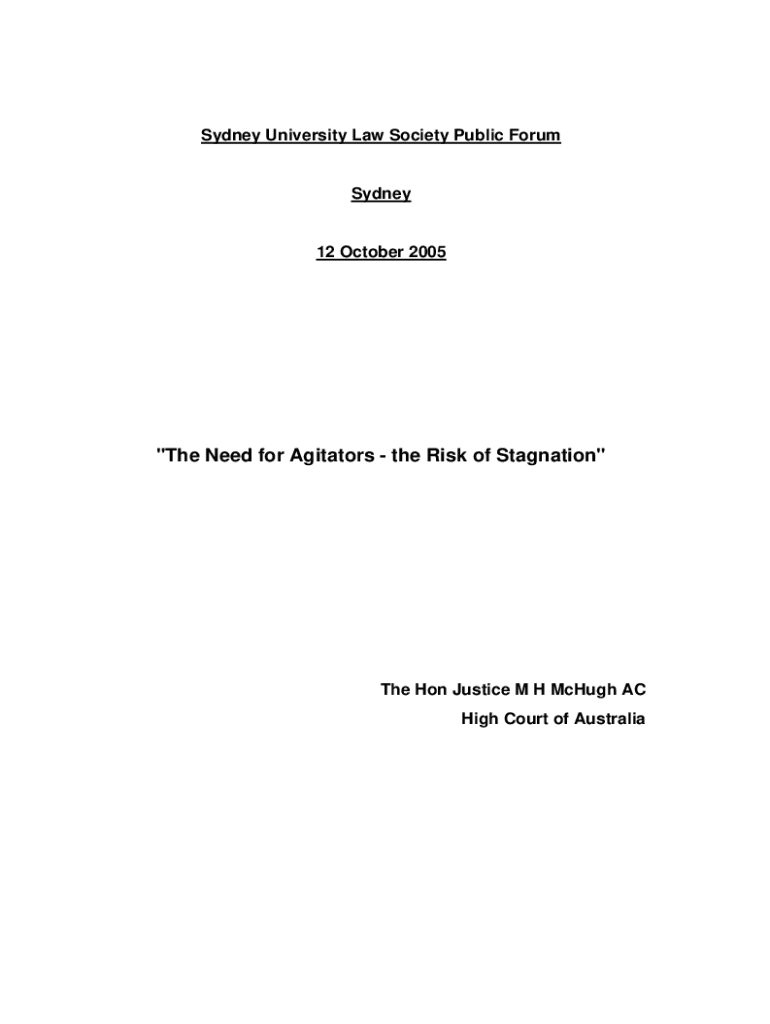
The speeches by The Hon Michael McHugh, former Justice of the High Court of Australia, are a collection of influential addresses that focus on the role and impact of legal and societal change. These speeches explore the necessity of challenging conventional norms and pushing for reforms, particularly in areas such as human rights and legal development. McHugh's insights provide a scholarly perspective on how legal professionals can engage with societal issues and drive progress.
Key Elements of the Speeches
The core themes of McHugh's speeches often revolve around:
- Agitators in Society: Highlighting the critical need for individuals who challenge the status quo to prevent societal stagnation.
- Human Rights Advocacy: Emphasizing the importance of a national Bill of Rights in Australia to protect citizens from government overreach.
- Legal Reform: Encouraging future legal professionals to actively participate in legal discourse and reform efforts.
- Historical Context: Using historical references to demonstrate the evolution and progress of legal systems.
Legal Use of the Speeches
McHugh's speeches are often cited in legal academia and practice for their articulate analysis of the law and its role in society. They provide compelling arguments for policy advocacy and legal education, serving as a resource for legal scholars, practitioners, and students. The speeches underscore the importance of a well-rounded understanding of both historical and contemporary legal challenges.
How to Use the Speeches
For those studying or practicing law, McHugh's speeches can be used to:
- Develop Critical Thinking: Analyze and critique existing legal frameworks and cultural norms.
- Support Legal Arguments: Leverage historical and literary references to strengthen arguments in academic papers or court cases.
- Drive Public Policy Discussion: Use highlighted issues, such as the need for a Bill of Rights, to engage in public policy discussions and reforms.
Steps to Access the Speeches
- Library Resources: Many law libraries, especially those affiliated with universities, hold collections of pivotal speeches by prominent figures like McHugh.
- Online Databases: Access speech transcripts from legal databases or institutional repositories that specialize in Australian jurisprudence.
- Legal Journals: Extract insights and critiques published in legal journals which analyze McHugh's contributions.
Who Typically Uses the Speeches
These speeches are popular among:
- Legal Scholars: For research and teaching materials.
- Law Students: As part of their studies in constitutional and human rights law.
- Policy Makers: Interested in the implications of a national Bill of Rights and other reforms.
- Human Rights Organizations: For advocacy and legal reform strategies.


Examples of Using the Speeches
In real-world scenarios, McHugh's speeches can be used in:
- Court Arguments: Lawyers can reference the speeches to back their human rights claims or when discussing the significance of reform.
- Academic Assignments: Students might include analyses of these speeches as part of their coursework on legal history or civil rights.
- Policy Papers: Crafting reform proposals that call for a national Bill of Rights, citing McHugh's arguments.
Important Terms Related to the Speeches
- Bill of Rights: A formal declaration of fundamental rights to protect citizens.
- Legal Reform: The process of reviewing and updating laws to reflect current societal values.
- Agitators: Individuals who challenge existing societal norms to drive progress.
Why You Should Reference McHugh's Speeches
Engaging with McHugh's speeches provides:
- Insightful Perspectives: A deep understanding of the intersection between law and society.
- Inspirational Catalyst: Encouragement for legal professionals to pursue equitable reforms.
- Historical Context: A foundational understanding of how past legal decisions shape current practices.
By delving into the speeches by The Hon Michael McHugh, readers gain valuable insights into legal reform and advocacy, fostering a deeper appreciation and understanding of the dynamic nature of law and human rights.