






Definition & Meaning
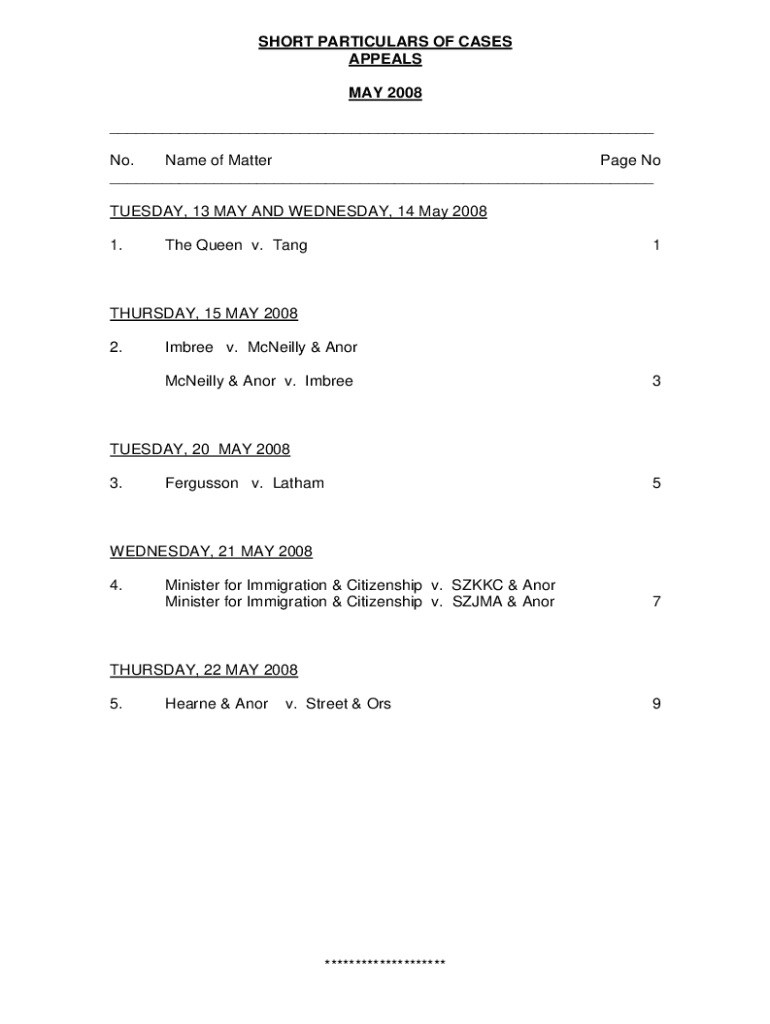
The term "Court of Appeal clarifies that appeals are a separate matter" refers to the judicial clarification provided by appellate courts that appeals are not simply a continuation of the original case but rather distinct legal proceedings. This means that, in the context of legal processes, an appeal is treated as a separate entity where previous judgments, evidence, and arguments are reviewed independently by a higher court. This distinction is crucial in understanding the legal framework and procedural boundaries associated with appeals in the U.S. judicial system.
Legal Use of the Court of Appeal Clarifies That Appeals are a Separate Matter
- Distinct Nature of Appeals: Appeals serve to reassess decisions made by lower courts, focusing on the application and interpretation of the law rather than revisiting factual determinations.
- Scope of Review: The Court of Appeal evaluates whether there were errors in the judicial process or misinterpretations of the law that could have affected the outcome of the lower court's decision.
- Case Law Reference: This clarification is often informed by precedents, where higher courts have specifically ruled on the independence and scope of appellate proceedings.
Key Elements of the Court of Appeal Clarifies That Appeals are a Separate Matter
- Grounds for Appeal: Legal grounds such as procedural errors, misapplication of the law, or findings contrary to established legal principles.
- Documentation: Comprehensive briefing by the appellant outlining perceived errors in the lower court's decision, accompanied by relevant legal precedents.
- Appellate Procedure: A structured process that may involve oral arguments, submission of written briefs, and possibly new evidence if allowed under appellate rules.
Steps to Complete the Court of Appeal Process
- Notice of Appeal: File a notice within a specific period post-judgment, signaling the intent to seek appellate review.
- Record on Appeal: Compile the trial court record for the appellate court's review, including transcripts and pertinent documents.
- Appellate Briefs: Submit written arguments outlining the basis of the appeal and the legal justification for overturning or modifying the lower court's decision.
- Oral Arguments: Present the case before the appellate judges, providing a platform for direct interaction and questions.
- Decision: Await the appellate court's decision, which may affirm, reverse, or remand the case for further proceedings.
Important Terms Related to Court of Appeal Clarifications
- Appellant: The party who files the appeal seeking a review of the lower court's decision.
- Appellee: The opposing party responding to the appeal, usually seeking to uphold the initial decision.
- Briefs: Detailed written submissions that include arguments, legal precedent, and proposed remedies.
State-Specific Rules for Appealing
- Variations in Procedures: Different states may have specific rules governing the timeline, format, and permissible scope of appeals.
- Jurisdictional Differences: State constitutions and legislation often define jurisdictional parameters that could affect the appeal process.
- Precedents: State-specific case law that guides how appeals are handled within that jurisdiction.
Examples of Using the Court of Appeal Clarifies That Appeals are a Separate Matter
- Case of Procedural Error: An appellant cites a trial judge's procedural error that potentially influenced jury instructions, warranting a thorough appellate review.
- Misinterpretation of Statute: When a lower court’s decision hinges on a contested interpretation of a law, the appeal may clarify statutory intent through higher court analysis.
- Constitutional Challenges: Appeals may address constitutional questions, thus requiring distinct legal interpretation compared to factual adjudication.
Penalties for Non-Compliance
- Dismissal of Appeal: Failure to adhere to appellate filing deadlines or procedural requirements can result in dismissal.
- Sanctions: Courts may impose sanctions for frivolous appeals or inappropriate conduct during the appellate process.
- Legal Costs: Appellants might be required to cover costs and attorney fees if they do not comply with prescribed appellate rules.
Application Process & Approval Time
- Filing Period: The time allowed for filing a notice of appeal is generally limited, often thirty to sixty days after the judgment.
- Review Timeframe: Depending on court caseloads and complexity, the appellate review process can take several months to over a year.
- Expedited Procedures: In certain cases, expedited procedures may be available, typically requiring a demonstration of urgent circumstances.
Digital vs. Paper Version
- Electronic Filing: Most state courts encourage electronic filing for efficiency, ensuring secure and timely submission of appeal-related documents.
- Paper Filings: While some jurisdictions still accept paper submissions, digital filing is often preferred and may offer additional tracking and receipt acknowledgment features.