







Definition & Meaning
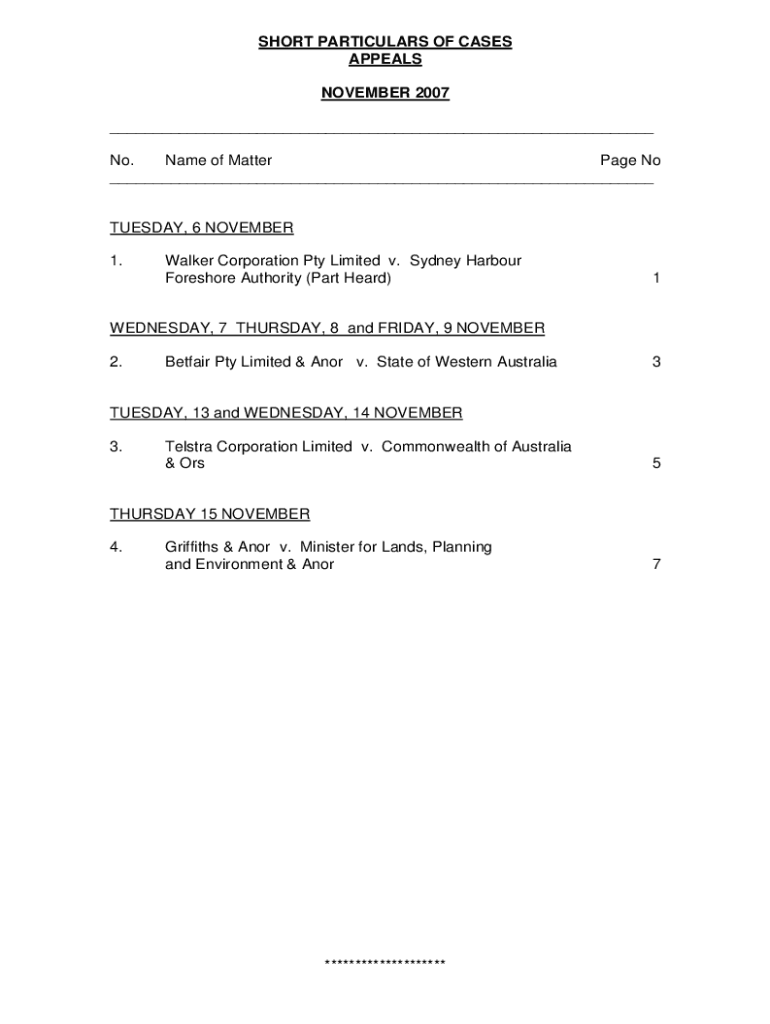
The "Land and Environment Court of NSW Judicial Newsletter" is a specialized publication dedicated to providing updates, insights, and detailed analyses regarding the legal proceedings and decisions made by the Land and Environment Court of New South Wales (NSW). This judicial body is crucial for resolving matters related to environmental law, land use, planning, and related disputes. The newsletter aims to inform legal professionals, academics, and individuals interested in environmental legal practices about recent cases, rulings, and developments in NSW's legal landscape. The content can range from detailed case studies to summaries of important judicial determinations.
Key Elements of the Land and Environment Court of NSW Judicial Newsletter
The newsletter typically contains several critical components designed to keep readers updated and informed.
- Recent Case Summaries: Detailed insights and analysis of recent court cases, highlighting legal precedents and judicial reasoning.
- Judicial Decisions: An overview of decisions handed down by the court, explaining their impact on current and future legal standings.
- Legal Analysis: Articles providing expert interpretation of complex legal issues addressed by the court.
- Policy Updates: Information on legislative changes or updates affecting environmental law and land use regulations in New South Wales.
- Legal Practitioner Contributions: Articles and insights by experienced legal professionals, offering perspectives on ongoing legal issues and debates.
How to Use the Land and Environment Court of NSW Judicial Newsletter
Legal practitioners leverage the newsletter to stay informed about recent judgments and legal trends. This information helps guide lawyers in preparing for cases or advising clients accurately on land and environmental issues within the NSW jurisdiction. Additionally, academics and students use the newsletter as a resource for studying shifts in legal interpretations and policy impacts.
- For Case Preparation: Legal professionals analyze summaries and decision texts to form strategies or understand potential case outcomes.
- For Academic Purposes: Researchers cite analyses from the newsletter in academic papers and discussions focusing on land and environmental law.
- For Policy Development: Policymakers review the legal impacts discussed in the newsletter to consider potential changes in regulation or public policy.
Who Typically Uses the Land and Environment Court of NSW Judicial Newsletter
The primary audiences for the newsletter include legal practitioners, such as lawyers specializing in environmental and land law, judges, and legal scholars. Government officials and policymakers involved in land management, environmental regulation, and urban planning also find the newsletter beneficial. Moreover, advocacy groups focusing on environmental issues and public interest lawyers may use the newsletter to stay informed on judicial decisions that could affect their campaigns or litigation strategies.


Legal Use of the Land and Environment Court of NSW Judicial Newsletter
The newsletter serves as a vital tool in the legal profession, offering clarity and detailed information on legal principles as interpreted by the NSW Land and Environment Court. Subscribers can use the content to ensure their actions align with current legal standards and judicial expectations.
- Guidance in Legal Interpretation: The newsletter often helps clarify complex legal matters, providing subscribers with a deeper understanding of how the law is applied.
- Precedent Reference: Legal professionals reference case analysis to predict outcomes and shape arguments for future cases.
Important Terms Related to the Land and Environment Court of NSW Judicial Newsletter
A comprehensive understanding of key terms is essential for making the most of the newsletter.
- Judicial Ruling: The final decision by a judge or court resolving the issue before them.
- Environmental Law: A body of law concerned with the protection of the environment, regulating human impact on nature.
- Land Use Regulation: Laws and policies governing how land can be used, including zoning laws and environmental impact assessments.
- Case Law: Law established by previous court decisions, which serves as a guide for deciding subsequent cases.
Steps to Complete the Land and Environment Court of NSW Judicial Newsletter
The creation process for each edition of the newsletter is systematic, ensuring reliable and comprehensive coverage.
- Topic Selection: Editors and contributors choose current and relevant legal issues and cases to feature.
- Research and Analysis: Experts conduct in-depth research on chosen topics, compiling legal texts and opinions.
- Drafting and Review: Initial drafts are written and reviewed by a panel of legal experts to ensure accuracy and objectivity.
- Editing and Finalization: The content is edited for clarity and coherence, ensuring it meets the publication's standards before being finalized for distribution.
State-Specific Rules for the Land and Environment Court of NSW Judicial Newsletter
The NSW Land and Environment Court operates under specific rules and regulations unique to New South Wales. Understanding these state-specific legal frameworks is essential for interpreting cases within the right jurisdictional context.
- Land Dispute Resolution: Many rules cover how disputes over land ownership and usage are resolved, including mediation and arbitration guidelines.
- Environmental Compliance: Rules governing environmental compliance ensure that all land use and development adhere to state conservation and sustainability standards.
Examples of Using the Land and Environment Court of NSW Judicial Newsletter
Ranked among its crucial offerings, practical examples help elucidate complex legal principles.
- Case Study on Urban Development: An overview of a leading case where urban development challenges were brought before the court, demonstrating judicial reasoning and implications for local planning rules.
- Analysis of Environmental Impact Legislation: Through examples, the newsletter illustrates how recent legislation affects court decisions regarding environmental permitting and assessments.




