






Definition & Significance of "The Vanishing Trial"
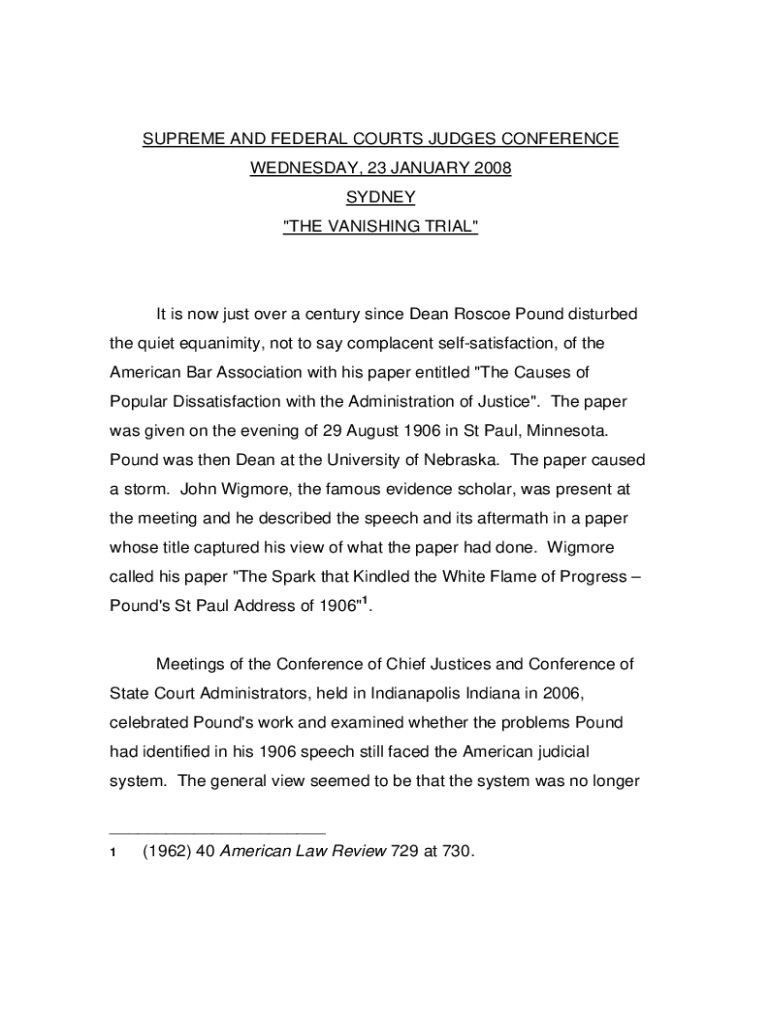
The term "The Vanishing Trial" refers to a noticeable trend within the American judicial system where the frequency of trials has significantly decreased over the years. This decline particularly affects federal courts and raises questions about whether this pattern indicates a systemic failure in delivering justice. The phenomenon can be traced back to Roscoe Pound’s early 20th-century critique on dissatisfaction with the legal process. The reduction in trials may be attributed to factors like over-management and the increasing popularity of alternative dispute resolution methods. Understanding this concept is crucial for legal professionals, as it affects how civil disputes are resolved.
Steps to Complete the Form "The Vanishing Trial", Supreme and Federal Courts Judges
-
Gather Necessary Information:
- Collect comprehensive background details related to the trial being assessed, including case identification numbers, parties involved, and any prior court orders or decisions.
-
Legal Research and Analysis:
- Conduct in-depth research to understand the historical context and implications of the phenomenon in the specific case, referencing federal court procedures and precedents as needed.
-
Filling Out the Form:
- Carefully enter all required details in each section of the form, ensuring accuracy in legal terminology and case specifics.
-
Review and Submission:
- Double-check for completeness and correctness before submitting. Form submission might vary based on court rules—consider electronic filing or in-person submission where applicable.
Why Understanding "The Vanishing Trial", Supreme and Federal Courts Judges is Crucial
Appreciating the dynamics behind "The Vanishing Trial" is essential for legal practitioners, judges, and policymakers, as it provides insight into the shifting landscape of judicial processes. By examining why fewer disputes go to trial, stakeholders can better address potential shortcomings within the justice system and work towards reforms that enhance the effectiveness of dispute resolution, ensuring that litigation management and issue definition are prioritized to bolster public confidence in judicial processes.
Who Typically Uses the Form "The Vanishing Trial", Supreme and Federal Courts Judges
-
Judges and Lawyers: Both federal and Supreme Court judges, along with attorneys and legal scholars, often engage with this form to evaluate and understand trends in trial occurrences.
-
Policy Analysts: These professionals utilize the form to assess the impacts of the vanishing trial phenomenon on legislative and judicial policies.
-
Academic Researchers: Scholars studying legal trends and judicial processes also make use of the form to support academic inquiries and publications.


Legal Use of the Form "The Vanishing Trial"
The legal utility of this form lies in its ability to document trends and assessments regarding the diminishing frequency of trials. Legal stakeholders employ it to explore whether alternative methods like mediation are influencing trial numbers and to scrutinize if such shifts align with or detract from delivering justice.
Key Elements of the Form "The Vanishing Trial"
-
Case Identification: Detailed information about the case in question, including docket numbers and involved parties.
-
Trial Frequency Analysis: A section to document and analyze how often similar cases proceed to trial.
-
Role of Alternative Dispute Resolution: Examination of the impact that non-trial resolution methods have had on the current legal landscape.
-
Judicial Feedback: Space for judges to provide insights on case management and trial effectiveness.
State-Specific Rules and Variations
Different states may have varying procedures and rules that affect trial frequency and management. Exploring state-specific regulations on litigation and trial management can reveal how localized legal frameworks contribute to the vanishing trial trend. For example, certain states may emphasize mediation at a higher rate, influencing their trial numbers.
Examples of Using the Form "The Vanishing Trial"
-
Federal Case Study: Analysis of a high-profile federal case settled outside of court could provide insight into the declining trial frequency federal courts face.
-
State-Level Examination: Review of state court cases where trials were bypassed in favor of alternative resolutions to understand local variations in the form's application.
-
Comparative Studies: Use the form to compare and contrast regions with differing trial frequencies, exploring contributing factors and judicial outcomes.