






Definition & Meaning
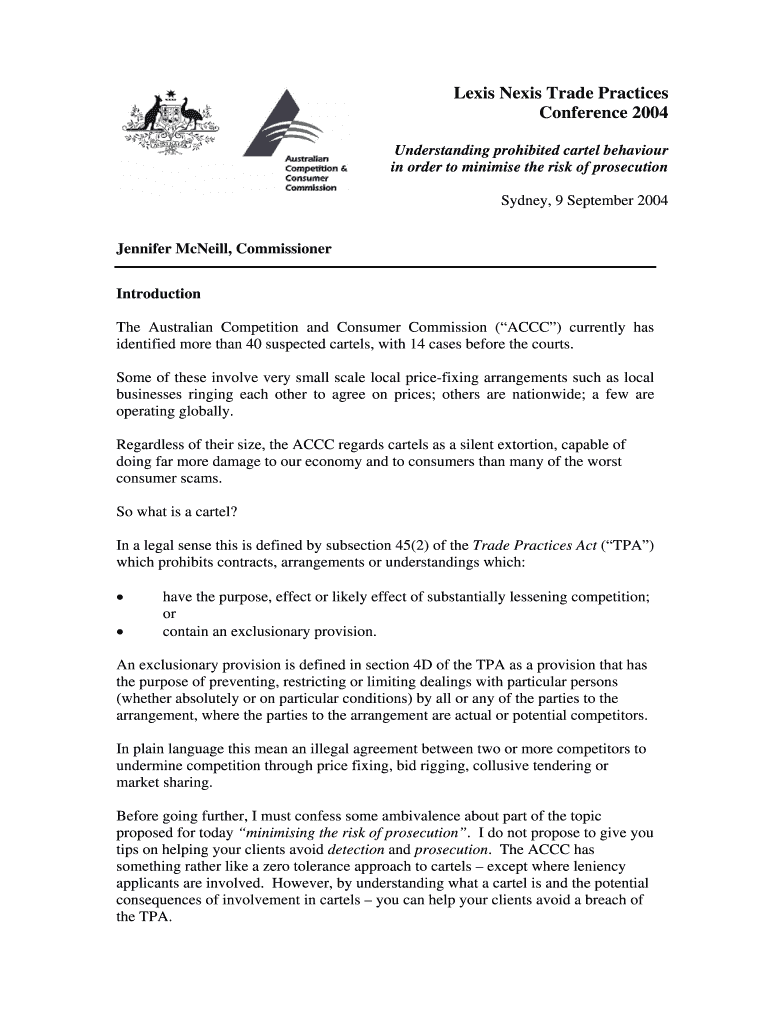
The term "the proposed Australian cartel offence: the - Oxford Law Faculty" refers to a significant legal framework being considered in Australia that targets cartel behavior. Cartels, as defined under the Trade Practices Act, involve agreements between competitors in the same industry to coordinate activities such as price fixing or market sharing, which restrict competition. This framework is designed to classify serious cartel activities as criminal offences, thereby introducing tougher penalties to deter such behavior. Understanding this proposed offense is crucial for businesses and legal practitioners dealing with competition law.
Key Elements of the Proposed Cartel Offense
In defining a cartel under the proposed regulations, several key elements are highlighted:
- Collusion: An agreement between competitors to limit competition, often through price fixing, market allocation, or bid rigging.
- Intention: Proof that the involved parties intentionally engaged in practices to hinder competitive markets.
- Impact on Market: Evaluation of how the cartel's activities affect market dynamics, pricing, and consumer choice.
These elements are critical in evaluating a business's or individual's involvement in a cartel, helping legal professionals assess potential violations.
Legal Use of the Proposed Australian Cartel Offense
The enforcement of the proposed cartel offense law will involve both civil and criminal proceedings. Legal use covers:
- Compliance: Organizations must ensure adherence to competition laws to avoid penalties.
- Leniency Policies: Entities disclosing cartel involvement may receive leniency in penalties, encouraging voluntary compliance and reporting.
The government's aim is to strengthen competitive practices in the market, making compliance non-negotiable for businesses.
Steps to Complete the Requirements
For businesses potentially affected by the proposed cartel offense, here are the steps to comply:
- Review Business Practices: Conduct an internal audit of agreements and practices that might violate the proposed legislation.
- Legal Consultation: Engage with legal experts in competition law to assess compliance and potential risks.
- Training: Implement robust training programs for employees to understand the implications of the new laws.
Following these steps can help organizations align with legal standards and avoid legal repercussions.
Who Typically Uses This Legal Framework
Understanding and applying the proposed Australian cartel offense is crucial for:
- Legal Professionals: Lawyers specializing in competition law will use this framework to advise clients.
- Compliance Officers: Professionals in charge of ensuring business practices meet legal standards.
- Business Executives: Leaders responsible for strategic decisions that might affect market competition.
These individuals must stay informed about changes in law to protect their businesses from legal infractions.
Why Comply with the Proposed Cartel Offense
Compliance with the proposed cartel offense is important because:
- Avoid Penalties: Non-compliance can lead to hefty fines and criminal charges, severely affecting business reputation.
- Market Integrity: Fair competition laws ensure a level playing field, which is beneficial for consumers and businesses alike.
Adopting these practices reflects a commitment to ethical business operations and corporate responsibility.
Important Terms Related to the Proposed Cartel Offense
Understanding the following terms is crucial:
- Bid Rigging: Forming agreements to influence the outcome of contract bidding.
- Price Fixing: An agreement among competitors to raise, lower, or stabilize prices.
- Market Sharing: Dividing markets among competitors to reduce competition.
Familiarity with these terms aids in identifying and mitigating risks associated with cartel behavior.
Examples of Using the Proposed Cartel Offense
Real-world examples illustrate its application:
- Case Studies: Analyze past instances of cartel behavior and the legal outcomes under existing laws.
- Hypothetical Scenarios: Create simulated situations to evaluate potential compliance challenges.
By exploring these examples, businesses can better anticipate legal challenges and prepare accordingly.
Penalties for Non-Compliance
Failure to comply with the proposed cartel offense may result in severe consequences:
- Fines: Substantial financial penalties are imposed for entities found guilty of cartel activities.
- Imprisonment: Individuals involved may face criminal charges, leading to imprisonment.
- Reputation Damage: Legal violations can tarnish a company's brand and undermine consumer trust.
Understanding these penalties encourages adherence to the law, safeguarding businesses from damaging repercussions.