






Definition and Meaning
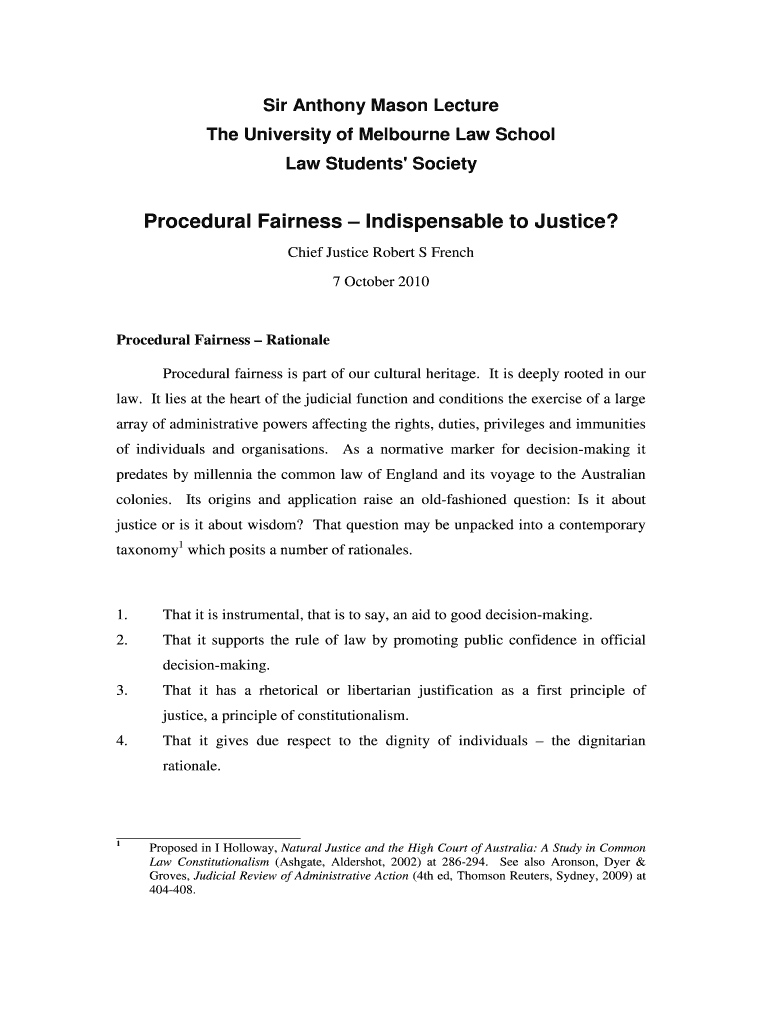
"Procedural fairness" refers to the legal principle that ensures fair decision-making processes in judicial and administrative settings. It mandates that individuals and entities subject to legal decisions be given a fair opportunity to present their case and understand the evidence against them. This process is crucial for maintaining confidence in the justice system and upholding the rule of law. The concept originates from the principles of natural justice and is considered indispensable in ensuring just outcomes in court proceedings and administrative actions.
Legal Use of Procedural Fairness
In the United States, procedural fairness is a fundamental component of the legal system, underpinning the due process rights enshrined in the Constitution. Courts, including the High Court, apply procedural fairness to ensure that all parties in a legal case receive a fair hearing. This involves adhering to established rules and procedures when making decisions that affect an individual's rights or obligations. Legal use of procedural fairness affects various areas, including criminal law, civil disputes, and administrative proceedings.
Key Elements of Procedural Fairness
Several key elements characterize procedural fairness within legal contexts:
- Right to a Fair Hearing: Individuals must be given the opportunity to present their case and respond to any adverse evidence.
- Right to an Impartial Decision-Maker: Decisions should be made by an unbiased adjudicator, with no personal interest in the outcome.
- Transparency of Decision-Making: The process should be open, with clear reasons for decisions provided to those affected.
- Timeliness: Legal proceedings should be conducted within a reasonable time to ensure justice is served promptly.
How to Use Procedural Fairness in Legal Contexts
Applying procedural fairness in legal contexts involves several steps:
- Identify the Context: Understand the legal setting and the nature of the decision being made.
- Gather Evidence: Collect relevant information and evidence to support your position.
- Present Your Case: Use the appropriate legal platform to present your arguments and evidence.
- Respond to Adverse Evidence: Review and counter any evidence presented against you.
- Engage with the Decision-Maker: Communicate effectively with the adjudicator, ensuring your case is understood.
Examples of Procedural Fairness
In practical terms, procedural fairness can be seen in various legal proceedings:
- Criminal Trials: Defendants have the right to confront witnesses and present their defense.
- Administrative Hearings: Individuals affected by government decisions, such as zoning changes, must be given the opportunity to present their views.
- Civil Litigation: Parties have the right to present evidence and cross-examine witnesses.
Important Terms Related to Procedural Fairness
Understanding procedural fairness involves familiarity with specific legal terms:
- Due Process: A constitutional guarantee of fair treatment through the normal judicial system.
- Natural Justice: Principles ensuring fairness in the decision-making process.
- Bias: A preconception or prejudice that affects impartiality.
- Hearing Rights: The right to be heard in a legal matter.
State-Specific Rules
While procedural fairness is a national principle, its application may vary based on state laws. States may have specific regulations or interpretations affecting how procedural fairness is applied in local courts. For instance, some jurisdictions may have unique rules regarding the admissibility of evidence or the procedures for administrative appeals. Understanding these differences is essential for ensuring compliance and effective legal representation.
Penalties for Non-Compliance
Failing to adhere to procedural fairness can have significant consequences. Courts may overturn decisions if they find that procedural fairness has been violated. This can lead to costly retrials or legal proceedings, damaging reputations and incurring penalties or other legal repercussions. Compliance with procedural fairness principles is crucial for maintaining the integrity of the justice system and protecting individual rights.