
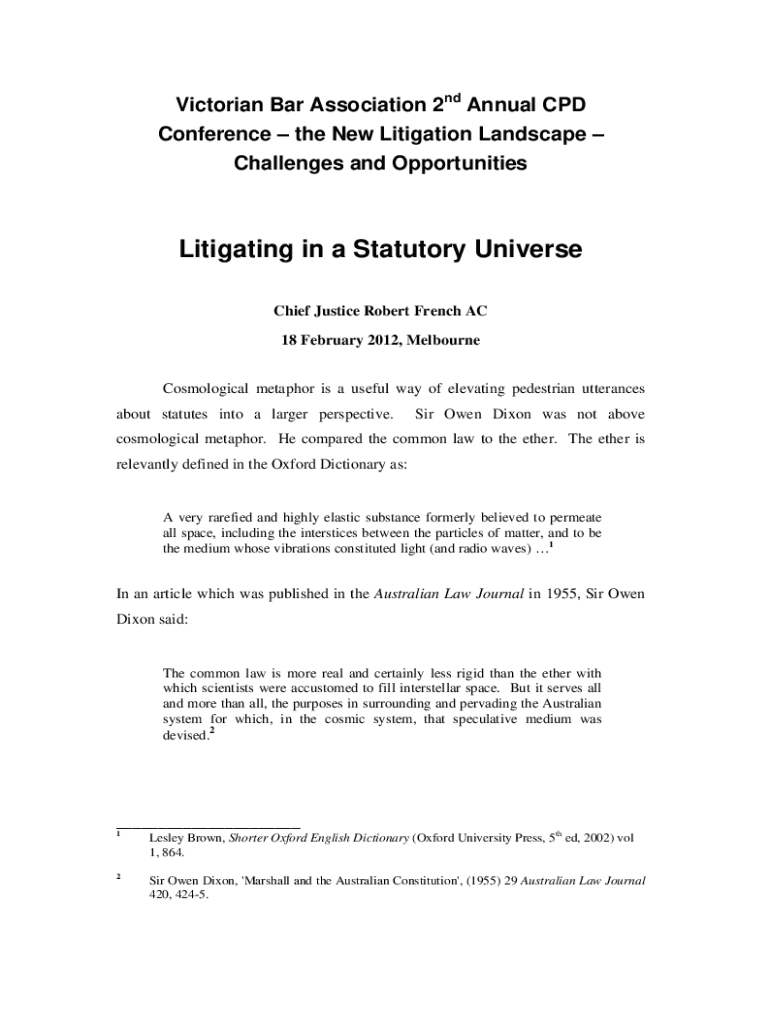







Definition and Meaning of Litigating in a Statutory Universe
Litigating in a statutory universe involves navigating the legal landscape of Australian law, particularly within the High Court of Australia. This process is distinguished by the prominence of statutes — legislatively enacted laws — over common law, which is derived from judicial decisions. The legal framework in this context demands a nuanced understanding of statutory interpretation, legislative intention, and the interplay between statutory provisions and common law principles to effectively resolve disputes.
- Statutes: Laws enacted by the legislative branch.
- Common Law: Legal precedents established by court decisions.
- Statutory Interpretation: Understanding and implementing enacted laws within judicial processes.
Key Elements of Litigating in a Statutory Universe
To competently handle cases within a statutory universe, it is crucial to be aware of key elements that influence this framework:
-
Statutory Interpretation: Practitioners must adeptly interpret legislative texts, understanding both the literal language and broader legislative intent.
-
Role of Precedent: While statutes take precedence, existing common law serves as a guide for interpreting statutory provisions where ambiguity exists.
-
Judicial Review: The High Court possesses the authority to review legislation for constitutionality, influencing how statutory matters are addressed.
-
Legal Precedents: Though less dominant, precedents derived from the High Court guide the interpretation and application of statutes.
-
Legislative Amendments: Legal practitioners must remain informed about legislative changes, as these directly affect statutory applicability and interpretation.
Legal Use of Litigating in a Statutory Universe in Australia
The High Court of Australia engages with the statutory universe primarily through appellate jurisdiction and constitutionally significant matters. This entails a detailed examination of how statutory laws operate within federal and state legislations.
- Jurisdictional Authority: The High Court holds overarching jurisdiction in interpreting federal laws and resolving disputes between states.
- Constitutional Interpretation: As the apex court, it assesses constitutional implications within statutory frameworks.
- Appellate Function: Reviewing lower court decisions based on statutory grounds to ensure adherence to legislative intent and constitutional governance.
Examples of Using the Statutory Universe
Illustrations of litigation involving statutory interpretation often depict complex scenarios where judicial interpretation has significant implications.
- Mabo v Queensland (No 2): This landmark case typified statutory interpretation concerning land rights, impacting Native Title laws.
- Workplace Relations Cases: Statutory laws in employment often prompt litigation around the interpretation of employment regulations and employee rights.
Important Terms Related to Litigating in a Statutory Universe
Understanding essential terminology plays a pivotal role in effectively navigating statutory litigation:
- Legislative Intent: The purpose and objectives the legislature aimed to achieve through the statute.
- Enactment Clause: A statutory clause that details when a law comes into effect.
- Ambiguity Resolution: Methods, including reference to extrinsic materials, to clarify ambiguous statutory provisions.
Who Typically Uses Litigating in a Statutory Universe
The process of statutory litigation is typically employed by a diverse range of legal professionals:
- Lawyers and Solicitors: Engaged in representing clients within courts interpreting statutes.
- Legal Academics: Analyze statutory frameworks for educational and reform prospects.
- Judges and Magistrates: Exercise statutory interpretation in their adjudicative functions.
How to Use the Litigating in a Statutory Universe
Practicing effective litigation within a statutory framework involves several strategic steps:
-
Comprehensive Statutory Analysis: Interpreting relevant statutes and discerning legislative intentions.
-
Integration of Precedent: Applying common law principles where statutory language is ambiguous.
-
Effective Advocacy: Leveraging statutory interpretation in developing persuasive legal arguments for judicial consideration.
-
Continuous Learning: Staying informed about legislative changes and emerging case law directly affecting statutory interpretation.
State-Specific Rules for the Statutory Universe
While litigation in a statutory universe primarily involves federal interpretation, each Australian state also operates under its statutes, creating nuanced differences:
- New South Wales: Certain statutory provisions can have state-specific interpretative nuances.
- Victoria: Distinct legislative frameworks guide statutory interpretation within state jurisdictions.
- Queensland: State legislation may influence statutory interpretation within the High Court context.
Steps to Complete the Litigating in a Statutory Universe
Engaging in litigation within the statutory universe involves a measured series of steps:
- Identifying Relevant Statutes: Sourcing the legislation pertinent to the legal issue at hand.
- Constructing Legal Arguments: Building arguments rooted in statutory parameters while integrating case law.
- Judicial Presentation: Presenting arguments within the court, emphasizing statutory meanings and desired legal outcomes.
- Navigating Appeals: Leveraging appellate processes for further statutory and interpretative considerations.
By understanding these comprehensive insights into litigating within a statutory universe, practitioners can effectively engage with the Australian legal system, ensuring robust interpretation and application of statutory laws.




