
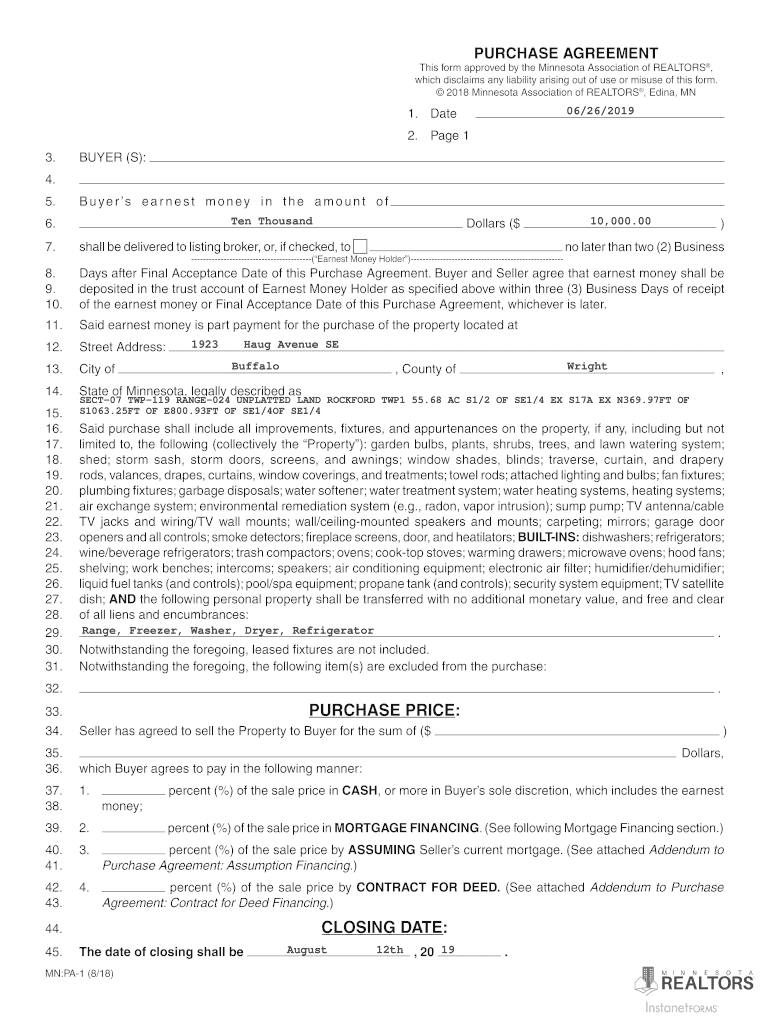







Definition & Meaning
The Minnesota Standard Residential Purchase Agreement is a legal document used in real estate transactions to outline the terms and conditions under which a buyer agrees to purchase a residential property. This agreement typically includes critical terms like the purchase price, closing date, and any contingencies that must be met for the sale to proceed. It serves as a formal offer from the buyer to the seller and becomes legally binding once both parties agree to the terms and sign it.
Key Components
- Purchase Price: The agreed-upon amount the buyer will pay for the property.
- Earnest Money: An initial deposit that demonstrates the buyer's seriousness about purchasing the property.
- Financing Contingency: Conditions related to securing a mortgage or other financing.
- Inspection Contingency: Provisions allowing the buyer to inspect the property and potentially renegotiate terms based on findings.
- Closing Date: The date on which the property will be legally transferred from seller to buyer.
Steps to Complete the MINNESOTA STANDARD RESIDENTIAL PURCHASE AGREEMENT - Template
- Fill Out Buyer Details: Include the buyer's full legal name and contact information.
- Enter Property Information: Provide the complete address and legal description of the property, ensuring accuracy for legal purposes.
- Specify Purchase Conditions: Detail the purchase price, earnest money, and any seller concessions or closing cost responsibilities.
- Outline Financing Details: Specify any conditions regarding the buyer's financing, such as obtaining a mortgage.
- Set Inspection Terms: Include timeframes for property inspections and specify any potential outcomes or renegotiations.
- Finalize with Signatures: Ensure both parties sign the document, including any agents involved, to make it legally binding.
Key Elements of the MINNESOTA STANDARD RESIDENTIAL PURCHASE AGREEMENT - Template
- Legal Description: The property's legal boundaries and designation, ensuring specificity in what is being bought.
- Title and Escrow Information: How the title will be transferred and conditions regarding escrow.
- Property Disclosures: Required disclosures about the property's condition and any known defects, such as lead-based paint hazards or septic system issues.
- Default Terms: Consequences if either party fails to uphold their part of the agreement.
Legal Use of the MINNESOTA STANDARD RESIDENTIAL PURCHASE AGREEMENT - Template
This purchase agreement is legally binding and enforceable in the state of Minnesota. It must comply with state laws and regulations surrounding real estate transactions. The document typically includes arbitration clauses to handle any disputes that arise between the buyer and seller.
Considerations for Legal Compliance
- Ensure all contingencies are clearly outlined and agreed upon.
- Verify the seller's disclosures meet Minnesota's legal requirements.
- Use the agreement in good faith, as any misrepresentation can result in legal consequences.
State-Specific Rules for the MINNESOTA STANDARD RESIDENTIAL PURCHASE AGREEMENT - Template
In Minnesota, specific laws govern real estate transactions, requiring certain disclosures and adherence to timelines. For example, sellers must disclose information on wells and sewage systems and any known environmental hazards.
Disclosures Required
- Lead-Based Paint: If the property was built before 1978, the seller must disclose any known presence of lead-based paint.
- Well Disclosure: Details regarding the location and condition of any wells on the property.
- Septic System: Information on any subsurface sewage treatment systems in place.
Who Typically Uses the MINNESOTA STANDARD RESIDENTIAL PURCHASE AGREEMENT - Template
This agreement is primarily used by real estate agents, buyers, and sellers engaged in residential property transactions in Minnesota. It is also relevant for parties involved in interpreting or enforcing the contract, such as lawyers or real estate brokers.

Common User Scenarios
- First-Time Homebuyers: Need to understand the implications of each clause.
- Real Estate Investors: Require knowledge of specific contingencies and return on investment considerations.
- Realtors and Agents: Facilitate the transaction using established legal documents to protect their clients.
Creating and Managing Fillable Forms
Features
- Fillable Fields: Include text boxes, checkboxes, dropdowns, and signature fields for data collection.
- Customization: Each field can be required or optional and assigned to specific parties for completion.
Benefits
- Simplifies data entry and ensures forms gather complete information.
- Allows tracking of who has completed which sections, ensuring a smoother workflow.
Examples of Using the MINNESOTA STANDARD RESIDENTIAL PURCHASE AGREEMENT - Template
Practical Use Case
- A couple purchasing their first home uses the agreement to outline terms like a closing date within 60 days and a contingency allowing them to back out if they cannot secure financing within 30 days.
Additional Scenarios
- Investor Purchase: A property investor uses the agreement to include clauses stipulating additional inspections before finalizing the purchase.
- Conditional Offers: Buyers include contingencies requiring the sale of their existing home before moving forward.
In-depth knowledge of the Minnesota Standard Residential Purchase Agreement's sections and applicable laws ensures safe and compliant real estate transactions. By detailing each block above, you can navigate through the complex process of drafting and executing a purchase agreement effectively, ensuring all legal and financial requirements are thoroughly met.




