






Definition & Meaning of the Protective Factors Survey, 2nd Edition (PFS-2)
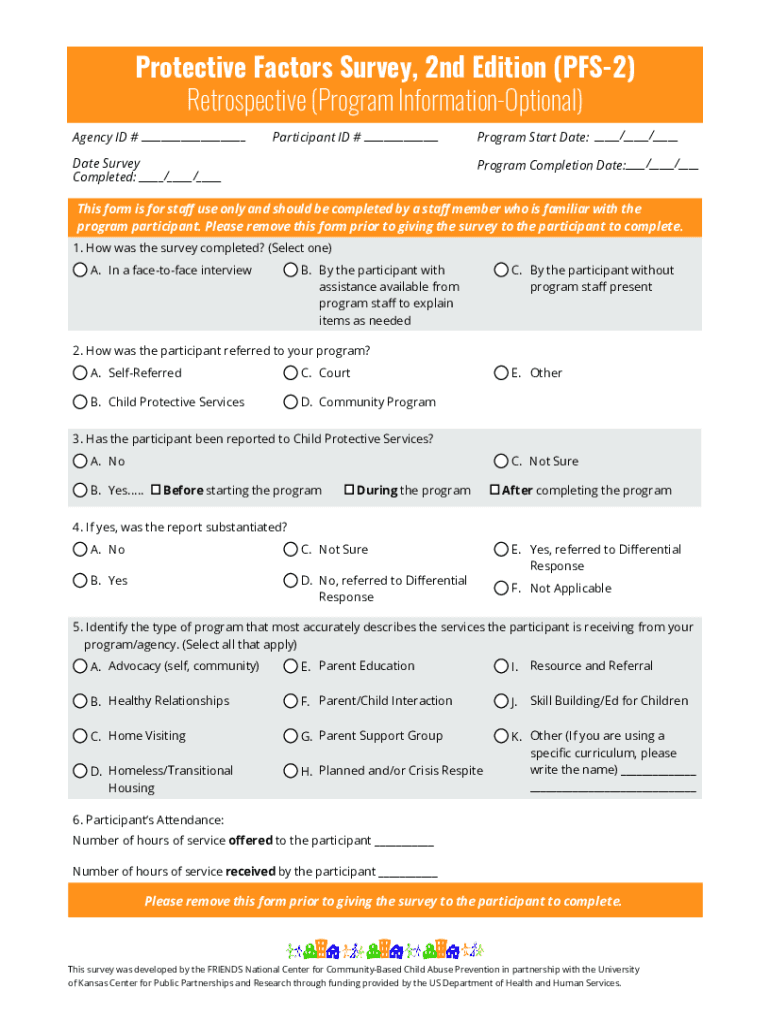
The Protective Factors Survey, 2nd Edition (PFS-2) is a crucial assessment tool utilized primarily by staff in community-based child abuse prevention programs. Its purpose is to gather information about participants' experiences and needs before and after engaging with these programs. This data collection focuses on various aspects such as family dynamics, support systems, economic challenges, and overall well-being, which are critical in enhancing the program's service delivery.
Understanding Protective Factors
- Family Dynamics: Involves evaluating relationships within the family structure and how these relationships impact the participant's environment.
- Support Systems: Assesses the availability and effectiveness of external support structures, such as extended family, friends, or community resources.
- Economic Challenges: Identifies financial struggles that participants face, providing insight into how these challenges might affect family stability and stress levels.
- Overall Well-being: Considers physical, emotional, and psychological aspects of participants' lives to provide a holistic view of their experiences.
How to Use the PFS-2
Using the PFS-2 involves a systematic approach to effectively collect and analyze data from program participants. It is designed for use both at the start and conclusion of participation to assess changes and outcomes.
Steps to Administer the PFS-2
- Initial Setup: Familiarize staff with the structure and purpose of the survey.
- Participant Introduction: Explain the survey’s confidentiality and aim to participants, ensuring informed consent.
- Administer the Survey: Guide participants in answering the questions honestly and thoroughly.
- Collect and Analyze Data: Compile data from completed surveys and analyze trends or patterns over time.
- Implement Findings: Utilize insights garnered to improve program effectiveness and tailor services to meet the participants' needs more efficiently.
Who Typically Uses the PFS-2
The PFS-2 is essential for professionals working in child welfare and prevention programs. Specifically, it is used by:
- Program Administrators: To evaluate program efficacy and make informed decisions regarding service adjustments.
- Social Workers: To gain insights into individual and family needs, guiding targeted interventions.
- Policy Makers: To gather data that informs policy decisions related to child welfare services.
- Researchers: To study the impact of preventative services on family dynamics and child safety.

Key Elements of the PFS-2
Understanding the key components of the PFS-2 is vital for its effective deployment and interpretation.
Essential Components
- Questionnaire Sections: The survey is divided into distinct sections targeting different areas of participants' lives, ensuring comprehensive coverage.
- Scoring System: Provides a standardized method to evaluate responses, facilitating easy comparison across different demographic groups.
- Confidentiality Measures: Ensures participant information is kept private, aligning with ethical standards in research and program evaluation.
Steps to Complete the PFS-2
Completing the PFS-2 requires careful attention to detail to ensure data accuracy and usefulness.
- Preparation: Ensure all necessary materials are ready and participants understand the survey process.
- Navigation of Survey: Guide participants through each question, offering clarification as needed.
- Submission: Collect completed surveys for data entry and initial review.
- Review and Feedback: Offer feedback to participants, highlighting areas of strength and opportunities for support.
Legal Use of the PFS-2
Using the PFS-2 carries specific legal responsibilities to ensure data protection and ethical compliance.
Compliance and Ethics
- Confidentiality Agreements: Protect participant data through legally binding agreements that restrict access to only authorized personnel.
- Data Retention Policies: Establish clear protocols for how long data should be stored and the conditions for its eventual disposal.
- Informed Consent: Secure clear and voluntary consent from participants before data collection begins.
Eligibility Criteria for PFS-2 Participants
Not everyone may be eligible to participate in the PFS-2, as its design targets specific demographics involved in prevention programs.

Criteria Overview
- Program Involvement: Participants should be actively involved in a child abuse prevention program.
- Consent Capabilities: Participants must have the capacity to provide informed consent or have a legal guardian consent on their behalf.
- Age Requirements: Typically focuses on adult caregivers, but specific criteria may vary based on program guidelines.
State-Specific Rules for the PFS-2
Understanding variations in how the PFS-2 is applied across different states is crucial for compliance and effective implementation.
Regional Variations
- Legislative Differences: Individual states may have specific legal requirements surrounding data collection and participant consent.
- Cultural Adaptations: The survey may need adjustments to fit cultural norms and practices within different states.
- Funding and Resources: Availability of resources to conduct and analyze the survey can vary significantly, impacting implementation and follow-up.
These blocks collectively provide a comprehensive guide on using and understanding the Protective Factors Survey, 2nd Edition (PFS-2). It ensures that practitioners have the information necessary to maximize the survey's utility and effectiveness.