Definition and Meaning
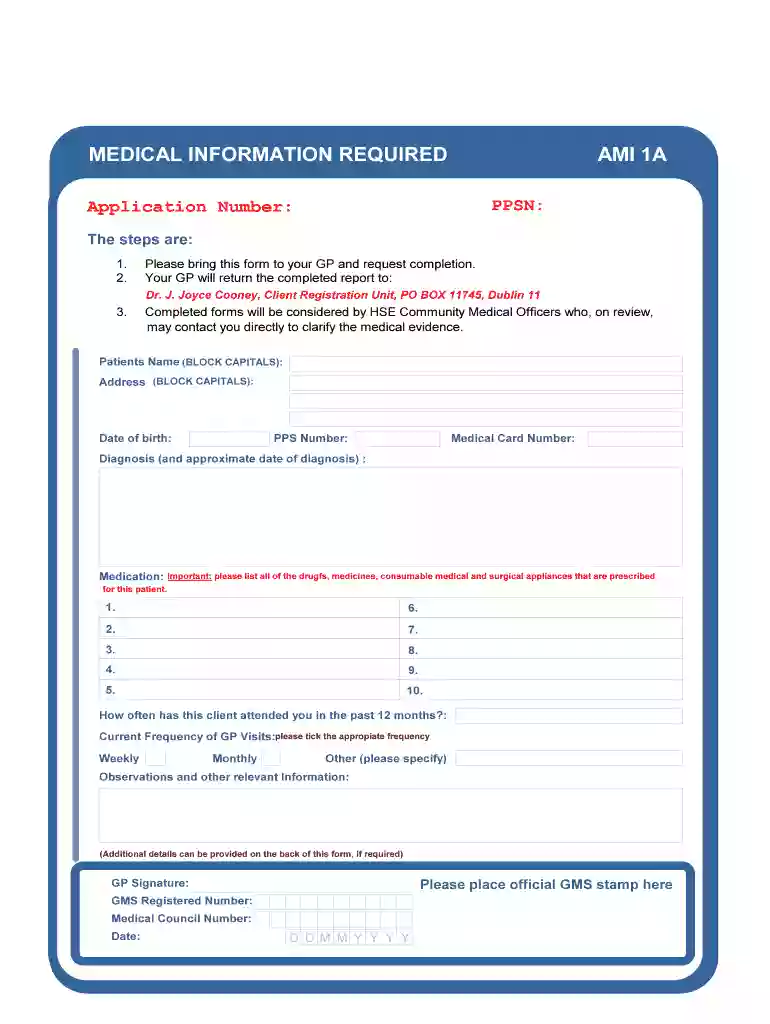
A "medical information required" form is an essential document utilized to gather comprehensive medical details about a patient. Typically completed by a General Practitioner (GP), this form captures critical information such as the patient's medical history, current medications, and frequency of GP visits. This helps medical professionals and organizations assess a patient’s health status and needs accurately. It serves as a tool for data collection, ensuring all relevant medical information is obtained in a standardized manner for further assessment or treatment planning.
Key Components
- Personal Details: Includes the patient's name, contact information, and other identifying details to ensure the form is correctly attributed.
- Medical History: Documents previous health conditions, surgeries, or treatments to provide context to the patient’s current health.
- Medications: Lists current prescriptions, dosages, and any over-the-counter drugs to prevent potential drug interactions.
- GP Visits: Records the frequency and purpose of medical appointments to track ongoing healthcare needs and monitoring.
How to Use the Medical Information Required Form
The medical information required form is used in various medical and administrative processes. It is essential for both healthcare providers and patients to know how to utilize this document effectively to ensure accurate and complete information collection.
Utilizing in Healthcare
- During Appointments: GPs complete this form during patient visits to ensure accurate information is captured on-site.
- For Referrals: This form is often required when referring a patient to a specialist, providing a succinct summary of the patient's health history and current conditions.
- In Emergencies: Medical personnel may use this form to quickly understand a patient's health background in urgent situations.
Administrative Uses
- Insurance Claims: Insurance companies may require this form to process claims, confirming the medical services provided align with reported conditions.
- School or Employer Requirements: Sometimes schools or employers request medical information forms to verify health-related absences or accommodations.
Steps to Complete the Medical Information Required Form
Completing the medical information required form involves several key steps to ensure accuracy and completeness. This section outlines a standard procedure for filling out the form and offers practical advice for each stage.
Step-by-Step Process
- Gather Basic Information: Begin by filling in the patient's personal details, including full name, date of birth, and contact information.
- Medical History Section: Carefully document past medical conditions, surgeries, and hospitalizations. Include details such as dates and outcomes.
- List Current Medications: Enter all prescribed and over-the-counter medications including dosage and frequency of intake.
- Record GP Visits: Note the frequency and reasons for recent doctor's visits, highlighting any ongoing health concerns that require regular monitoring.
- Review and Sign: Before submitting, review the completed form to ensure all sections are filled accurately. A GP or authorized medical personnel should sign the document to validate the information.
Key Elements of the Medical Information Required Form
Understanding the critical elements of the medical information required form is vital for effective usage. This section covers the primary components that make up the form, highlighting their importance and function.
Important Sections
- Patient Identification: Ensures the correct allocation of medical information to the right patient.
- Health Background: Provides a historical view of the patient's medical encounters, supporting accurate diagnosis and treatment.
- Medication Details: Helps prevent adverse drug reactions by detailing current drug use.
- Authorized Signature: Validates the accuracy of the provided information and assigns responsibility to the attending GP.
Legal Use of the Medical Information Required Form
The medical information required form complies with several legal standards to ensure patient data is handled responsibly. Awareness of these legal implications is crucial for both medical practitioners and patients.
Legal Considerations
- Confidentiality Obligations: Adheres to laws ensuring patient information remains confidential and secure, such as HIPAA in the United States.
- Informed Consent: GPs must obtain consent from patients before collecting and sharing medical information.
- Document Authenticity: Requires verification by medical professionals to ensure the information is trustworthy and valid.
Form Submission Methods (Online / Mail / In-Person)
Submitting the medical information required form can be done through various methods, depending on the preference or requirements of the healthcare provider or institution. This section explores different submission options.
Available Submission Methods
- Online Portals: Many healthcare facilities provide online platforms for patients and practitioners to submit forms electronically.
- Mail Submission: Patients or GPs can send completed forms through postal services for processing.
- In-Person Delivery: Hand-delivering the form to a specific department or individual can ensure it is received and reviewed promptly.
Software Compatibility
While the "medical information required" form is primarily a paper document, understanding its compatibility with digital tools can enhance its use. Integrating these forms with software solutions facilitates easier completion and record-keeping.
Compatible Software
- Electronic Medical Record (EMR) Systems: Often include features for digitizing and managing medical forms, enhancing accessibility for healthcare providers.
- Document Management Platforms: Tools like DocHub can streamline the process of filling, signing, and submitting forms online, offering features such as text insertion, annotation, and secure storage.