







Definition & Meaning
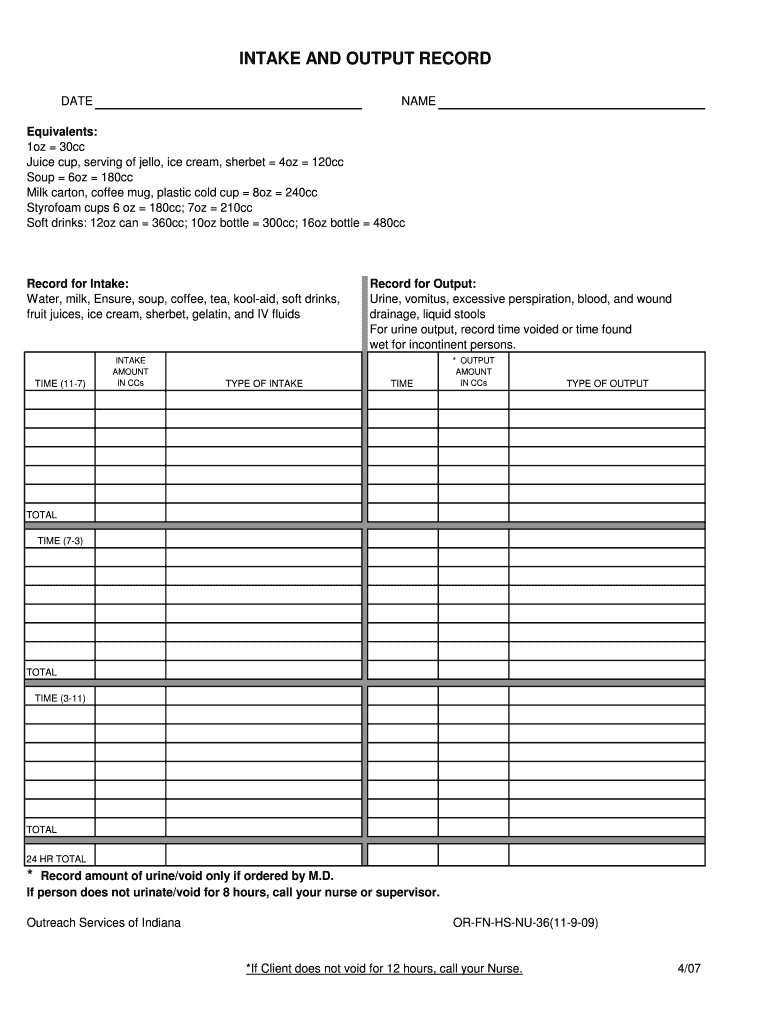
An Intake and Output Record is a comprehensive document used primarily in healthcare settings to document the fluid consumption and excretion of patients. It serves as a critical tool for medical professionals to track a patient's hydration status and ensure optimal fluid balance. This record is crucial for identifying trends in a patient's fluid intake and output over time, which can reveal potential health issues such as dehydration, fluid overload, or electrolyte imbalances. The form typically includes columns for logging the time, type, and amount of fluid intake or output, often measured in cubic centimeters (ccs).
Key Elements of the Intake and Output Record
The Intake and Output Record includes several key components to capture relevant patient data accurately. Important elements typically documented on the form are:
- Time Log: Each entry has specific time stamps indicating when the fluid intake or output occurred. This helps in monitoring trends and patterns over a daily cycle.
- Type of Fluid: Categories include different types of intake (e.g., oral fluids like water or milk, intravenous fluids) and output (e.g., urine, vomitus).
- Volume: The exact amount of fluid consumed or excreted is measured and recorded, commonly in ccs, ensuring precise monitoring of fluid balance.
- Observations: Additional notes that healthcare providers might add to indicate any anomalies or patient-reported issues related to fluid retention or loss.
How to Use the Intake and Output Record
Using the Intake and Output Record involves systematic documentation that requires attention to detail:
- Initial Setup: Before beginning, ensure personal protective equipment is worn as necessary and gather all tools required for accurate measurement (graduated cylinders, bedpan, etc.).
- Documenting Intake: Capture the time and type of fluid consumed or administered to the patient, whether orally or intravenously, and measure the volume accurately.
- Recording Output: Document each event of excretion, including time and type (urine, vomitus), using precise volume measurements.
- Review and Adjust: Regularly review the recorded data to make informed decisions on patient's fluid management, adjusting treatments as necessary based on findings.
Steps to Complete the Intake and Output Record
Completing the Intake and Output Record step-by-step can enhance reliability and accuracy:
- Gather Materials: Obtain the record form, a pen for documentation, and any measuring tools required for accurate volume assessment.
- Measure Fluids: Use appropriate containers for measuring both intake and output fluids. For oral intake, standard measuring cups may be used, while graduated containers are recommended for output.
- Log Details: Input the time, type, and volume for every recorded intake and output into the form meticulously.
- Continuous Monitoring: Update the form promptly with any new measurements learned through consistent monitoring practices throughout the patient’s stay.
Who Typically Uses the Intake and Output Record
Healthcare professionals, including nurses, doctors, and support staff, typically use the Intake and Output Record as a management tool:
- Nurses: Use the form to monitor and assess a patient's fluid balance over time, which is critical for planning care.
- Physicians: Review the records to develop treatment plans based on the patient's fluid balance needs or disturbances.
- Dietitians: May use the information to tailor nutrition and hydration plans, especially for patients with specific dietary restrictions or needs.


Important Terms Related to Intake and Output Record
A proper understanding of various terms associated with the Intake and Output Record is essential for its effective use:
- Cubic Centimeters (ccs): The standard unit of measurement for documenting fluid volume in the intake and output process.
- Intravenous Fluids (IV): Fluids directly administered into the veins, commonly accounted for in fluid intake measurements.
- Dehydration: A condition that the record helps prevent by monitoring insufficient liquid consumption or excessive fluid loss.
- Fluid Overload: An adverse condition associated with excess fluid in the body, identified through careful documentation and observation.
Legal Use of the Intake and Output Record
In the United States, maintaining detailed and accurate Intake and Output Records is not just a clinical requirement but also has legal implications:
- Compliance and Accountability: Healthcare facilities are legally accountable for maintaining meticulous records to demonstrate compliance with health standards.
- Patient Safety: Accurate records are part of legal requirements to ensure patient safety and avoid litigation related to medical negligence.
- Documentation Regulations: Adherence to regulations surrounding patient data documentation secures the integrity and credibility of healthcare providers.
Examples of Using the Intake and Output Record
Real-world scenarios demonstrate the practical application of the Intake and Output Record:
- Surgery Patients: Records are crucial for managing post-operative fluid therapy, monitoring recovery, and preventing complications like edema.
- Chronic Illness: For chronic conditions such as kidney disease, the records help in assessing renal function and planning dialysis schedules.
- Elderly Patients: Monitoring fluid intake and output is vital in geriatric care to prevent dehydration, a common issue among older adults.
State-Specific Rules for the Intake and Output Record
Understanding variations in state laws regarding the use of Intake and Output Records in clinical settings across the U.S. is important:
- State Regulations: Each state may have different regulations mandating how long and in what manner healthcare facilities must keep these records.
- Licensing Requirements: Facilities might need to comply with specific licensing and operational guidelines varying by state to ensure standardized care.
This structure provides a detailed and organized examination of the Intake and Output Record, ensuring thorough coverage and utility for healthcare professionals.




