






Definition & Meaning
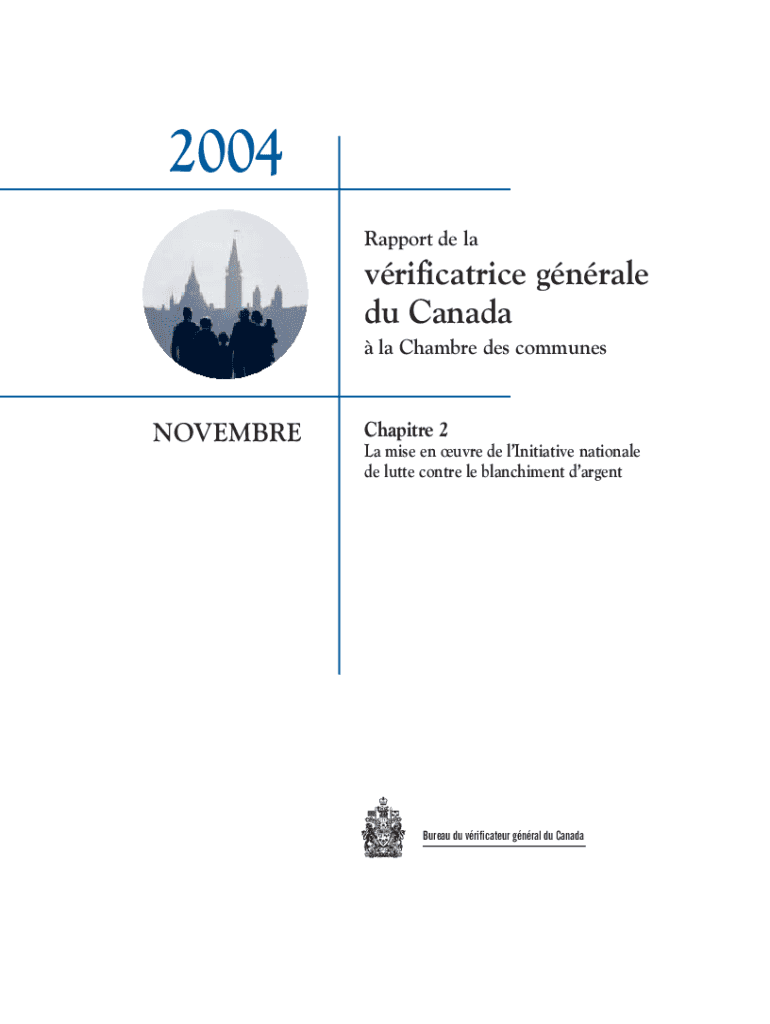
"2004 - Rapport de la vérificatrice générale du Canada - Novembre Chapitre 2La mise en œuvre de l'Initiat" refers to a specific report by the Auditor General of Canada released in November 2004. This document examines the implementation of the National Initiative Against Money Laundering, initiated in 2000. The report assesses the effectiveness, highlights the compliance with international standards, and points out existing gaps in the system.
Key Themes
- Compliance Assessment: Evaluates how well Canada's system aligns with international anti-money laundering standards.
- Identified Gaps: Focuses on restrictions on shared information, lack of collaboration, and exclusion of lawyers from reporting obligations.
- Recommendations: Suggests improvements in feedback mechanisms and accountability measures for effectiveness evaluation.
How to Obtain the 2004 Report
Acquiring a copy of the 2004 report is vital for those involved in financial regulation or compliance.
Accessing the Report
- Online Access: The full report is downloadable from the Office of the Auditor General of Canada's official website.
- Library Archives: Public and university libraries with comprehensive Canadian government document collections may have physical copies.
- Request from the Auditor General’s Office: Direct requests can be made for electronic or print versions.
- Third-party Document Services: Platforms like DocHub might also provide access if they comprehensively archive governmental documents.
Tips for Access
- Consider Subscription Services: Access reports through professional or academic databases that require subscriptions.
- Contact Professional Networks: Reach out to colleagues in the industry who might already possess a copy.
Key Elements of the 2004 Report
Understanding the core components of this report is essential for implementing its recommendations.
Main Components
- Introduction and Context: Provides background on the National Initiative Against Money Laundering and its objectives.
- Evaluation Criteria: Details the standards and benchmarks used to assess the initiative's effectiveness.
- Findings and Observations: Empirically backed evaluations of the initiative's achievements and shortcomings.
- Recommendations: Offers actionable steps for bridging existing gaps.
Importance of These Elements
- Contextual Overview: Essential for understanding the initiative's framework and rationale.
- Actionable Insights: Recommendations guide policymakers and institutions in enhancing compliance and effectiveness.
Steps to Complete the Report's Recommendations
Implementing the suggestions outlined in the report is key to improving the initiative.
Implementation Strategy
- Review Findings: Thoroughly analyze the report’s findings to understand specific gaps.
- Prioritize Actions: Rank recommendations based on their impact and feasibility.
- Allocate Resources: Designate financial and human resources to address critical areas identified.
- Collaborate with Stakeholders: Engage relevant entities including financial institutions and legal professionals.
- Monitor Progress: Establish metrics to regularly evaluate progress in closing identified gaps.
Common Challenges
- Resistance to Change: Institutions may face inertia in altering established processes.
- Resource Constraints: Implementing recommendations may require more funds or personnel than currently available.
Who Typically Uses the 2004 Report
The report serves a varied audience concerned with financial regulation and compliance.


Key Users
- Governmental Agencies: Primarily used by those in finance, justice, and homeland security for policy formulation.
- Financial Institutions: Banks and other finance-related entities use the report to align practices with recommended standards.
- Legal Professionals: Lawyers and consultants rely on the report to advise clients on compliance.
- Academics and Researchers: Used for scholarly analysis in the fields of law, economics, and public policy.
Important Terms Related to the Report
Grasping the terminology used within the report enhances comprehension and effective application.
Glossary of Terms
- AML (Anti-Money Laundering): Refers to regulations designed to prevent illegal money flow.
- CANAFE: Canada’s financial intelligence unit responsible for monitoring anti-money laundering efforts.
- Reddition de Comptes: Mechanisms for ensuring accountability in the implementation of the initiative.
Application of Terms
- In Policy Discussions: Clear understanding of these terms is crucial for informed decision-making.
- In Legal Contexts: Precise usage helps in drafting compliant practices.
Legal Use of the 2004 Report
The legal implications of the report emphasize compliance and regulatory standards.
Legal Relevance
- Guiding Legislation: Provides a benchmark for laws concerning anti-money laundering measures.
- Compliance Audits: Utilized by auditors to evaluate institutional compliance with recommendations.
- Judicial Review: Informs courts during proceedings related to financial misconduct or regulatory breaches.
Legislative Impact
- Policy Development: Legislators reference the report when crafting new regulations or amending existing ones.
- Legal Precedents: Courts may use the report to inform judgments or enforce regulatory standards.