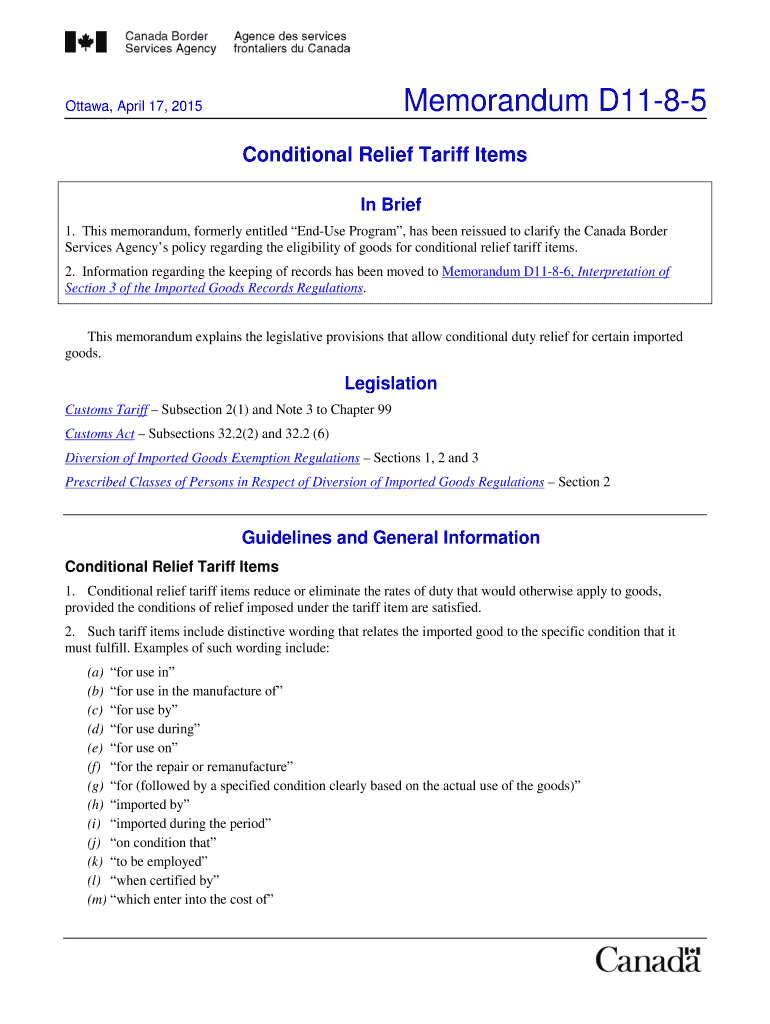







Definition & Meaning
The Memorandum D11-8-6 serves as an interpretative guide focused on section 3 of the imported goods regulations. This document delineates how section 3 of the customs legislation is to be understood and applied, offering clarity around the obligations and rights of parties involved in the importation process. It provides a legal reference for importers, ensuring they meet their compliance requirements and understand the nuances involved in international trade.
How to Use the Memorandum D11-8-6 - Interpretation of Section 3 of the Imported
Understanding how to properly apply the interpretations provided in Memorandum D11-8-6 is essential for importers. The document acts as a reference for determining if goods meet the necessary importing standards and regulations. Users are advised to closely align their import practices with the guidelines set forth in the memorandum to avoid any legal discrepancies. The memorandum can be used as a checklist to ensure all aspects of section 3 are adequately addressed before proceeding with customs clearance.
Step-by-Step Usage
- Read Thoroughly: Familiarize yourself with the entire memorandum to understand the scope and implications.
- Identify Relevant Sections: Focus on sections that directly pertain to your import activities.
- Cross-Reference: Compare your existing procedures against the requirements outlined in the memorandum.
- Document Compliance: Ensure all necessary documentation meets the criteria specified within the memorandum.
Key Elements of the Memorandum D11-8-6 - Interpretation of Section 3 of the Imported
The main components of the memorandum include:
- Definitions: Terms crucial to understanding the regulations fully are clarified to prevent misinterpretation.
- Scope: Describes the extent and limits of section 3 in a practical context.
- Procedures: Offers guidance on the actions required to remain compliant with import regulations.
- Exceptions and Special Cases: Details the conditions under which standard processes may vary.
Who Typically Uses the Memorandum D11-8-6 - Interpretation of Section 3 of the Imported
This memorandum is primarily used by importers, customs brokers, and legal experts dealing in international trade law. Government officials involved in customs enforcement and compliance are also key users. Businesses engaged in regular import activities rely on this document for adhering to legal requirements to avoid penalties and ensure smooth transactions.


Business Types Benefiting Most
- Retailers: Particularly those importing large volumes of goods.
- Manufacturers: Importing raw materials or components.
- Distributors: Handling international distribution channels.
Penalties for Non-Compliance
Failure to comply with the guidelines set out in the Memorandum D11-8-6 can result in significant penalties. These may include fines, suspension of import privileges, or legal action. It is crucial for importers to adhere strictly to the provisions to avoid such repercussions. Infractions could also damage business reputations, leading to loss of trust among partners and clients.
How to Obtain the Memorandum D11-8-6 - Interpretation of Section 3 of the Imported
The memorandum can be accessed through the official customs agency's website or by contacting the relevant authorities who manage import regulations. It is typically available in both digital and paper formats to accommodate different preferences.
Software Compatibility
For those using digital tools like TurboTax or QuickBooks, it is vital to ensure that your software is updated to integrate current import regulations, including those outlined in the memorandum. This compatibility aids in maintaining precise records and verifying compliance before submission of any necessary customs declarations.
Examples of Using the Memorandum D11-8-6 - Interpretation of Section 3 of the Imported
In practice, an importer can refer to the memorandum during audits or when facing inquiries from customs officials regarding the classification of imported products. By using the interpretations provided, importers can navigate disputes or misunderstandings that may arise, using the guidelines as a foundation to justify their practices and decisions.
Steps to Complete the Memorandum D11-8-6 - Interpretation of Section 3 of the Imported
While the memorandum itself is not a form to complete, it provides steps and guidelines for ensuring compliance with section 3 requirements. Importers should follow outlined procedures to meet all necessary criteria and maintain appropriate records. This involves regularly reviewing and adapting business practices as advised.
- Review Policies: Consistently update company policies to align with any changes or updates in the memorandum.
- Provide Training: Regularly instruct staff on the importance of compliance with section 3 to prevent avoidable errors.
Eligibility Criteria
Not all businesses will need to apply the full breadth of the memorandum's guidance, as criteria may vary based on the nature and scope of imports. Businesses must review the document to determine applicable elements based on product type and volume of import activities.