






Definition & Meaning
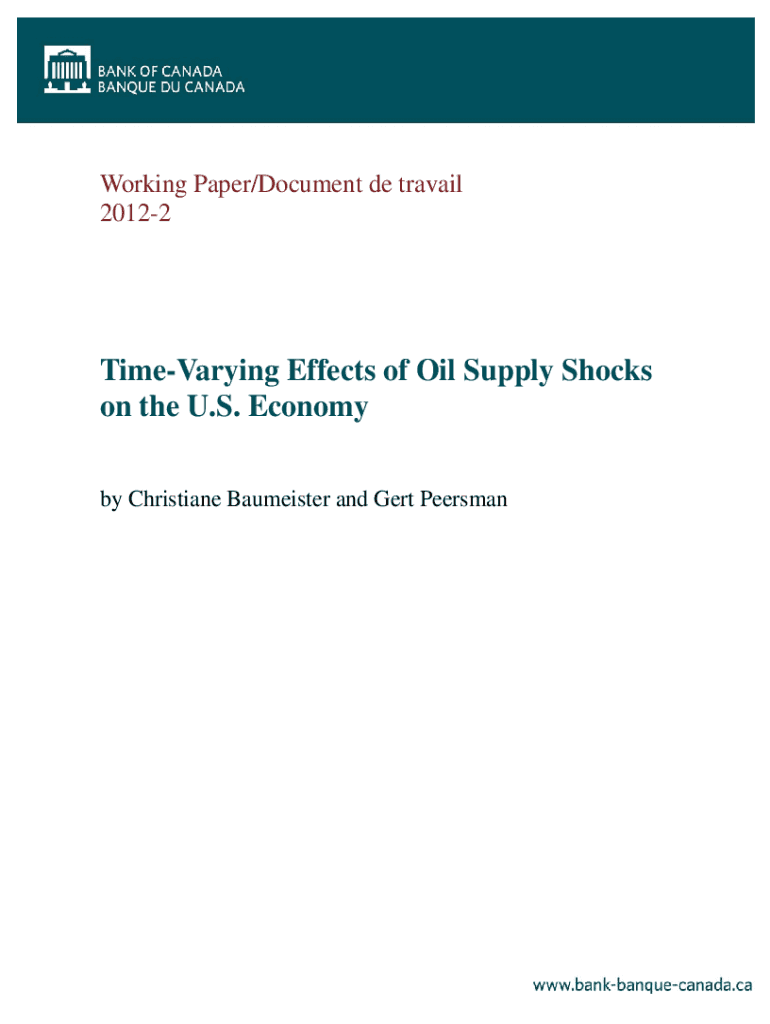
The "Time-Varying Effects of Oil Supply Shocks on - IDEAS RePEc" refers to a research paper analyzing how oil supply shocks influence the U.S. economy over time. It focuses on the fluctuating impacts of these shocks from 1974 onwards, particularly examining the role of oil in economic fluctuations. This work is significant in understanding how changes in oil supply affect the broader economic environment, encompassing factors such as inflation and recessions.
Key Concepts
- Oil Supply Shocks: Sudden changes in the availability of oil, which can significantly impact prices and economic conditions.
- Vector Autoregression Model: A statistical model used to capture the relationship between multiple time series data points, helping to forecast the effects of shocks.
- Short-run Price Elasticity: A measure of how sensitive the demand for oil is to price changes over a short period.
How to Use the Analysis
Understanding the research findings involves examining the data used and the conclusions drawn regarding economic impacts. Readers should focus on the statistical models employed and the resulting insights into historical and potential future economic conditions.
Analytical Framework
- Understanding Economic Impact: Focus on how changes in oil supply have historically influenced economic metrics like GDP and inflation.
- Forecasting Future Implications: Use model predictions to hypothesize about future economic conditions based on current oil market trends.
Steps to Analyze the Research
- Familiarize with Economic Models: Understand the vector autoregression model and its application in economic research.
- Review Historical Data: Analyze the trends from 1974 onwards to comprehend how oil supply shocks relate to economic outcomes.
- Interpret Findings: Focus on the key conclusions concerning the elasticity of oil demand and its impact on the economy.
Who Typically Uses This Analysis
The insights from this research are particularly beneficial for economists, policymakers, and financial analysts who need to comprehend the macroeconomic implications of oil supply dynamics.
Beneficiary Groups
- Economists: Use the data for theoretical and practical economic modeling.
- Policy Makers: Inform decisions related to energy policy and economic stabilization.
- Financial Analysts: Utilize findings for market predictions and investment strategies.
Key Elements of the Research
The research consists of several critical components that help in evaluating the economic consequences of oil supply changes.
Core Components
- Economic Indicators: GDP, inflation, and price elasticity effects derived from the data.
- Historical Context: Evaluating past instances of oil shocks for a better understanding of current implications.
- Model Reliability: Addressing the accuracy of the vector autoregression model used in drawing conclusions.
Legal Use and Compliance
While primary targeted for economic research, understanding the legal implications involves ensuring the analysis complies with intellectual property rights and the ethical use of data.
Data Usage Guidelines
- Intellectual Property: Ensure the research is cited appropriately in any subsequent analysis.
- Ethical Considerations: Maintain transparency in how the data is interpreted and presented.
Examples of Using the Analysis
The analysis is effectively used in real-world scenarios to inform economic strategy and policy-making.
Practical Applications
- Economic Forecasting: Predict potential downturns or booms based on current oil market trends.
- Energy Policy Development: Create informed policies aimed at mitigating the impact of supply fluctuations.
- Investment Decisions: Shape financial strategies based on economic predictions related to oil supply.
Digital vs. Paper Version
For academic and research purposes, digital versions of this research paper are generally preferred due to ease of access and wider distribution possibilities.
Advantages of the Digital Format
- Accessibility: Easily accessible for reference and analysis by a large audience.
- Updation: Facilitates quick updates and revisions of data as new information becomes available.
- Collaboration: Supports collaborative efforts through shared online resources and databases.
Software Compatibility
While primarily research-focused, tools such as statistical and economic modeling software may be employed for further analysis and data interpretation.
Compatible Tools
- Statistical Analysis Software: Platforms like R or Stata for deeper data examination.
- Economic Modeling Applications: Tools that allow for simulation of future economic conditions based on current data trends.
By examining these topics thoroughly, users can gain a comprehensive understanding of how oil supply shocks have historically affected the economy and what this might mean for the future.