
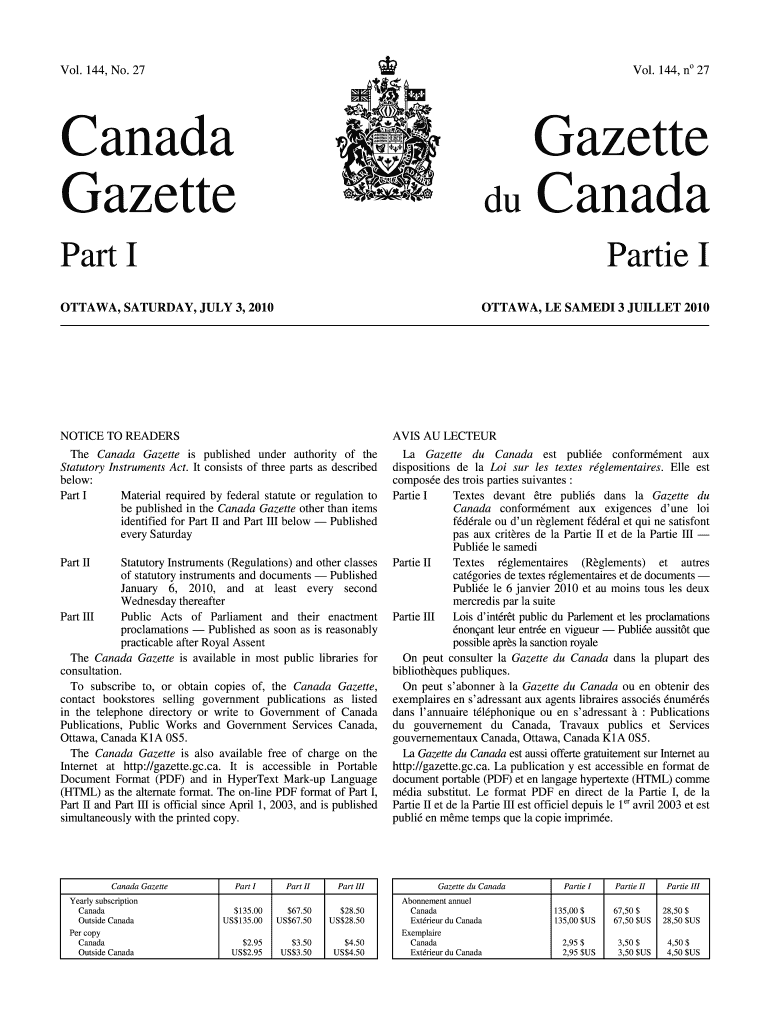







Definition & Purpose of Canada Gazette, Part I - Environnement Canada
The Canada Gazette, Part I - Environnement Canada serves as an official publication medium for the Canadian government, particularly focusing on environmental regulations, notices, and decisions. It acts as an essential resource for those interested in environmental policies and legislative updates. The Gazette informs the public, including businesses, organizations, and individuals, about proposed regulations and orders that have implications for the environment. By providing detailed insights into these legislative measures, it plays a crucial role in ensuring transparency and public participation in governmental processes related to environmental management and protection.
How to Use the Canada Gazette, Part I - Environnement Canada
Using the Canada Gazette, Part I involves navigating through complex entries to find relevant information on environmental laws and regulations. Here’s a step-by-step approach:
- Access the Gazette: Visit the official Canada Gazette website. The Gazette is published every Saturday, and the latest and archived issues are available online.
- Locate Relevant Sections: Utilize the table of contents to find sections related to Environnement Canada. You can also use search functions available on the website to locate specific topics or regulatory details.
- Analyze Entries: Read through the entries carefully. Each entry typically includes the background, intentions of the proposed regulation, and its implications.
- Provide Feedback: If a public consultation is open, stakeholders have the opportunity to submit feedback. Instructions for submitting comments are usually provided within the entry.
Steps to Complete Documentation for the Canada Gazette
Completing documentation related to submissions to the Canada Gazette involves precise steps to ensure submissions are accepted and considered:
- Understand Submission Requirements: Review the relevant call for submissions or comments section of the Gazette to understand what documents need to be prepared.
- Prepare Required Documents: Assemble necessary documentation that supports your submission or comment, such as technical evaluations, environmental impact assessments, or expert opinions.
- Format Your Submission: Follow specific formatting guidelines often outlined in the Gazette, which may include document length, file format, and submission deadlines.
- Submit by Deadlines: Ensure all submissions are made before the specified deadlines. The Canada Gazette usually allows submissions via email, online portals, or by mail.
- Confirmation: Upon submission, seek a confirmation receipt to ensure it was successfully received.
Key Elements of the Canada Gazette, Part I - Environnement Canada
The Canada Gazette, Part I comprises various structured elements vital for its function:
- Regulatory Proposals: Detailed descriptions of new environmental policies and rules.
- Notices and Orders: Official notifications regarding environmental regulations and decisions.
- Public Consultation Invitations: Sections calling for public and stakeholder input on regulatory proposals.
- Background Information: Contextual data explaining the rationale and necessity for specific proposals or orders, often accompanied by legal justifications and projected impacts.
Who Typically Uses the Canada Gazette, Part I - Environnement Canada
The Canada Gazette is utilized by a diverse range of stakeholders:
- Environmental Law Professionals: Lawyers and legal advisors working in environmental law track updates and regulatory changes.
- Government Officials: Officials within government agencies use the Gazette to announce and review policy changes.
- NGOs and Advocacy Groups: These groups monitor the Gazette to stay informed on new environmental regulations impacting their areas of interest.
- Businesses and Corporations: Companies affected by environmental regulations, such as those in manufacturing or resource extraction sectors, review the Gazette for compliance requirements.


Legal Use of the Canada Gazette, Part I - Environnement Canada
The legal significance of the Canada Gazette, Part I is substantial, as it acts as the official record for environmental regulations and legislative updates. Legal professionals and stakeholders reference the Gazette to ensure compliance with Canadian environmental laws. It provides the official dates for the enactment or amendment of regulations, which are critical for determining contractual and compliance obligations.
Required Documents for Submissions
When contributing to a public consultation or submitting documentation for proposals in the Canada Gazette, certain documents are typically required:
- Official Cover Letter: An introductory letter that outlines the purpose and intent of your submission.
- Supporting Documentation: This can include detailed reports, studies, or evidence supporting your position or feedback.
- Identification Details: Required for verification, including personal or organizational identification and contact information.
Digital vs. Paper Version: Accessibility and Preference
Although the Canada Gazette is available in both digital and paper formats, the digital version offers significant advantages:
- Instant Accessibility: Online access ensures individuals and organizations can quickly reach the latest updates.
- Search Functionality: The digital format allows users to perform keyword searches, vastly improving the ease of finding relevant entries.
- Sustainability: Digital publications align with environmental sustainability goals by reducing paper usage.
By adhering to these structured blocks, readers can gain comprehensive knowledge about the Canada Gazette, Part I - Environnement Canada, its uses, and its significance in navigating and understanding Canada's environmental regulatory landscape.




