






Definition & Meaning
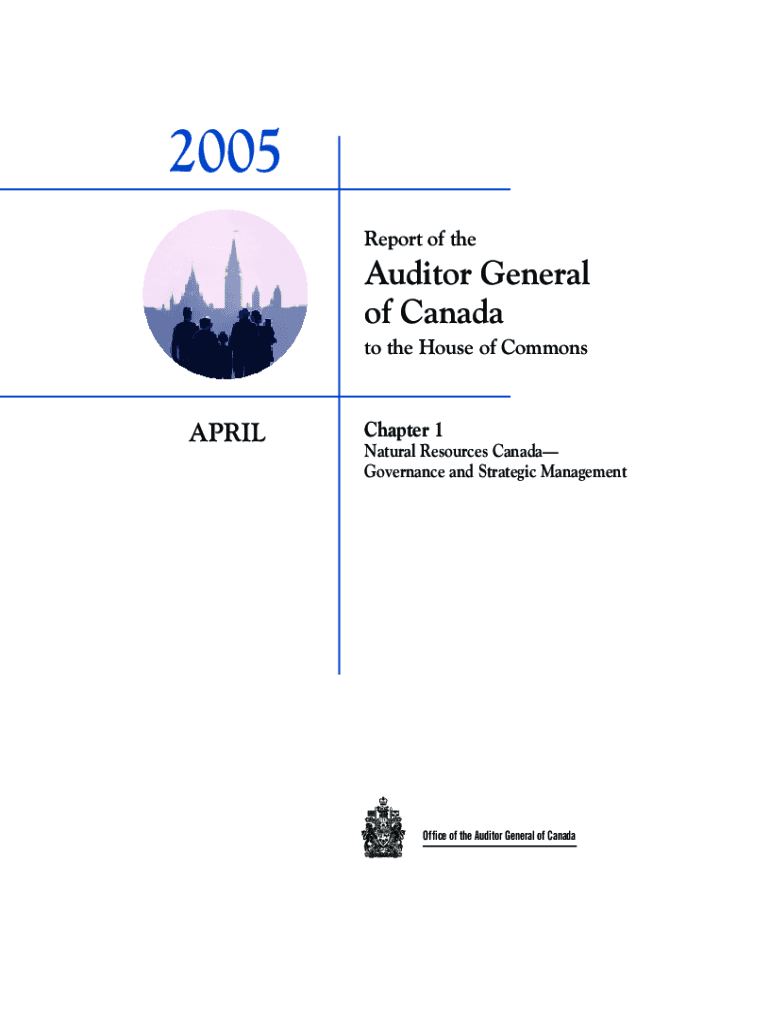
The "ARCHIVED - Office of the Auditor General of Canada 4 4" likely refers to a specific document or report produced by the Office of the Auditor General of Canada. Such reports are typically comprehensive assessments that evaluate the effectiveness and efficiency of government departments and agencies. They provide detailed analysis on various aspects such as resource management, strategic implementation, and compliance with governmental policies. In this context, an "ARCHIVED" status implies that the document is no longer current but serves as a valuable historical record.
How to Use the Document
Utilizing the "ARCHIVED - Office of the Auditor General of Canada 4 4" requires understanding its structure and objectives. Begin by identifying the main findings and recommendations outlined in the document. Analyze these within the context of the time it was written to understand historical perspectives on government functions. The insights derived can be compared with current practices to gauge improvements or persistent challenges. It is a critical resource for researchers, policy-makers, and auditors seeking to comprehend past governance issues and strategies.
How to Obtain the Document
To access the "ARCHIVED - Office of the Auditor General of Canada 4 4," visit the official website of the Office of the Auditor General of Canada. Their archive section provides downloadable copies of past reports. Physical copies might be available at national or university libraries that maintain extensive government document collections. If the specific document is challenging to find, consider contacting the Office directly for assistance in locating or providing access to archived material.
Steps to Complete Analysis
Analyzing the "ARCHIVED - Office of the Auditor General of Canada 4 4" involves several steps:
- Identification: Locate the specific archived document from the available repositories.
- Review: Carefully read the document, focusing on the executive summary, methodology, findings, and recommendations.
- Contextual Analysis: Compare the findings with contemporaneous reports or data to understand the broader context.
- Evaluation: Assess the outcomes or changes implemented as a result of the document's recommendations.
- Documentation: Compile the insights and comparative analysis for future reference or further study.
Why It Matters
The "ARCHIVED - Office of the Auditor General of Canada 4 4" serves as a crucial reference point for understanding governance and operations during its publication period. It highlights key challenges and offers strategic recommendations that may still hold significance. Researchers and analysts use it to track the evolution of government accountability issues and benchmark current performance against historical data. It is also valuable for training new auditors on evaluating government operations.
Who Typically Uses This Document
The document is primarily used by:
- Auditors and Analysts: For insights into government audits and comparisons with current evaluations.
- Policy Makers: To understand past governmental challenges and the effectiveness of implemented policies.
- Academic Researchers: Seeking data for historical analysis of Canadian governmental operations.
- Students: Studying public administration or policy for examples of real-world auditing processes.
Important Terms Related to the Document
Familiarizing oneself with specific terms mentioned in the document enhances comprehension:
- Governance: Refers to the framework of rules, relationships, systems, and processes through which authority is exercised and controlled in organizations.
- Resource Management: The efficient and effective deployment of an organization's resources when they are needed.
- Compliance: The act of adhering to or conforming with laws, regulations, and standards.
- Metrics: Standard measurements used in assessing the efficiency, performance, progress, or quality of a plan or process.
Legal Use of This Document
Though archived, the "ARCHIVED - Office of the Auditor General of Canada 4 4" can still influence legal and policy considerations. Its historical analysis and findings may be used as a reference in legal cases involving questions of compliance and government accountability. Learning from past audits helps ensure transparency and litigation preparedness in current government operations.
Key Elements of the Document
The critical components of the document typically include:
- Executive Summary: An overview of the audit’s purpose, scope, and key findings.
- Detailed Findings: In-depth analysis of the areas of focus, providing insights and evidence-based conclusions.
- Recommendations: Suggested actions or changes to address identified issues.
- Methodology: The audit processes and analytical techniques used to gather and assess information.