






Definition and Meaning
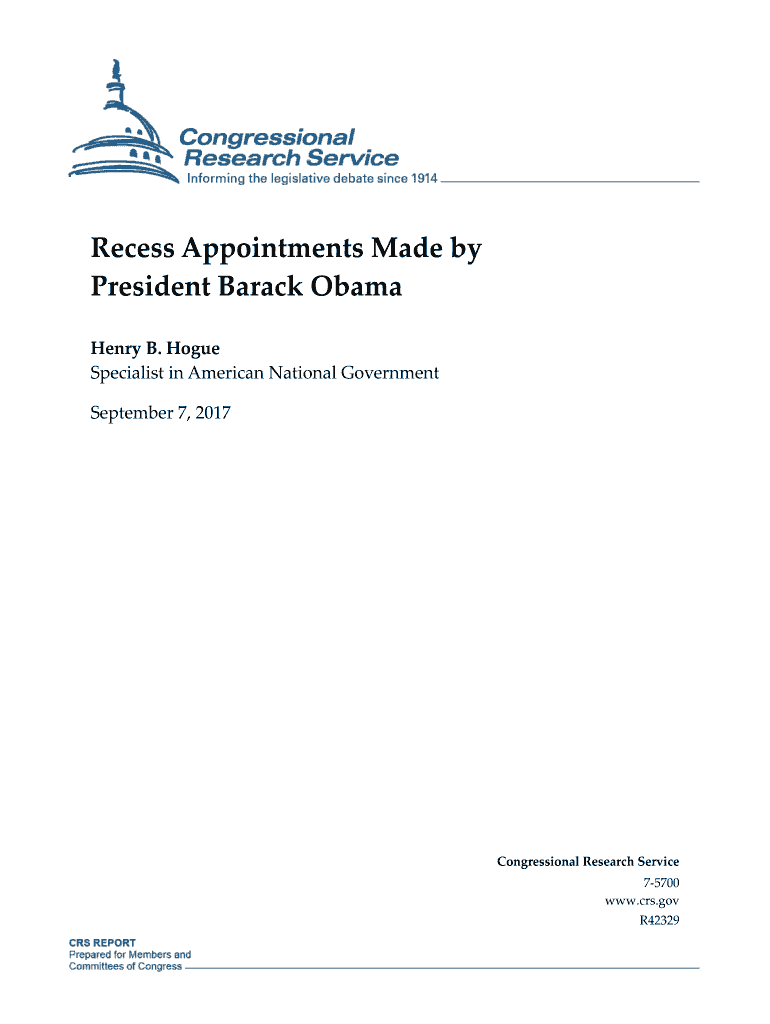
Recess appointments refer to a constitutional mechanism whereby the President of the United States can fill official positions without the Senate's confirmation during times when the Senate is not in session. These appointments originate from Article II, Section 2, Clause 3 of the U.S. Constitution, which empowers the President to make temporary appointments that would otherwise require Senate approval. The use of this authority addresses staffing gaps that might occur during Senate recesses, ensuring that essential governmental functions are not interrupted due to unfilled positions.
How to Obtain Recess Appointments
For a recess appointment to be obtained, two primary conditions must be met. First, the Senate must be in recess. A recess, for these purposes, has traditionally been understood as a period when the Senate is not holding sessions long enough to be considered official, although there has been legal debate over precise duration criteria. Second, the position in question must be one that typically requires Senate confirmation. Once these conditions are met, the President can exercise the power to fill the position temporarily. This process is initiated by the President’s selection of a candidate, who can immediately assume office upon the appointment.
Steps to Complete the Recess Appointments Process
- Identify the Vacancy: Determine the official position that requires filling due to an absence or impending vacancy.
- Evaluate Recess Opportunity: Confirm that the Senate is in session recess and ensure that the recess duration is adequate for making a legal appointment, based on existing legal precedents.
- Select a Candidate: Assess and choose a suitable individual for the position. This involves evaluating qualifications and compatibility with the role's responsibilities.
- Formalize the Appointment: Once a candidate is selected, the President issues a formal appointment, which allows the candidate to assume the role immediately.
- Notify the Senate: Upon reconvening, the Senate must be informed of these appointments. This step facilitates subsequent confirmation proceedings if the appointee is to remain in the position beyond the temporary period.
Legal Use of Recess Appointments
The legal framework supporting recess appointments ensures that government operations remain functional during Senate adjournments. However, the use of this mechanism has been scrutinized over historical contexts where Presidents have appointed individuals during breaks considered too short by some legislators. The Supreme Court verified roles in these matters, ruling on the constitutionality of appointments made during short Senate breaks, particularly pro forma sessions. Legal controversies generally arise when appointments are perceived as circumventing standard legislative procedures, emphasizing the necessity of practicing such authority judiciously.
Important Terms Related to Recess Appointments
- Pro Forma Session: A brief meeting of the Senate, often used to prevent recess appointments by technically keeping the Senate in session.
- Senate Confirmation: The process by which the Senate reviews, holds hearings for, and ultimately votes to approve or reject presidential nominees for various governmental positions.
- Recess Duration: The period of time that must elapse for a Senate recess to legally allow recess appointments, often debated in judicial and legislative arenas.
Examples of Using Recess Appointments
Historically, various Presidents have utilized recess appointments to navigate moments of political impasse or urgency. For instance, President Barack Obama appointed Richard Cordray as director of the Consumer Financial Protection Bureau during a Senate recess. The legality of this appointment faced challenges as it occurred during a pro forma session, sparking significant legal discourse and ultimately leading to a Supreme Court ruling that clarified the scope of recess appointments.
Key Elements of Recess Appointments
Recess appointments encompass several core elements that guide their function and scope:
- Temporary Tenure: Appointees serve temporarily until the end of the next Senate session unless confirmed.
- Senate Notification: The President must notify the Senate of the appointment upon its reconvening to allow due process.
- Position Eligibility: Only positions necessitating Senate confirmation qualify for recess appointments.
State-Specific Rules for Recess Appointments
While recess appointments are federally governed, their implications can differ across states based on factors like local governmental needs and administrative structures. Individual states may also recognize similar recess-based procedures within their own legislative parameters, adjusting to specific governance requirements and timing constraints. Presidents or state governors wield similar powers to address regional leadership voids during local legislative recesses, guided by their constitutions or charters.