






Definition & Meaning
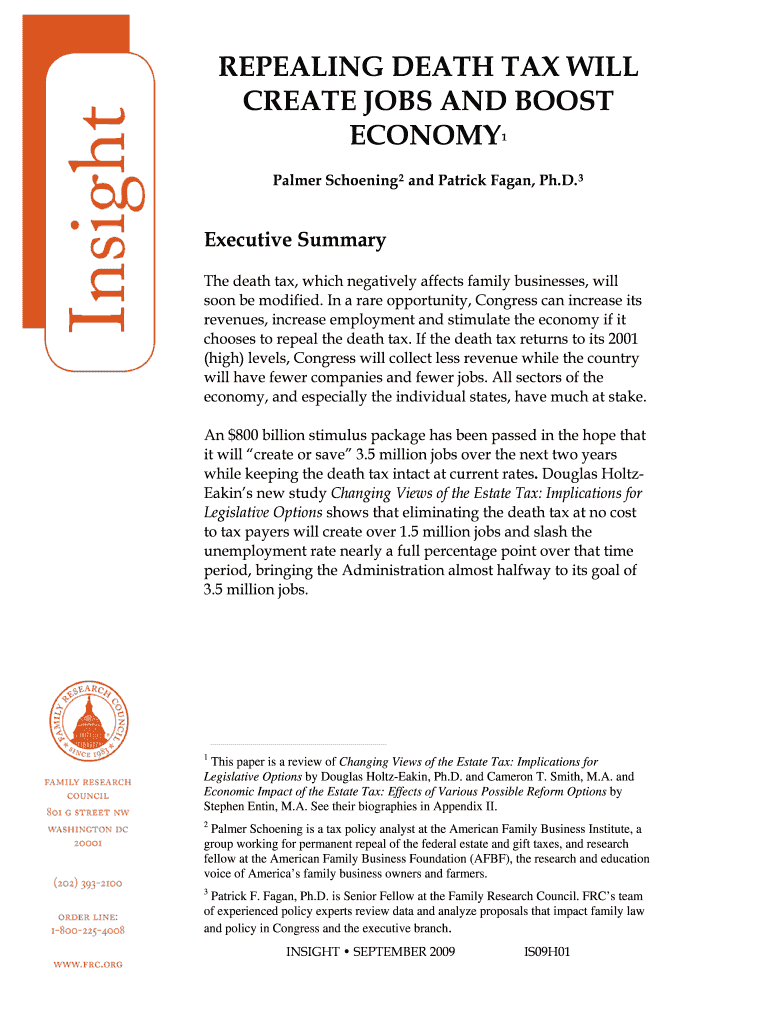
The term "death tax" commonly refers to the federal estate tax in the United States. This tax is levied on the transfer of the estate of a deceased person and is applicable to assets exceeding a certain threshold. The concept of repealing this tax involves eliminating the requirement to pay taxes on an estate after the owner's death. Proponents argue that its repeal would protect family-owned businesses from liquidation due to the inability to pay large tax bills, thereby fostering economic stability and growth.
Why Repeal the Death Tax
Repealing the death tax is advocated for its potential to generate significant economic benefits. Critics of the tax argue that it discourages investments, hampers job creation, and reduces savings. By eliminating this tax, it is argued that there would be an increase in capital accumulation and business continuity, particularly for small and family-owned businesses. This, in turn, could lead to an increase in job opportunities as these enterprises grow and expand without the burden of estate tax liabilities.
Key Elements of the Repealing Death Tax Proposal
Repealing the death tax involves several key components designed to achieve favorable economic outcomes. These include:
- Preservation of Family Businesses: Allows family-owned entities to remain intact without the pressure of selling assets to cover tax obligations.
- Stimulation of Economic Growth: Encourages business investments and expansion by freeing capital that would have been allocated for tax payments.
- Increase in Job Creation: As businesses grow, the demand for labor increases, leading to the creation of jobs and reducing unemployment rates.
- Rise in Government Revenue: Enhanced business activity and economic growth could lead to increased overall tax revenue through other tax channels.
Who Typically Supports Repealing the Death Tax
Support for this repeal typically comes from business owners, particularly small family-owned businesses, agricultural stakeholders, and proponents of free-market economics. These groups argue that the death tax disproportionately affects small businesses and farms, making it difficult for heirs to maintain operations without liquidating assets. Additionally, some legislators and policymakers advocate for the repeal as a means to boost economic growth and streamline tax regulations.
State-Specific Rules for the Death Tax
While the federal estate tax is a nationwide regulation, individual states may also impose their own estate or inheritance taxes with distinct rules and thresholds. For example, several states have different exemption amounts that determine the applicability of the tax, while some have no estate tax at all. It's important for individuals to consider both federal and state regulations when planning their estates to ensure compliance and optimize tax liabilities.
Financial and Legal Impact of Repealing the Death Tax
The legal implications of repealing the death tax are substantial, as they influence tax planning strategies, estate planning processes, and inheritance laws. Financially, the removal of this tax could lead to:
- Immediate Relief: Beneficiaries would no longer need to sell business assets to meet tax obligations, preserving family businesses.
- Long-Term Investments: Families may be more inclined to invest in business expansion, contributing to sustained economic growth over time.
- Simplification of Estate Planning: Repealing the tax would simplify estate planning, reducing the complexity of compliance with tax laws.
Steps to Complete an Estate Plan in Light of Death Tax Repeals
- Assess Current Estate Value: Evaluate whether federal or state estate taxes currently apply to understand potential future liabilities.
- Consult Estate Planning Professionals: Engage with financial planners and legal professionals to adapt estate plans to potential changes in tax laws.
- Update Estate Documents: Ensure wills, trusts, and beneficiary designations reflect the latest estate structure and wishes.
- Utilize Tax-Advantaged Instruments: Make use of tools like trusts that can minimize tax exposure under current and potential future laws.
- Prepare for Changing Legislation: Stay informed about legislative developments related to estate taxes and consider flexible planning strategies.
Examples and Case Studies
Several real-world scenarios illustrate the impact of the death tax and potential benefits of its repeal:
- Family-Owned Farms: Many agricultural operations struggle with passing farms to the next generation without selling land to cover estate taxes, impacting agricultural sustainability.
- Small Businesses: A small manufacturing business faced selling capital equipment to pay estate tax, leading to reduced production capabilities and layoffs.
- Historical Precedents: Examination of past legislative changes and their effects on economic growth provides insights into the potential outcomes of repealing the death tax.
Software Compatibility and Document Management
Business owners and individuals preparing estate plans should consider digital tools that facilitate document creation and management. Platforms like DocHub offer compatibility with various file formats, such as PDFs and word documents, ensuring seamless integration and simplification of estate planning documentation. With features like legally binding electronic signatures and collaboration tools, technology can streamline estate planning amidst tax legislation changes.
Legal Use and Compliance
Adhering to legal standards is crucial when dealing with estate plans and potential tax law changes. The repeal of the death tax would require individuals to:
- Stay Informed About New Legislation: Regularly check for updates on tax laws and understand their implications.
- Document Compliance Processes: Keep comprehensive records of estate plans to ensure compliance and facilitate any requisite legal review.
- Engage Legal Advisors: Consult legal experts to navigate complex tax legislations and develop compliant estate strategies.
These components provide a comprehensive view of the death tax's implications, the arguments for its repeal, and the necessary considerations for those impacted.