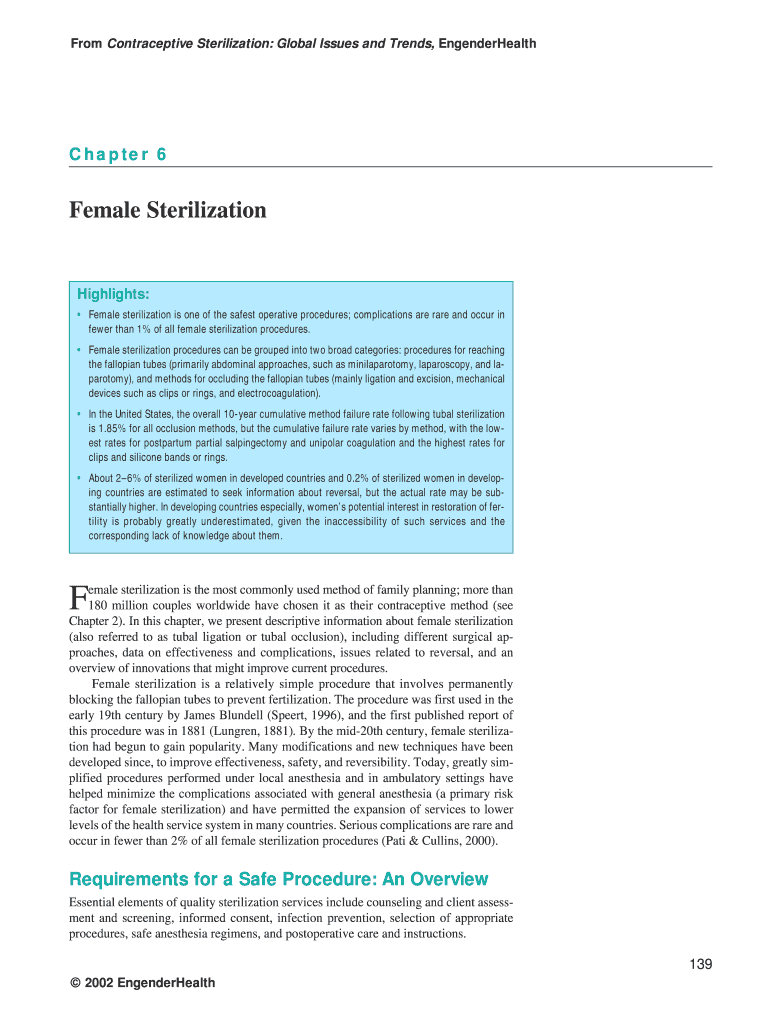







Definition and Meaning of Female Sterilization
Female sterilization is a permanent form of contraception that involves a surgical procedure to block or seal the fallopian tubes, preventing eggs from reaching the uterus for fertilization. It is one of the most reliable methods of birth control due to its high effectiveness rate. The primary aim of this procedure is to provide women with a long-term solution for pregnancy prevention. Although considered irreversible, some methods can be attempted to reverse the procedure, but success rates vary.
Techniques Involved
- Tubal Ligation: Often referred to as having one's "tubes tied," this method uses clips, rings, or other devices to close the fallopian tubes.
- Tubal Occlusion: Involves the insertion of devices or substances into the tubes to create a permanent block.
- Bipolar Coagulation: This method uses electric current to cauterize sections of the fallopian tubes.
Considerations
- Once the procedure is performed, it is important to understand that it is generally considered permanent and not to be entered into lightly.
- Informed consent is crucial, involving a comprehensive discussion with healthcare providers about the risks, benefits, and potential for regret.
Risks and Complications of Female Sterilization
Although female sterilization is deemed one of the safest operative procedures, complications can occur and are typically rare. Being informed about these potential risks is essential for individuals considering this form of contraception.
Possible Complications
- Post-Operative Pain: Some discomfort post-surgery is common, but usually manageable with pain relief.
- Infection: Like any surgical procedure, there is a minimal risk of infection at the incision site.
- Anesthesia Risks: General risks associated with anesthesia include allergic reactions or respiratory issues.
Long-Term Effects
- Regret and Psychological Impact: Some women experience regret post-sterilization, particularly if they undergo significant life changes.
- Ectopic Pregnancy: Although rare, if pregnancy does occur, it is more likely to be ectopic, where the embryo implants outside the uterus.
Procedure and Methodology
Understanding the steps involved in female sterilization can aid prospective candidates in making an informed decision.
Procedure Steps
- Pre-Surgery Counseling: Discussion with a healthcare provider to discuss intentions, alternative options, and potential outcomes.
- Pre-Operative Preparation: Medical examination and tests to ensure fitness for surgery.
- Surgical Procedure: Typically performed under anesthesia, involving a minor incision.
- Recovery: Post-surgical recovery usually involves mild pain management and a short recovery period.
Types of Surgical Procedures
- Laparoscopic Sterilization: Involves small incisions and is often performed as day surgery.
- Mini-Laparotomy: Often chosen immediately following childbirth.
Eligibility and Suitability
Determining eligibility for female sterilization involves multiple factors, ensuring the procedure aligns with an individual’s reproductive goals.
Criteria for Eligibility
- Age Considerations: Generally recommended for women over a certain age or those who are certain about not wanting more children.
- Medical History: Evaluation of overall health and past medical conditions.
- Reproductive Goals: Should reflect a considered and definitive decision regarding future childbearing.
Counseling and Assessment
- Informed Consent: Ensures understanding of the procedure's permanence.
- Psychological Assessment: Some healthcare providers may recommend psychological counseling to discuss potential feelings of regret.
Legal and Ethical Considerations
While female sterilization offers autonomy over reproductive health, it also involves navigating certain legal and ethical considerations.
Informed Consent
- Legal Requirement: Informed consent is a legal requirement to ensure patients understand and agree to the procedure.
- Documentation: Proper documentation should reflect the patient's understanding and voluntary decision-making.
Ethical Issues
- Autonomy: Ensures a woman's independent decision-making is respected.
- Non-Discrimination: Procedures should never be coerced or influenced by external factors such as socio-economic status.
Sociocultural Factors and Considerations
Understanding the sociocultural context can significantly impact the decision-making process for female sterilization.
Cultural Attitudes
- Perception of Sterilization: Views on sterilization can vary widely across different cultural or religious backgrounds.
- Community Influences: Peer and familial attitudes can sway personal decisions.
Education and Awareness
- Public Health Information: Programs aimed at educating women about their contraceptive options.
- Access to Resources: Ensures equitable access to sterilization procedures and information for all social groups.
Future Innovations and Developments
The field of female sterilization is continuously evolving, with emerging techniques and technologies aimed at improving outcomes.
Current Research
- Reversal Techniques: Research is ongoing to improve the efficacy of reversal processes.
- Non-Surgical Methods: Studies are investigating less invasive options that may provide reversible forms of long-term contraception.
Technological Advancements
- Improved Materials: Development of safer and more effective occlusion devices.
- Enhanced Recovery Protocols: Advancing recovery protocols to minimize post-operative complications further.
Real-World Examples and Case Studies
Analyzing real-world examples can provide insights into the practical application and outcomes of female sterilization.
Case Studies
- Case Study 1: A 35-year-old woman opts for tubal ligation after her third child, reporting satisfaction with the outcome due to her firm decision against future childbearing.
- Case Study 2: A younger woman experiences regret post-procedure due to life changes, highlighting the need for thorough pre-surgery counseling.
Practical Scenarios
- Engaging in supplier education about sterilization can lead to better-informed decisions and less post-procedure regret among women.
This comprehensive examination of female sterilization provides detailed insights into its implementation, risks, ethical considerations, and evolving nature. It serves as a resource for individuals contemplating this method and professionals guiding clients in their decision-making processes.