






Definition and Meaning
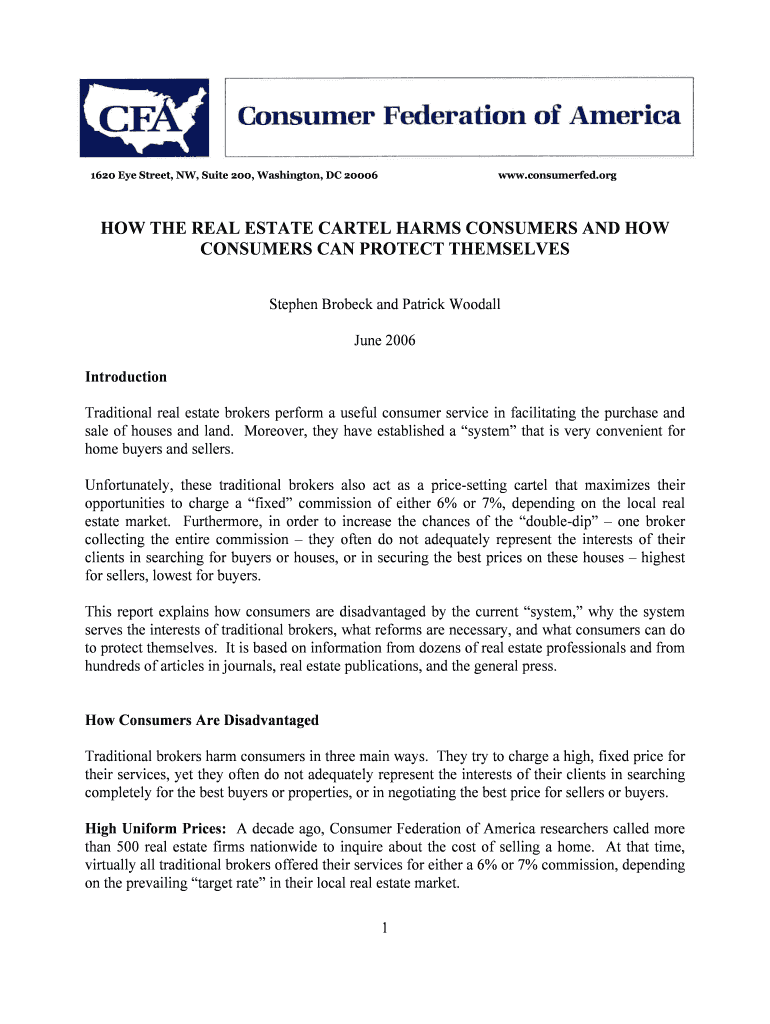
The term "real estate cartel" refers to a group of traditional real estate brokers who adhere to fixed pricing structures, notably charging commissions of six to seven percent. These brokers are often critiqued for their price-setting tactics, which limit competition and create an anti-competitive environment that harms consumers. This behavior often results in higher costs and fewer options for buyers and sellers, effectively creating a barrier to entry for innovative brokerage models that could offer more favorable terms to consumers.
The Impact of Fixed Commissions on Consumers
Fixed commissions imposed by traditional real estate cartels can significantly inflate the cost of buying or selling a home. Consumers are often saddled with commissions that do not reflect the actual effort or value provided by the broker. This rigidity can discourage negotiation and limit the ability of consumers to seek lower rates, effectively reducing the potential for cost savings. By promoting a standardized commission structure, the real estate cartel stifles competition and innovation, leaving consumers with little choice but to comply.
Consequences for Buyers and Sellers
- Higher Costs: Buyers end up paying indirectly for high commissions, which can lead to inflated property prices.
- Limited Options: Both buyers and sellers have fewer brokerage options available due to the dominance of traditional brokers who adhere to these fixed rates.
- Reduced Bargaining Power: Consumers lack leverage to negotiate commissions, resulting in a less consumer-friendly transaction environment.
The Role of Real Estate Brokers
Real estate brokers within the cartel often fail to adequately represent their clients' interests due to their focus on maintaining fixed commission rates. This focus can lead to conflicts of interest, where the broker’s financial incentive is not aligned with the best interests of the client. Instead of acting as advocates for their clients, brokers may prioritize transactions that secure their commissions over finding the best deal for the buyer or seller.
Areas of Concern
- Conflict of Interest: Brokers may push clients towards transactions that benefit them financially rather than what’s most favorable for the customer.
- Lack of Transparency: Standardized commission rates can obscure the true costs of services, making it difficult for consumers to make informed financial decisions.
- Limited Consumer Advocacy: Brokers may not negotiate vigorously on behalf of their clients, given their reliance on fixed-rate structures.
Legal Framework and Consumer Protection
Efforts to regulate the impact of real estate cartels have focused on increasing transparency and promoting competition. Proposals for reform have included requirements for better consumer information and rules to curb discrimination against nontraditional brokers who may offer more competitive rates. Independent regulatory bodies could enforce these reforms to ensure fair practices that prioritize consumer interests.
Key Legal Measures
- Mandatory Disclosure: Brokers should be required to disclose their commission structure upfront to allow consumers to evaluate costs effectively.
- Nontraditional Broker Support: Legislation to support alternative brokerage models can promote competition, reduce costs, and enhance service quality.
- Independent Oversight: Regulatory bodies can monitor and penalize anti-competitive practices, ensuring that consumer protection is a primary focus.
Reforming Real Estate Practices
Reforming the current practices of real estate cartels involves empowering consumers to negotiate and seek out alternative brokers. Educating consumers about their rights and options plays a crucial role in enabling them to engage more effectively in the real estate market.
Steps for Consumers
- Research Alternatives: Consumers should explore nontraditional brokerage models that offer flexible pricing and services.
- Negotiate Terms: Consumers have the right to negotiate commission rates and other contract terms to better suit their financial situation.
- Demand Transparency: Ensure that all costs and commissions are disclosed upfront before committing to any broker agreement.
- Seek Legal Advice: Consulting with a real estate attorney can provide additional protection and clarity on brokerage agreements.
The Case for Independent Regulation
The necessity for independent regulation arises from the need to balance brokers’ business interests with consumer protection. Ensuring that real estate practices operate in a fair and open market requires oversight that is unbiased and vigilant.
Elements of an Effective Regulatory Framework
- Consumer-Centric Policies: Focus regulations on ensuring that consumer interests are prioritized over broker profits.
- Regular Audits: Conduct audits of brokerage practices to deter and penalize anti-competitive behavior.
- Transparent Complaint Mechanisms: Establish accessible and responsive channels for consumers to report grievances and seek redress.
Examples and Case Studies
Case studies have highlighted the negative effects of real estate cartels on individual consumers who have experienced financial loss due to inflated broker fees. These examples emphasize the importance of reform and the potential benefits of more competitive, consumer-friendly models.
- Case Study 1: A seller in a metropolitan area significantly overpaid in broker commissions, reducing their net profit from the home sale.
- Case Study 2: Buyers were able to save thousands by using a nontraditional brokerage that offered a flat-fee service, contrasting sharply with the standard six percent commission rate.
Importance of Consumer Education
Empowering consumers with knowledge and resources can transform the real estate market by enabling more informed decision-making. Educational campaigns about brokerage practices and consumer rights can lead to a more equitable marketplace.
Educational Initiatives
- Workshops and Seminars: Offer sessions led by real estate experts and consumer rights advocates.
- Online Resources: Provide accessible guides on understanding brokerage agreements and negotiating terms.
- Community Outreach: Partner with consumer protection organizations to spread awareness effectively.
Conclusion
Real estate cartels pose a significant challenge to creating a fair, open marketplace for housing transactions. By understanding how these cartels operate and affect consumers, stakeholders can move toward a system that offers better protection and options for buyers and sellers. Reform, education, and independent regulation are key components in navigating this complex economic landscape effectively.