






Definition and Meaning
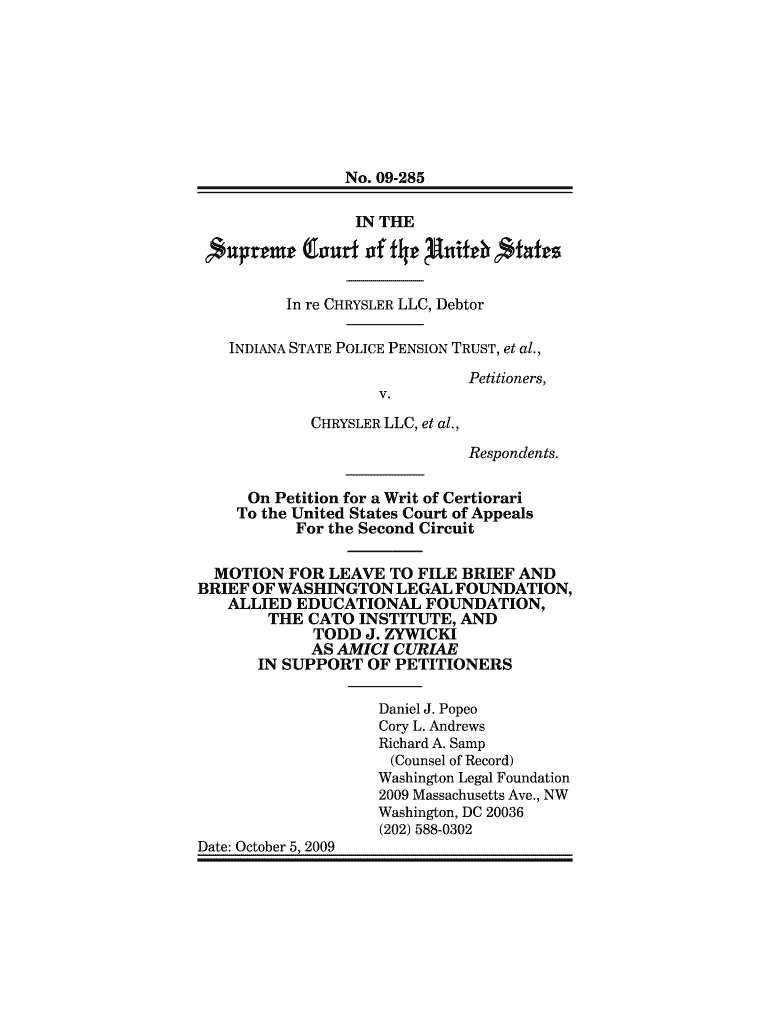
The case "Indiana State Police Pension Trust v Chrysler LLC" involves a legal dispute during Chrysler's bankruptcy proceedings. It highlights concerns about the use of Troubled Asset Relief Program (TARP) funds for the sale of Chrysler's assets, and it addresses creditor rights under Chapter 11 of the Bankruptcy Code. The Cato Institute, alongside other amici, expressed concerns about government actions impacting creditor protections and future bankruptcy cases.
Key Elements of the Case
- Parties Involved: The main parties in this case include the Indiana State Police Pension Trust as the petitioner and Chrysler LLC as the respondent. The Cato Institute and others filed an amicus curiae brief in support of the petitioners.
- Legal Focus: Central to this case is the use of TARP funds to expedite Chrysler's asset sale, raising issues about bypassing Chapter 11 protections.
- Potential Impact: The decision could affect secured creditors' rights and the stability of credit markets during bankruptcies.
- Amici Concerns: The amici, including the Cato Institute, criticized potential governmental self-dealing and the prioritization of some creditors over others.
Important Terms Related to the Case
Understanding the specific terminology used in this case is essential for those involved:
- TARP (Troubled Asset Relief Program): A program created to purchase toxic assets and provide capital to banks during the financial crisis.
- Chapter 11 Bankruptcy: A section of the Bankruptcy Code facilitating the reorganization of distressed businesses.
- Section 363 Sale: A provision allowing the sale of assets free of liens or claims, bypassing full creditor protections under Chapter 11.
- Amicus Curiae: Literally "friend of the court"; a party not directly involved in the case but offers information or expertise relevant to the issue.
Legal Use of the Case Findings
The findings from this case contribute to the legal landscape by defining how government actions using TARP funds can impact bankruptcy proceedings:
- Government Role: The case questions the extent of government involvement in private bankruptcies using federal funds.
- Creditors' Rights: It sets precedents for how secured and unsecured creditors are treated under accelerated bankruptcy sales.
- Legal Precedents: Future cases can reference this decision to evaluate the appropriateness of expedited asset sales in restructuring processes.
Why This Case Matters
The case holds significant implications:
- Secured Creditors: Underscores the importance of protecting secured creditors' rights in bankruptcy scenarios.
- Market Stability: Addresses concerns over market destabilization due to governmental interventions.
- Legal and Financial Community: Provides a reference point for legal proceedings and financial restructurings affected by governmental actions.
Who Typically Uses the Case Insights
The insights from this case are valuable to a variety of stakeholders:
- Legal Professionals: Attorneys use the case to assess precedence in bankruptcy cases.
- Financial Institutions: Banks and investment firms analyze the case to understand the implications on secured lending practices.
- Regulatory Agencies: Government bodies consider the findings to guide policies on federal intervention in private sector bankruptcies.


Business Types that Benefit Most
Businesses in specific sectors need to pay attention to the ramifications of this case:
- Automotive Industry: As a high-profile bankruptcy case in this sector, the outcome informs future restructuring strategies.
- Financial Services: Lenders are particularly interested in the protections offered to creditors in asset sales.
- Government Contractors: Entities receiving federal funds can examine how government policy may influence contractual and financial obligations during bankruptcies.
State-Specific Rules
The application of this case may vary across different jurisdictions:
- State Bankruptcy Laws: While federal provisions under Chapter 11 apply universally, local variations in state bankruptcy laws may influence outcomes in similar cases.
- Creditor Protections: States may have additional regulations that further secure creditor interests, impacting how cases like this are litigated.
Examples of Applying the Case
Real-world scenarios demonstrate the practical applications of this case:
- Bank Restructurings: Financial institutions might cite this case when negotiating terms for restructuring agreements involving distressed automotive clients.
- Legal Strategy Development: Lawyers develop case strategies by referencing the governmental role and creditor rights issues highlighted in this case.
- Industry Risk Assessments: Risk analysts incorporate findings from this case into evaluations of governmental intervention risks in distressed markets.