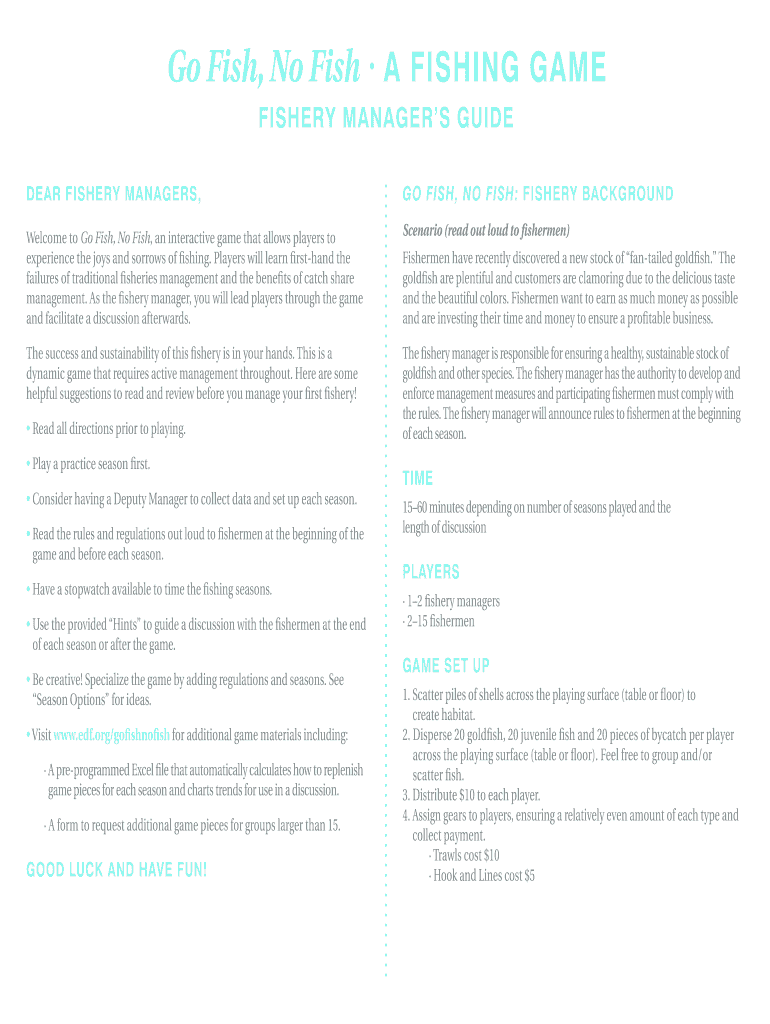







Definition and Meaning of Go Fish, No Fish A FISHING GAME
"Go Fish, No Fish A FISHING GAME" is an interactive and educational tool designed to teach users about sustainable fisheries management. It is intended primarily for fishery managers and fishermen, helping them understand the complexities and repercussions of various seafood capturing regulations. The game provides insights into different management styles, such as traditional methods versus catch share programs, through varied gameplay scenarios that emphasize the importance of maintaining ecological balance in fisheries.
How to Use Go Fish, No Fish A FISHING GAME
Engagement with the game involves participating in simulations where users must make decisions regarding catch limits, quota systems, and other regulatory measures. Players navigate through several scenarios that challenge their strategic thinking and management skills. Key learning outcomes include understanding the economic trade-offs and ecological impacts of decisions made to sustain fish populations, an aspect crucial for both personal growth in management skills and professional responsibilities in fisheries management.
Gameplay Scenarios
- Traditional Management: Explore scenarios where conventional rules are applied to manage fish populations.
- Catch Share Management: Learn to implement quota-based strategies and their implications for sustainability.
- Economic Impacts: Gain insight into how different management practices affect the fishing economy and local communities.
Key Elements of Go Fish, No Fish A FISHING GAME
The game is built around core elements that replicate real-world scenarios in fishery management. These elements are crafted to provide a realistic experience of decision-making processes involved in managing fisheries.
- Decision-Making: Players must choose how to apply various management strategies, understanding their potential environmental, economic, and social outcomes.
- Role-Playing: As fishery managers, users experience the responsibility of maintaining sustainable practices.
- Outcome Analysis: Post-scenario discussions enable players to reflect on the ecological results and management efficiency.
Who Typically Uses Go Fish, No Fish A FISHING GAME
The game is mainly utilized by fishery managers, researchers, academicians, and policy-makers. It also serves educational institutions aiming to incorporate practical learning modules about environmental management policies, especially those focusing on fisheries and aquatic ecosystems.
Beneficiary Profiles
- Fishery Managers: Enhance decision-making skills related to natural resource management.
- Educators: Teach students about ecological balance and sustainable practices.
- Researchers: Analyze the implications of different fisheries policies and their effectiveness in real-world applications.
Legal Use of Go Fish, No Fish A FISHING GAME
Engagement with the game must comply with intellectual property rights, ensuring it is used for educational and professional purposes rather than commercial exploitation. It provides a legitimate resource to facilitate learning in an interactive format while promoting sustainability.
Important Terms Related to Go Fish, No Fish A FISHING GAME
Understanding key terminology is vital when engaging with the game. Here are important terms players might encounter:
- Catch Limits: Restrictions set to control the amount of fish captured during a specific period.
- Catch Share Programs: Quota systems assigning specific portions of the total allowable catch to individuals or organizations.
- Fisheries Management: Practices aimed at maintaining fish populations at sustainable levels.
State-Specific Rules for Go Fish, No Fish A FISHING GAME
The game's scenarios may vary according to state-specific regulations, highlighting how regional differences influence fisheries policies. Players become acquainted with diverse legal frameworks and compliance requirements within the U.S., bridging knowledge gaps between various regulatory environments.
Examples of Using Go Fish, No Fish A FISHING GAME
Real-world applications of the game enhance learning through practical examples. Players might explore scenarios that reflect actual fisheries management circumstances, leading to discussions about best practices and innovative strategies.
- Case Study Simulations: Players engage in scenarios based on historical fisheries data, exploring outcomes from previous management initiatives.
- Interactive Workshops: Educators and managers use the game for collaborative exercises to improve policy implementation skills.
By utilizing these sections, the comprehensive coverage of "Go Fish, No Fish A FISHING GAME" is ensured, fulfilling educational and management training needs through practical, scenario-based learning.