







Definition & Meaning
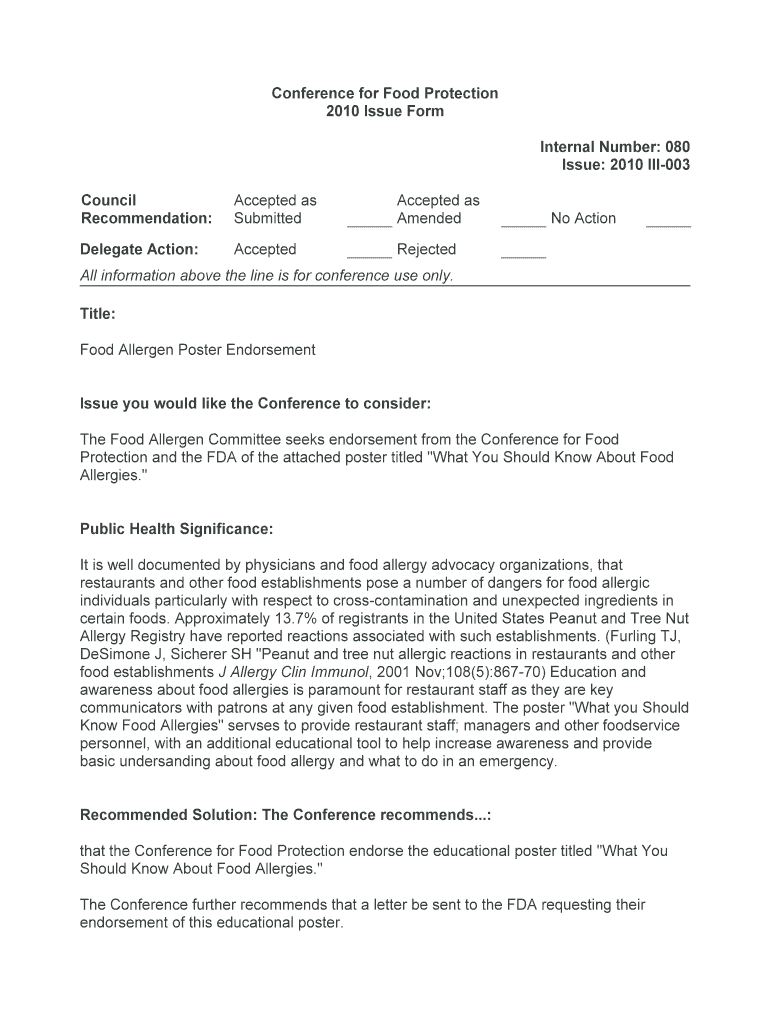
The "Conference for Food Protection 2010 Issue Form" is a structured document used during the Conference for Food Protection to address and discuss public health issues related to food safety. It serves as a formal proposal template for stakeholders to bring forth concerns, new research findings, policy suggestions, or other relevant matters needing attention. Primarily utilized by professionals in the food industry, public health officials, and regulatory agencies, it provides a consistent format to ensure clear communication and thorough consideration of the issues presented.
Purpose and Functionality
- Proposal Submission: Users present problems or new topics for conference consideration.
- Standardization: Ensures consistency in content and format for easy analysis and review.
- Stakeholder Collaboration: Facilitates feedback and input from a diverse group of industry experts.
How to Use the Conference for Food Protection 2010 Issue Form
The form is typically filled out by individuals or groups who wish to propose an issue for discussion at the conference. It's important to include detailed information accurate to the topic so that reviewers can evaluate the proposal effectively.
Step-by-Step Usage Guide
- Identify the Issue: Clearly define the food safety or protection topic you wish to address.
- Gather Data: Collect supporting evidence to justify the importance of the issue.
- Fill Out Form Fields: Input all necessary information, including the issue description, objectives, and proposed solutions.
- Review for Completeness: Ensure all sections of the form are completed accurately.
- Submit: Follow the outlined submission method (often detailed in the form itself).
Key Elements of the Conference for Food Protection 2010 Issue Form
The form is organized into several sections to facilitate comprehensive coverage of the proposed issue. Each section serves a distinct purpose in creating an understandable and actionable submission.
Important Sections
- Issue Identification: Clearly states the problem or subject to be addressed.
- Background Information: Provides context and background, detailing why the issue is important.
- Proposed Solution: Describes potential solutions or actions recommended to address the issue.
- Stakeholders Affected: Lists individuals or groups who may be impacted by the issue or its resolution.
- References and Appendices: Documents any supporting data or references that bolster the proposal.
Steps to Complete the Conference for Food Protection 2010 Issue Form
When completing this form, it is essential to methodically provide all requested details, ensuring clarity and precision.
Detailed Completion Process
- Read Instructions: Review any guidelines provided to understand submission requirements.
- List and Describe Issue: Clearly describe the issue at hand, using specific terms and references.
- Outline Objectives: Specify the goals of addressing this issue and the expected outcomes.
- Detail Proposed Actions: Offer actionable steps or suggestions that could resolve or mitigate the issue.
- Review and Confirm: Double-check all entries for accuracy and completeness before submission.
Who Typically Uses the Conference for Food Protection 2010 Issue Form
The form is used by a variety of stakeholders involved in food safety and protection, including:


Key User Groups
- Food Industry Professionals: Individuals responsible for production, processing, and distribution of food products.
- Public Health Officials: Workers in agencies responsible for enforcing health regulations and policies.
- Academic Researchers: Scholars conducting research pertaining to food safety and public health.
- Regulatory Agencies: Government bodies tasked with setting and enforcing food safety standards.
Important Terms Related to Conference for Food Protection 2010 Issue Form
Understanding the terminology associated with this form is vital for its correct completion and submission.
Glossary of Terms
- Allergens: Substances that can cause allergic reactions in sensitive individuals.
- Cross-Contamination: Transfer of harmful bacteria or other microorganisms from one surface, substance or food to another.
- Pathogens: Microorganisms that can cause disease in humans and animals.
- Regulatory Authority: Government or organizational body responsible for overseeing compliance with food safety standards.
Examples of Using the Conference for Food Protection 2010 Issue Form
Specific scenarios demonstrate the form’s flexibility and applicability across different contexts in food protection.
Real-World Application Cases
- Poster Proposals: Submitting a proposal for educational materials, such as posters focusing on food allergy awareness.
- Policy Changes: Suggesting changes to existing food safety regulations based on new research findings.
- Research Findings: Proposing conference sessions to discuss recent findings in food microbiology.
Legal Use of the Conference for Food Protection 2010 Issue Form
The form operates within established legal frameworks to ensure that submissions align with food safety regulations and guidelines.
Legal Context and Compliance
- Federal Standards: Adheres to U.S. federal guidelines on food safety and public health.
- Document Security: Maintains confidentiality and data protection as per legal requirements.
- Regulatory Endorsement: Proposals often seek support from governmental regulatory bodies like the FDA.




