Type text, add images, blackout confidential details, add comments, highlights and more.
02. Sign it in a few clicks
Draw your signature, type it, upload its image, or use your mobile device as a signature pad.
03. Share your form with others
Send it via email, link, or fax. You can also download it, export it or print it out.
How to use or fill out 48-341 -- History of Arch’l Theory with Our Platform
Ease of Setup
DocHub User Ratings on G2
Ease of Use
DocHub User Ratings on G2
Click ‘Get Form’ to open the 48-341 -- History of Arch’l Theory document in the editor.
Begin by entering your name in the designated field at the top of the form. This personalizes your submission and ensures proper identification.
In the section for Possible POST-WAR MODERN THEORETICIAN or THEORY, provide a clear title or name that you wish to present. Use the space provided to elaborate on your choice.
For Possible READINGS or SOURCES, list specific authors and books. Follow the sample formats provided for consistency, ensuring you include publication details such as place, publisher, date, and call number.
Articulate your SUBJECT / THESIS clearly. This should encapsulate your main hypothesis or research question within your subject area. Use multiple lines if necessary to fully express your idea.
Review all entries for clarity and completeness before finalizing your document.
Start using our platform today to streamline your document editing and submission process for free!
Fill out 48-341 -- History of Arch l Theory online It's free
The term theory of architecture was originally simply the accepted translation of the Latin term ratiocinatio as used by Vitruvius, a Roman architect-engineer of the 1st century ce, to differentiate intellectual from practical knowledge in architectural education, but it has come to signify the total basis for judging
What is the vitruvian theory?
Vitruvian Man is a study of the human form visually perfected through the application of mathematics. People, such as da Vinci, saw mathematics as a universal constant, with proper proportions repeating themselves across the universe.
Who are the 4 fathers of architecture?
Le Corbusier, Mies van der Rohe, Frank Lloyd Wright, and Louis Kahn are four of the most notable architects to date. Read on to find out more about the creative process of these four leaders of the modern era, and why their projects and practices are still influential to our modern times.
What is the Vitruvian theory of architecture?
Through his work, Vitruvius identified three principles of architecture known as the Vitruvian Triad: firmitas firmness, utilitas utility and venustas beauty. These three underlying bases remain the essential components of all successful structural designs (lib.
Is the history of architecture the history of the struggle for light Le Corbusier?
The history of architecture is the history of the struggle for light. Modern life demands, and is waiting for, a new kind of plan, both for the house and the city. To create architecture is to put in order.
Related Searches
48 341 -- history of arch l theory pdf free48 341 -- history of arch l theory pdf
Related forms
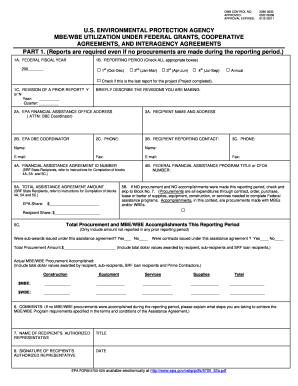
EPA Form 5700-52a - US Environmental Protection Agency - epa
What are the principles of the Vitruvian architecture?
One of the most well-known ideas from the writings of Vitruvius is known as the Vitruvian Triad. The triad consists of three principles or ideals for all architecture: Firmitatis, utilitatis, and venustatis, or stability, utility, and beauty.
What did Vitruvius say about architecture?
In Book I, Chapter 1, titled The Education of the Architect, Vitruvius instructs 1. Architecture is a science arising out of many other sciences, and adorned with much and varied learning; by the help of which a judgment is formed of those works which are the result of other arts.
Related links
History of Architectural Theory
Jan 11, 2008 This architectural history seminar offers a chronological overview of architectural theory from. Vitruvius to the mid-twentieth century.
Origin, evolution, and maintenance of gene-strand bias in
by M Atre 2024 Cited by 2 Gene-strand bias is a characteristic feature of bacterial genome organization wherein genes are preferentially encoded on the leading strand of replication.
Cookie consent notice
This site uses cookies to enhance site navigation and personalize your experience.
By using this site you agree to our use of cookies as described in our Privacy Notice.
You can modify your selections by visiting our Cookie and Advertising Notice.