






Definition and Meaning of Alfred Hutton's Fencing Mastery
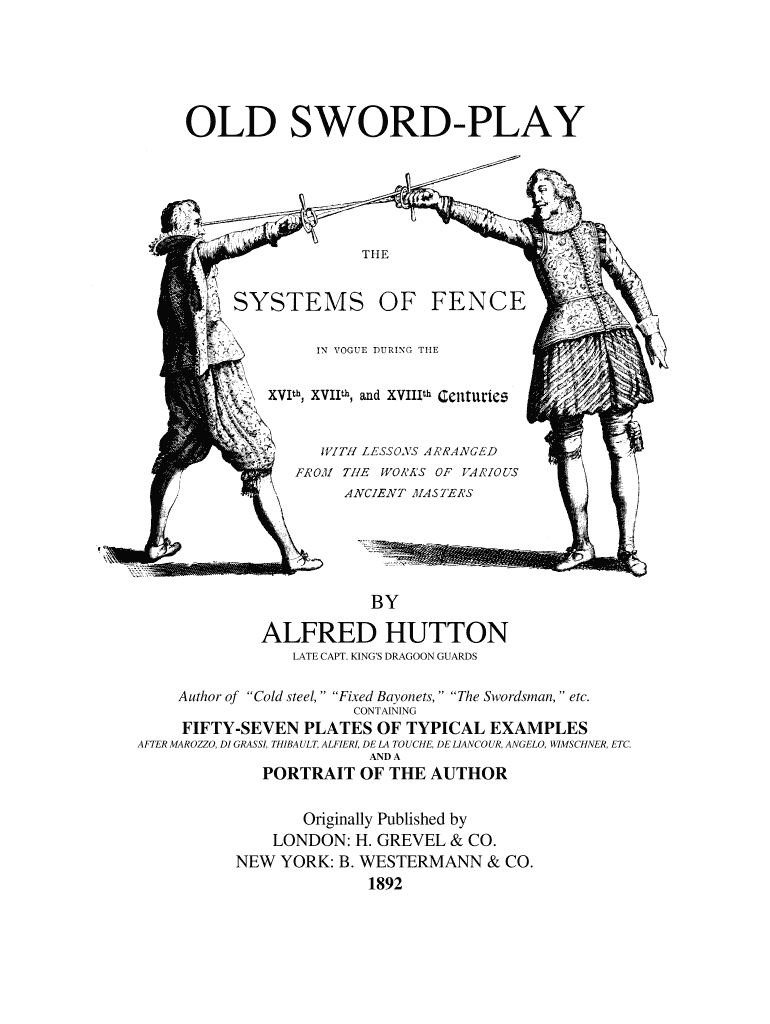
Alfred Hutton, a prominent figure in the revival of historical fencing, is recognized for his work on the techniques and teachings of ancient swordplay. His pivotal document, "Old Sword-Play," showcases these classical techniques, which have been preserved for modern enthusiasts and practitioners. The text provides both a historical overview and a practical guide, making it an invaluable resource for those interested in martial arts and stage combat. Hutton's work highlights the intricate skills associated with various weapons, such as the rapier and dagger, and emphasizes the cultural significance of these practices in both historical and modern contexts.
Key Elements of Alfred Hutton's Fencing Techniques
Hutton's teachings are detailed, offering insights into the guards, cuts, parries, and combinations necessary for mastering different weapons. His contributions have been instrumental in bridging the gap between past and present martial arts practices. The document emphasizes precision, discipline, and the understanding of historical contexts. Key elements include:
- Weaponry: Focuses on the usage of two-hand swords, broadswords, and bucklers.
- Techniques: Detailed instructions on guard positions and attack strategies.
- Cultural Context: Understanding the historical significance of fencing movements and their applications.
How to Use Alfred Hutton's Fencing Techniques
To effectively apply Hutton's fencing methods, practitioners should start by familiarizing themselves with the various weapon techniques and the historical context provided in "Old Sword-Play." Here are practical ways to incorporate these teachings:
- Study the Document: Begin with a thorough reading of Hutton's text to understand the fundamental theories.
- Practice Techniques: Engage in regular practice sessions focusing on guard positions and attack strategies.
- Historical Analysis: Analyze the historical contexts to appreciate the evolution of fencing styles.
Steps to Mastering Alfred Hutton's Teachings
To master the techniques taught by Alfred Hutton, adherence to a structured approach is beneficial:
- Initial Assessment: Gauge your current understanding of fencing to tailor your learning process.
- Weekly Practice: Dedicate time each week to practicing specific techniques outlined in Hutton's text.
- Periodic Review: Regularly review both your progress and the historical content to maintain a holistic understanding.
- Mentorship: Seek guidance from experienced practitioners who are familiar with Hutton's work.
Who Typically Studies Alfred Hutton's Fencing Techniques
Hutton's fencing methods are typically studied by a diverse group of individuals, including:
- Martial Artists: Those interested in historical martial arts forms and their modern applications.
- Stage Combatants: Actors and performers who wish to incorporate authentic historical techniques into their performances.
- Historians and Enthusiasts: Individuals with a passion for historical weaponry and combat methods.
Importance of Studying Alfred Hutton's Techniques
Understanding and practicing Alfred Hutton's techniques provides several benefits:
- Historical Appreciation: Encourages a deeper understanding and appreciation of historical martial arts.
- Skill Development: Enhances physical skills, including coordination, reflexes, and strategy.
- Cultural Insight: Offers insight into the cultural and historical significance of fencing across different eras.
Legal and Ethical Considerations in Practicing Hutton's Techniques
While engaging with Hutton's fencing methods, it's crucial to remain aware of legal and ethical considerations, particularly in practice settings:
- Safety Protocols: Ensure the use of proper protective gear to prevent injury during practice.
- Appropriate Venues: Practice within designated spaces to adhere to safety and legal stipulations.
- Cultural Sensitivity: Approach the historical material with respect and consideration for its original context.
Practical Examples of Using Alfred Hutton's Fencing Techniques
Using Hutton’s techniques can vary greatly depending on context and intent. Here are some examples:
- Historical Reenactments: Implementing authentic techniques in battle reenactments to enhance historical accuracy.
- Theatrical Productions: Integrating fencing into plays and movies for realistic fight scenes.
- Martial Arts Competitions: Applying learned techniques in controlled combative environments to test and refine skills.
State-by-State Differences in Practicing Hutton's Fencing Techniques
While fencing practices are generally universal, state regulations can impact where and how techniques are practiced:
- Regulatory Differences: Some states may have specific requirements regarding martial arts clubs and public practice spaces.
- Licensing and Certifications: Variations in the need for licenses or certifications to teach or practice fencing depending on regional laws.
Versions or Alternatives to Alfred Hutton's Work
While Alfred Hutton's "Old Sword-Play" remains a seminal work, other resources and modern interpretations also contribute to the field:
- Contemporary Analyses: Modern interpretations and updates to Hutton’s work, adapted to current martial arts contexts.
- Other Historical Manuscripts: Comparisons with fencing techniques from other historical sources to provide broader perspectives.
- Online Platforms: Digital versions and video tutorials offering expanded access to learning and practicing these techniques.
Overall, Alfred Hutton's work provides a rich tapestry of historical knowledge and practical skill development for both serious martial artists and cultural enthusiasts.