






Definition and Meaning
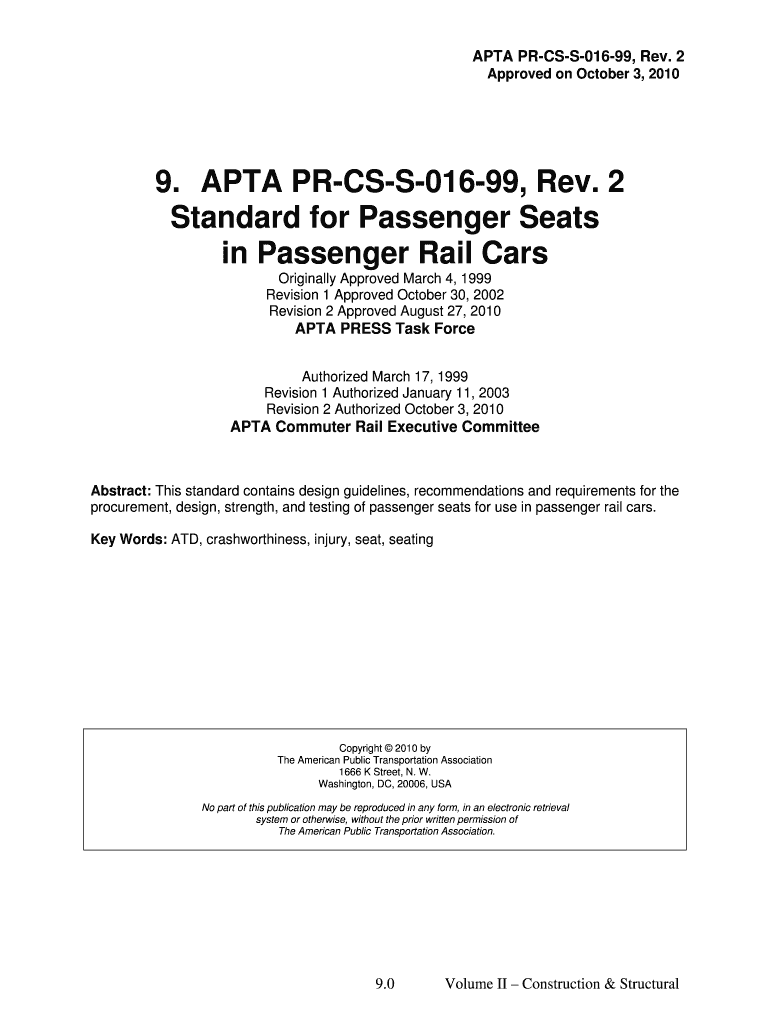
The APTA PR-CS-S-016-99, Rev. 2 document is a comprehensive standard that provides guidelines for passenger seat design in passenger rail cars. It serves as a critical resource for ensuring safety and crashworthiness by specifying the requirements for seat strength, testing protocols, and injury criteria during dynamic tests. This document plays a vital role in enhancing passenger safety by outlining the necessary standards for seat attachment security, injury mitigation, and compliance with federal regulations.
Key Elements of the APTA PR-CS-S-016-99, Rev
This document encompasses several important sections that address the design and safety of passenger seats in rail cars. Key elements include:
- Seat Strength: Specifications ensure seats can withstand forces encountered during operation and accidents, minimizing the risk of detachment.
- Injury Criteria: Guidelines to reduce the risk of injury during dynamic events via features like compartmentalization and impact absorption.
- Flammability Standards: Protocols to resist fire spread, ensuring a safer environment.
- Testing Protocols: Detailed procedures for assessing compliance with safety standards.
Important Terms Related to APTA PR-CS-S-016-99, Rev
Understanding specific terminology is essential for proper implementation:
- Crashworthiness: The ability of a seat to protect occupants in an accident.
- Compartmentalization: Design strategy to keep passengers within a defined area, reducing injury risks.
- Dynamic Tests: Testing procedures simulating real-world forces that a passenger seat would encounter.
How to Use the APTA PR-CS-S-016-99, Rev
Organizations can utilize this document to guide the design and procurement of passenger seats for railcars:
- Conduct Initial Assessment: Evaluate current seat designs against the document's standards.
- Design Modifications: Update designs to align with specified requirements, focusing on strength, security, and injury mitigation.
- Testing: Implement prescribed testing protocols to certify compliance with the outlined criteria.
Compliance and Legal Use
Adhering to the APTA PR-CS-S-016-99, Rev ensures compatibility with federal safety regulations:
- Mandatory Compliance: Necessary for manufacturers and transit authorities to provide safe transportation services.
- Legal Framework: Ensures all seat designs meet federal safety mandates, minimizing legal liabilities.
- Documentation: Keeps records of compliance efforts as evidence in safety audits or investigations.
Steps to Complete the APTA PR-CS-S-016-99, Rev Standards
To align with the document's protocols, follow these essential steps:
- Review: Thoroughly analyze the existing guidelines.
- Training: Educate engineering teams on specific requirements and safety objectives.
- Implementation: Integrate criteria into the design and manufacturing processes.
- Testing and Validation: Follow dynamic testing procedures to confirm compliance.
Who Typically Uses the APTA PR-CS-S-016-99, Rev
The document is primarily used by:
- Manufacturers: Develop and supply passenger seats for rail cars.
- Transit Authorities: Implement seats that comply with safety standards.
- Design Engineers: Design seats that meet the described requirements and criteria.


Practical Examples of Using APTA PR-CS-S-016-99, Rev
- Case Study 1: A rail car manufacturer redesigns their passenger seating to comply, leading to a 20% improvement in crash test performance.
- Case Study 2: A transit authority retrofits existing rail vehicles with updated seating, reducing reported injuries in crash simulations by 25%.
Versions or Alternatives to the APTA PR-CS-S-016-99, Rev
The APTA PR-CS-S-016-99, Rev. 2 is a revision of previous versions, incorporating enhanced safety measures:
- Previous Versions: Older editions without the updated safety criteria and federal regulation compliance.
- Alternatives: Other international standards that might provide different safety or design criteria.
Software Compatibility
Tools such as CAD software can aid in designing seats per specifications, offering features to simulate and test the outlined protocols, making implementation more efficient and precision-driven.