






Definition and Meaning of California Schedule P (541)
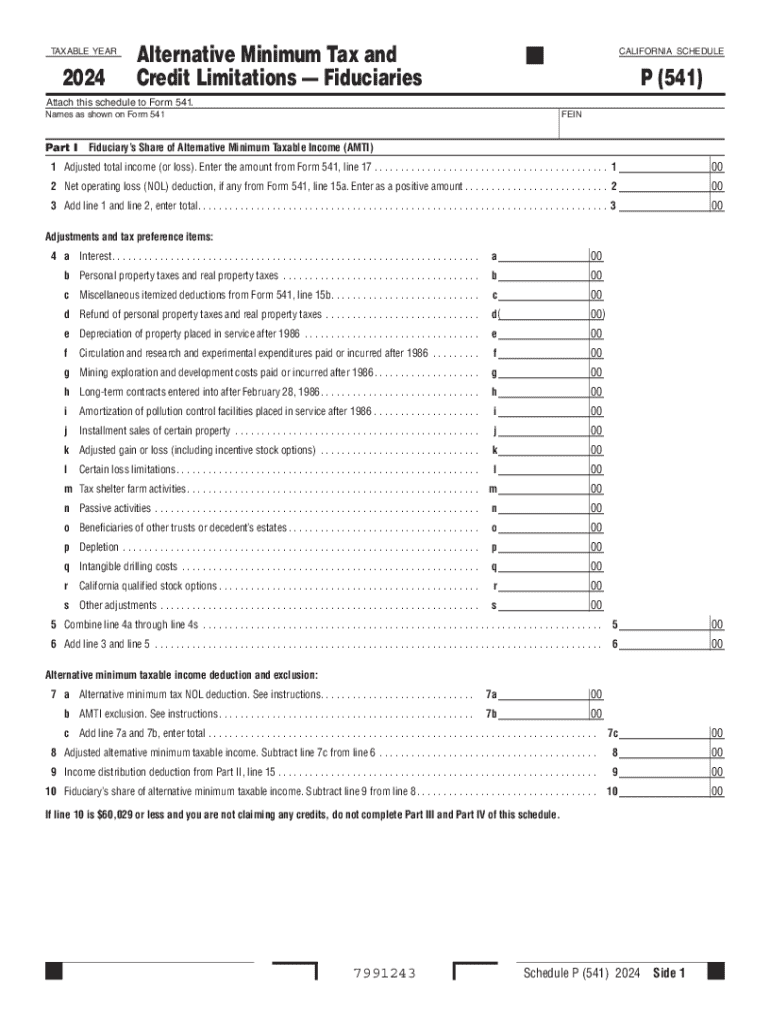
The California Schedule P (541) is an important tax form used by fiduciaries when calculating the Alternative Minimum Tax (AMT) and credit limitations for estates and trusts. This document plays a critical role in determining the fiduciary's share of the Alternative Minimum Taxable Income (AMTI), allowing adjustments for income distribution deductions and tentative minimum tax computations. By detailing these calculations, the form helps to ensure that the correct amount of tax is paid, based on the fiduciary's adjusted taxable income.
Use Cases for California Schedule P (541)
The California Schedule P (541) is applicable to various fiduciary scenarios where accurate tax reporting is crucial. Key examples include:
- Trusts that distribute income to beneficiaries, necessitating careful computation of AMT and the distribution deduction.
- Estates managing diverse asset portfolios, where taxable events impact AMTI calculations.
- Financial entities managing complex financial transactions that need to adjust income for tax purposes.
Steps to Complete the California Schedule P (541)
- Calculate Alternative Minimum Taxable Income (AMTI): Begin by adjusting regular taxable income for AMT purposes.
- Income Distribution Deduction: Deduct distributions made to beneficiaries from AMTI on an AMT basis.
- Tentative Minimum Tax Computations: Use the adjusted AMTI to compute the tentative minimum tax.
- Credit Limitations: Apply any applicable credits that may reduce tax liabilities.
Important Terms Related to California Schedule P (541)
Understanding key terminology is essential for accurately completing Schedule P (541):
- Fiduciary: An individual or entity tasked with managing assets for another's benefit.
- Alternative Minimum Tax (AMT): A tax provision ensuring individuals and entities with substantial deductions pay a fair share of tax.
- Alternative Minimum Taxable Income (AMTI): Regular taxable income adjusted for AMT purposes.
- Income Distribution Deduction: A deduction reflecting distributions made from a trust or estate to beneficiaries.
Legal Use of the California Schedule P (541)
California Schedule P (541) is strict in its adherence to legal guidelines, ensuring that fiduciaries correctly report and pay taxes:
- Compliance with Tax Codes: The form is designed to comply with both federal and state regulations regarding AMT and fiduciary distributions.
- Safeguarding Accuracy: Proper form completion is essential for avoiding penalties due to underreporting or miscalculation.
California Schedule P (541) Filing Deadlines and Important Dates
Adhering to deadlines ensures compliance and avoids penalties:
- Federal and State Filing Deadlines: Typically coincide with the general tax filing deadlines, although specific dates can vary annually.
- Extensions Possible: Filing for extensions may be necessary; understanding the process is crucial for avoiding late penalties.
Required Documents for Completing the California Schedule P (541)
Gather the necessary documents before starting the form:
- Previous Year's Tax Returns: Provides a baseline for current calculations.
- Income Statements: Details on income that may affect AMTI.
- Distribution Records: Documentation of distributions made to beneficiaries for accurate deduction calculations.
Who Typically Uses the California Schedule P (541)
Several types of fiduciaries and entities often use California Schedule P (541):
- Trustees: Responsible for managing trust assets and distributing income.
- Estate Executors: Manage the financial affairs of deceased individuals and oversee asset distributions.
- Financial Institutions: May act as fiduciaries in managing estate or trust assets.


Key Elements of the California Schedule P (541)
The form consists of essential sections guiding users through vital tax calculations:
- AMTI Calculation Section: Adjustments made to regular taxable income.
- Income Adjustments and Credits: Details income sources and credits impacting AMTI.
- Tentative Tax Computations: Computing the minimum tax based on adjusted income figures.
Software Compatibility with California Schedule P (541)
Using compatible software can streamline the form completion process:
- Tax Preparation Software: Many popular solutions, such as TurboTax and QuickBooks, support these calculations.
- Automated Data Imports: Some platforms allow for direct importation of necessary financial data, reducing manual input.
Recognizing these aspects of California Schedule P (541) will facilitate accurate completion and reporting, reducing the likelihood of errors and ensuring compliance with tax obligations.