






Definition & Meaning
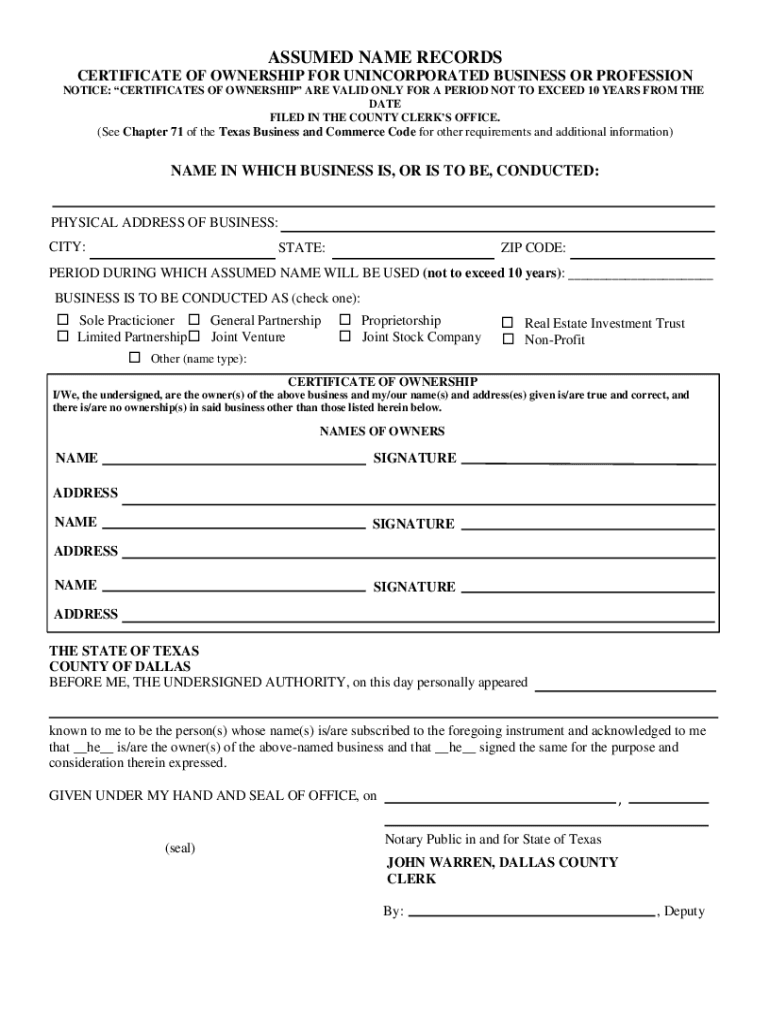
The "Assumed Name Application for Certificate of Ownership" is a legal form used primarily for registering an assumed name, often known as a "doing business as" (DBA), for an unincorporated business or profession, especially common in states like Texas. This form facilitates the public declaration of the ownership of a business name intended for public use that is otherwise different from the owner's legal name. Such declarations are essential for consumer protection, helping authorities trace and verify the ownership of a business.
Key Elements of the Form
When completing the Assumed Name Application, you'll need to provide several critical pieces of information:
- Business Name: Clearly specify the assumed name under which your business will operate.
- Business Address: Include the physical location from which the business will primarily operate.
- Owner Details: List each owner's full name and address. If there are partners involved, their names and addresses should also be included.
- Duration of Use: State the time period for which the assumed name will be used, which is typically up to ten years.
- Notary Acknowledgment: The form will usually require a notary's signature to confirm the identity of the applicant(s).
Steps to Complete the Application
- Gather Necessary Information: Assemble the required information, such as business names, addresses, and owner identities.
- Fill Out the Form: Carefully enter all information into the form, ensuring accuracy and completeness.
- Notarization: Most forms need to be signed in the presence of a notary public, who will authenticate the signatures of the applicant(s).
- Submission: Submit the completed form to the appropriate county clerk's office. Each county may have specific submission protocols.
Who Typically Uses This Form
Typically, small business owners, sole proprietors, and partners use this form when they wish to operate a business under a name different from their own legal names. It is also prevalent among those opening a new business, as it allows them to establish a unique brand identity without the complexity of forming a new legal entity.
Legal Use of the Assumed Name Application
Registering an assumed business name is a legal requirement in many states to provide transparency and protect consumer rights. It ensures that consumers can easily identify the owners behind a business name. Failure to register an assumed name when required could result in fines, legal complications, or challenges in enforcing contracts signed under the assumed name.
State-Specific Rules
While the general purpose of the Assumed Name Application is consistent across different jurisdictions, specific requirements can vary by state. For example, in Texas, businesses must file the form with the county clerk where the business operates. In contrast, other states may require registration at the state level. Always check the specific rules of your state's business regulatory agency or legal counsel.
Required Documents
To file the application, you'll need:
- Completed Application Form: Fully filled out with accurate details.
- Identifications: Legal identification for all business owners for notarization.
- Registration Fee: Varies by county or state, typically paid at the time of submission.
Filing Deadlines / Important Dates
It's crucial to submit the Assumed Name Application before conducting any business under the assumed name. The form typically specifies a renewal period before the assumed name expires, which is usually up to ten years. Mark the renewal date on your calendar to avoid lapsing in registration, which could forfeit rights to the name.
Penalties for Non-Compliance
Failing to file the Assumed Name Application can result in several penalties, such as fines or the inability to legally enforce contracts signed under the assumed name. It may also result in potential legal complications if a consumer cannot determine who owns a business. It is crucial for business continuity and legal protection to comply by registering the name appropriately.