






Definition and Overview
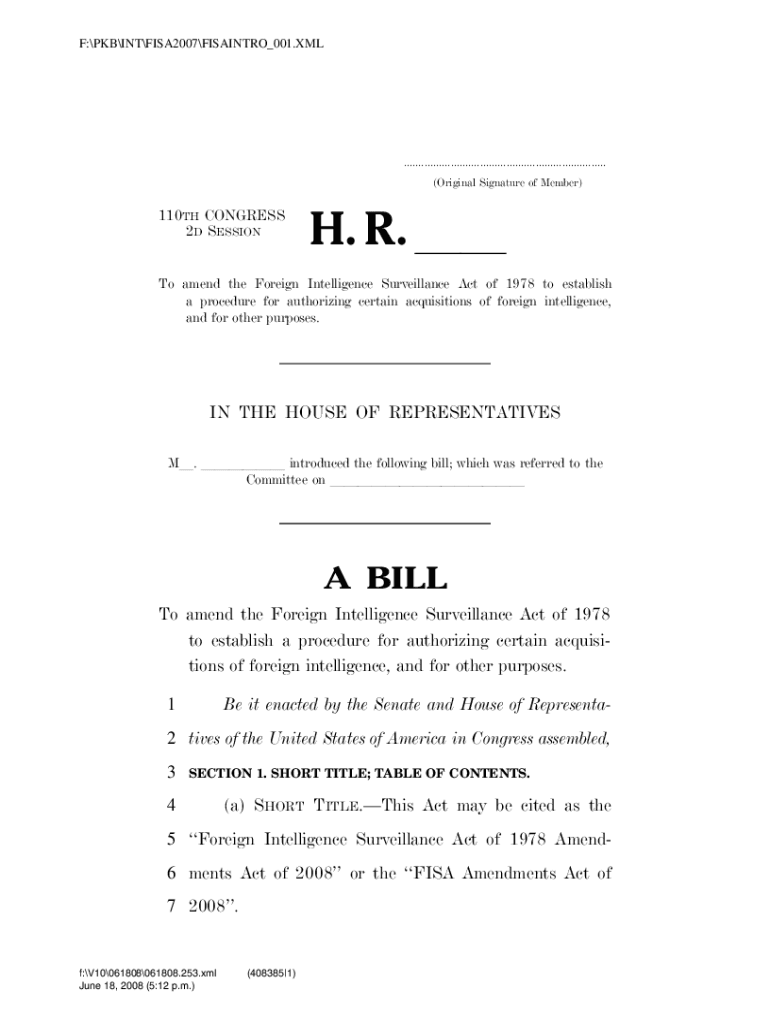
The Foreign Intelligence Surveillance Act (FISA), enacted in 1978, is a pivotal United States federal law that outlines procedures for the surveillance and collection of foreign intelligence information. FISA is primarily concerned with foreign powers and their agents operating within the U.S. It sets the legal framework for electronic surveillance activities sanctioned by the U.S. government, ensuring these activities are aligned with constitutional protections against unreasonable searches and seizures.
Purpose and Use Cases
FISA is designed to enhance national security while safeguarding civil liberties. It authorizes the surveillance of foreign nationals suspected of espionage or terrorism, with a particular focus on individuals residing outside the U.S. The Act supports intelligence operations that involve electronic communications, physical searches, and the monitoring of foreign powers. U.S. intelligence agencies rely on FISA provisions to intercept communications that are crucial for national security, effectively balancing the need for intelligence gathering with constitutional rights.
Judicial Oversight and Compliance
A significant aspect of FISA is its stringent judicial oversight. Surveillance requests under FISA must receive approval from the Foreign Intelligence Surveillance Court (FISC). This specialized court ensures that the surveillance activities adhere to legal standards and constitutional protections. The approval process involves a detailed review of the presented evidence and a determination of probable cause that the target is an agent of a foreign power. This rigorous judicial scrutiny acts as a check against potential abuses of surveillance powers.
Amendments and Enhancements
Over the years, FISA has undergone several amendments, notably after the events of September 11, 2001, with the introduction of the USA PATRIOT Act. These amendments have expanded the scope of surveillance, addressing emerging technologies and evolving security threats. Key changes include provisions for roving wiretaps, enabling surveillance on individuals using multiple communication devices, and the expansion of the "business records" provision, which allows for the collection of tangible things relevant to an investigation.
Protections for Service Providers
FISA includes specific protections for electronic communication service providers involved in intelligence operations. These companies are granted immunity from civil liability when they assist the government in authorized surveillance activities. This legal shield is essential for fostering cooperation between private sector entities and intelligence agencies, ensuring that critical infrastructure and communication networks actively support national security efforts without fear of legal reprisal.
Emergency Authorizations and Reporting
In situations requiring immediate action, FISA allows for emergency authorizations to commence surveillance without initial judicial approval. These emergency powers are subject to strict conditions and require subsequent approval by the FISC within seven days. Additionally, FISA mandates comprehensive reporting to Congress, ensuring that both the legislative and judicial branches remain informed of surveillance activities, thereby maintaining a system of checks and balances.
Handling and Use of Collected Information
FISA stipulates clear guidelines for the use and dissemination of information obtained through surveillance. The collected intelligence must be relevant to foreign intelligence, counterintelligence, or counterterrorism. Stringent minimization procedures are in place to protect the privacy of U.S. persons. These procedures require the careful handling of non-publicly available information, limiting who can access this data and how it can be used, ensuring it aligns with the intent of the authorized surveillance.
Legal Implications and Penalties
Non-compliance with FISA can lead to severe legal consequences. Unauthorized surveillance or misuse of collected data may result in penalties, including criminal charges, fines, and exclusion of improperly obtained evidence in legal proceedings. FISA emphasizes the importance of compliance with legal standards to protect both national security interests and individual constitutional rights.
Key Takeaways
- FISA is essential for maintaining national security by regulating intelligence operations involving foreign entities within the U.S.
- Judicial oversight is crucial, with the FISC playing a pivotal role in authorizing and overseeing surveillance activities.
- Amendments have expanded FISA's scope to address modern security challenges and technological advancements.
- Legal protections for service providers encourage cooperation with intelligence agencies, ensuring robust support for surveillance activities.
- Compliance with FISA is not only a legal requirement but also vital to the protection of civil liberties and constitutional rights.