
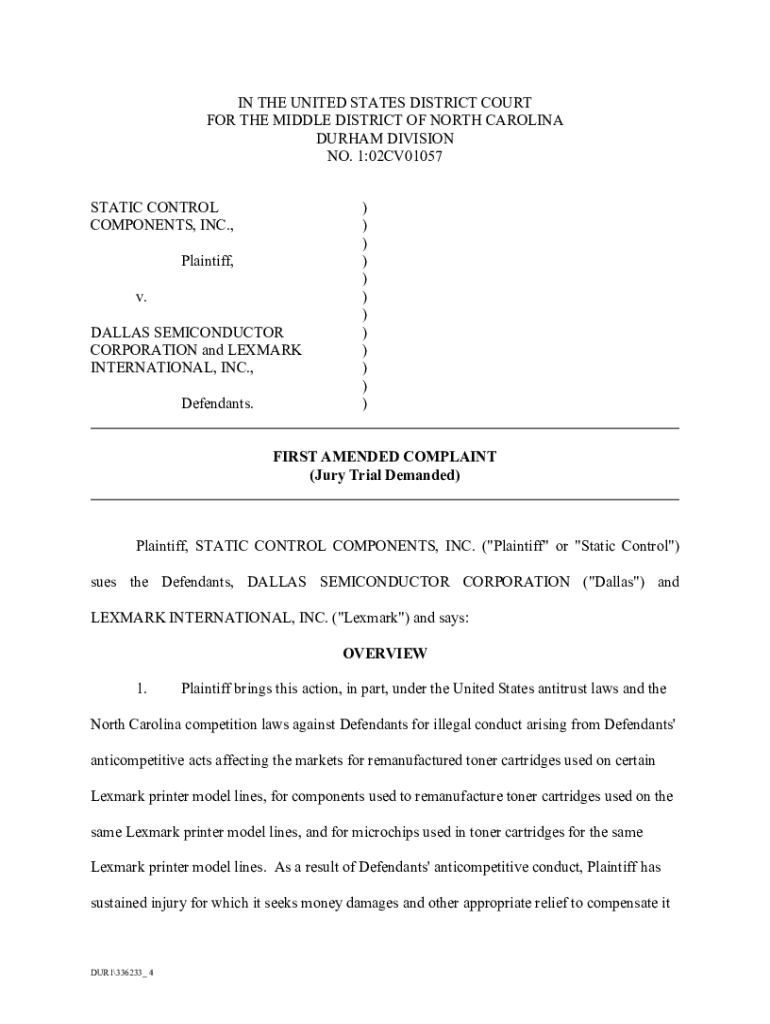







Definition & Meaning
The "United States District Court for the Middle District of North Carolina" is a federal court with jurisdiction over a specific geographical region. This court handles a variety of cases, including civil, criminal, and administrative matters under federal law. The Middle District encompasses Greensboro, Winston-Salem, and Durham, providing a venue for legal proceedings initiated or involving residents and entities from these areas. Its primary function is to administer justice fairly according to the law, offering a platform for dispute resolution and upholding legal rights and obligations.
Steps to Complete Forms for the Court
-
Identify the Correct Form:
- Determine the nature of your legal matter to ensure you are using the appropriate court form.
- Common forms include complaints, motions, and applications for records.
-
Gather Required Information:
- Collect all personal, case-related, and financial information necessary for form completion.
- This may include names of involved parties, case numbers, and specific legal references.
-
Fill Out the Form Accurately:
- Complete all sections of the form with clear, concise, and accurate information.
- Pay special attention to mandatory fields and ensure no section is left incomplete.
-
Review and Verify:
- Double-check your entries for accuracy and completeness to avoid processing delays.
- Consider legal guidance if uncertain about any legal terms or requirements.
-
Submission:
- Submit the form according to specified instructions, using available methods like online submission, mailing, or in-person delivery to the court.
How to Use the Court System
-
File Initiating Documents:
- Use available templates to file complaints or petitions, setting the lawsuit or request in motion.
- Ensure you include all required supporting documents to establish jurisdiction or legal standing.
-
Respond to Cases:
- Respond to summons or complaints by filing answers or motions as instructed.
- Adhere to deadlines for filing responses to avoid default judgments.
-
Participate in Hearings:
- Engage in pre-trial hearings or status conferences through assigned formats, either virtually or in-person.
- Comply with court instructions for presenting evidence and witness testimonies.
Important Terms Related to Court Cases
-
Jurisdiction:
- Refers to the court's authority to hear a case, which must relate to geographical boundaries and subject matter.
-
Plaintiff/Defendant:
- The plaintiff is the party initiating the lawsuit, while the defendant is the one being sued or accused.
-
Motion:
- A formal request for the court to issue a specific order or ruling within a case.
-
Discovery:
- The pre-trial process where parties exchange evidence and information pertinent to the case.
Key Elements of Court Procedures
-
Case Filing:
- Initiate the legal process by submitting appropriate documents and paying associated fees.
-
Service of Process:
- Officially notify involved parties about the legal action filed against them, typically via a summons.
-
Pre-Trial Motions:
- Make strategic legal requests, such as to dismiss cases or compel evidence, before the trial commences.
-
Trial:
- The main court proceeding where evidence is presented, witnesses testify, and the judge/jury renders a decision.
Legal Use of Court Forms
Court forms are used to officially document legal proceedings and requests within the judicial system. They aid in recording legal actions like filing lawsuits, submitting claims or defenses, and requesting court orders. Proper usage and submission of these forms play a critical role in ensuring that legal processes are recognized and enforced by the court, maintaining order and efficiency within the legal framework.
State-Specific Rules
The Middle District of North Carolina follows federal rules but aligns them with state-specific regulations and procedures:
- Ensure compliance with both federal and North Carolina state laws during legal proceedings.
- Understand local court rules regarding filing procedures, deadlines, and permissible legal practices.
- Engage with state-specific legal resources or consult legal professionals operating within North Carolina for regionally tailored advice.
Digital vs. Paper Versions
Contemporary court systems, including the Middle District of North Carolina, offer both digital and paper forms:
-
Digital Forms:
- Accessible online, allowing for electronic completion and submission.
- Frequently used for efficiency and to reduce the need for physical storage.
-
Paper Forms:
- Traditional means of submission, necessary for those without digital access or preference.
-
Considerations:
- Verify the court's acceptance of electronic submissions or requirements for hard copies.
- Ensure cybersecurity and data privacy when handling digital forms.
Examples of Using the Court System
Civil Cases
An individual files a civil complaint against another party, disputing issues such as breach of contract or personal injury. The court facilitates a fair resolution through mediation, settlement conferences, or trial.
Criminal Proceedings
The federal prosecutor charges a suspect, and the case progresses through arraignment, pre-trial hearings, and, if necessary, trial. The court ensures constitutional rights are upheld while determining the suspect's innocence or guilt.
Administrative Appeals
Parties may seek judicial reviews of administrative decisions, like those from governmental agencies, requiring the court to analyze the administrative record and authority exercise.
These examples illustrate how the United States District Court for the Middle District of North Carolina serves as a critical facility for legal dispute resolution, rights protection, and justice administration.




