






Definition and Meaning of Multicultural Health 2002 - The California Endowment
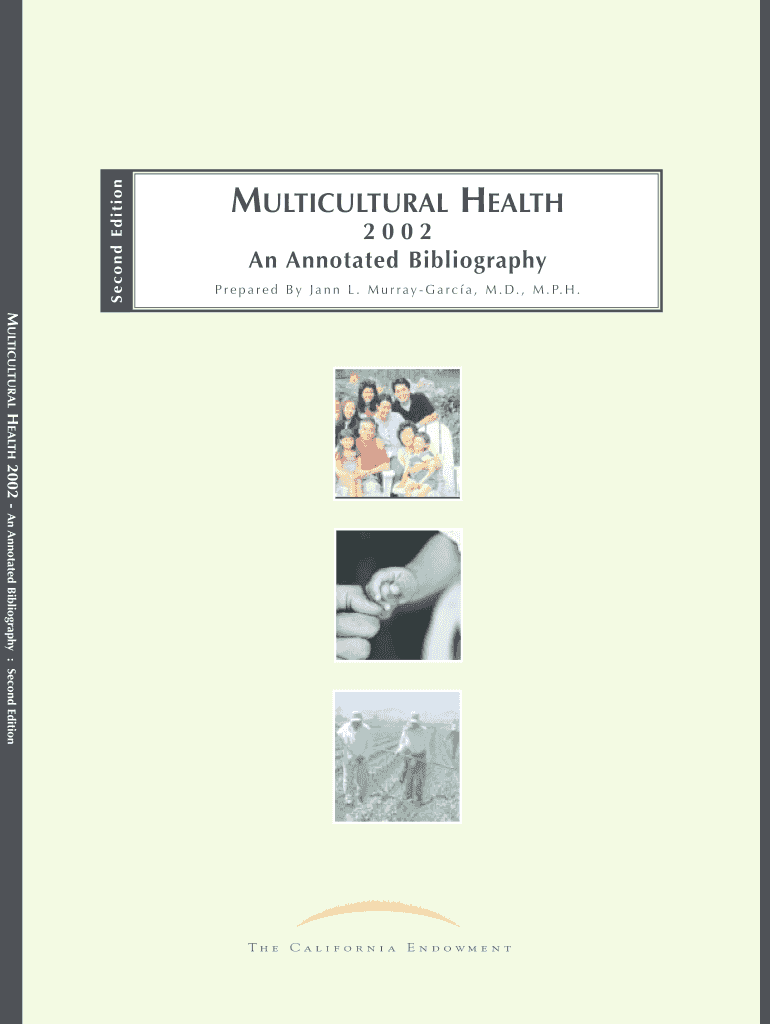
"Multicultural Health 2002: An Annotated Bibliography" is a document that explores the diverse healthcare needs of underserved populations in California. Prepared by Jann L. Murray-García for The California Endowment, the bibliography highlights the importance of multicultural approaches in healthcare. It emphasizes the need for resources, research, and education to address issues such as workforce diversity, health disparities, cultural competency, language access, and community responsiveness. The document includes over 180 entries summarizing relevant articles and studies, advocating for equitable healthcare access.
Importance of Multicultural Health Approaches
The document underscores the critical role of understanding cultural contexts in improving health outcomes. This involves recognizing the unique health challenges faced by different communities and tailoring healthcare approaches to meet those specific needs. Effective multicultural health approaches can lead to increased patient satisfaction, improved compliance with medical advice, and ultimately better health outcomes.
How to Use the Multicultural Health 2002 - The California Endowment
To effectively utilize this document, stakeholders should integrate its insights into policies and practices. Healthcare administrators and providers can use the bibliography to identify areas needing focus, such as improving language accessibility in healthcare settings or expanding research into health disparities. Academics and researchers can leverage the summaries for literature reviews or as a foundation for further study. Community organizations might use these findings to support advocacy efforts aimed at promoting health equity.
Practical Applications in Healthcare Settings
- Policy Development: Use the document to inform policy creation that addresses health disparities and promotes equity.
- Educational Programs: Incorporate findings into training modules for healthcare professionals, emphasizing cultural competency.
- Community Initiatives: Design health programs that are culturally sensitive and cater to the unique needs of diverse community groups.
Steps to Complete the Multicultural Health 2002 - The California Endowment
Although the document is already complete, interpreting and acting on its findings involves several steps. Organizations should start by reviewing relevant summaries in the bibliography to gather insights pertinent to their specific context. Next, they could develop strategies to implement multicultural best practices in their operations. Additionally, setting measurable goals to track progress in addressing health disparities would be essential.
Step-by-Step Guidance
- Review the Bibliography: Determine which articles align with your organization's focus and needs.
- Develop a Strategy: Identify action points for implementing insights into practice.
- Set Objectives: Create clear goals and benchmarks based on the identified strategies.
- Monitor and Evaluate: Regularly assess progress and adapt strategies as necessary for continuous improvement.
Key Elements of Multicultural Health 2002 - The California Endowment
Several key elements make this document a valuable resource:
- Annotated Summaries: Provides concise summaries of over 180 articles, focusing on various aspects of multicultural healthcare.
- Focus Areas: Includes critical topics such as cultural competency, health disparities, and language access.
- Advocacy for Equity: Emphasizes the importance of equitable healthcare access and the role of community responsiveness in achieving it.
Focus Areas in Detail
- Workforce Diversity: Importance of diverse representation in healthcare teams to improve patient care and understanding.
- Cultural Competency: Techniques and education strategies to enhance provider understanding of diverse cultural norms and values.
- Language Access: Strategies to overcome language barriers that hinder effective communication between providers and patients.
Who Typically Uses the Multicultural Health 2002 - The California Endowment
The primary users of this document include healthcare professionals, policymakers, educators, and community leaders. It serves as a resource for those committed to improving healthcare delivery in multicultural settings and ensuring equal access to quality care.


Target User Groups
- Healthcare Providers: For implementing culturally competent practices in patient care.
- Policymakers: Drafting policies that promote health equity and address disparities.
- Researchers and Academics: As a foundation for further research and study into multicultural health issues.
Legal Use of the Multicultural Health 2002 - The California Endowment
The document serves as a legal framework guideline for supporting policies and programs aimed at promoting health equity. Although not a legal instrument, its comprehensive collection of research can inform legislative development or be used as an advocacy tool in discussions with lawmakers or health organizations.
Informing Policy and Practice
- Policy Guidelines: Used as a reference to align local and state health policies with multicultural considerations.
- Advocacy: Supports initiatives aimed at obtaining funding or resources for communities impacted by health disparities.
Important Terms Related to Multicultural Health 2002 - The California Endowment
Understanding the terminology used within the document is crucial for its effective application. Terms such as "cultural competency," "health disparities," and "workforce diversity" are key concepts that recur throughout the bibliography.
Key Terminology Explained
- Cultural Competency: The ability of healthcare providers to understand and integrate cultural factors into patient care.
- Health Disparities: Differences in health outcomes across different population groups, often caused by social, economic, or environmental disadvantages.
- Workforce Diversity: Representation of different cultural, racial, and ethnic groups within healthcare teams to enhance service quality.
Examples of Using the Multicultural Health 2002 - The California Endowment
Real-world examples illustrate the document's application in varied settings, showcasing its impact on enhancing multicultural health paradigms.
Case Studies and Implementation Models
- Community Health Programs: Some organizations have used insights from the bibliography to develop community-based programs that specifically target local health disparities.
- Educational Curriculum Development: Universities have included these bibliographic insights in their healthcare courses to train future providers on the importance of cultural competency.
By leveraging these blocks and restructuring them into a comprehensive content format, users can gain a detailed understanding of "Multicultural Health 2002 - The California Endowment" and effectively integrate its findings into diverse healthcare contexts.