
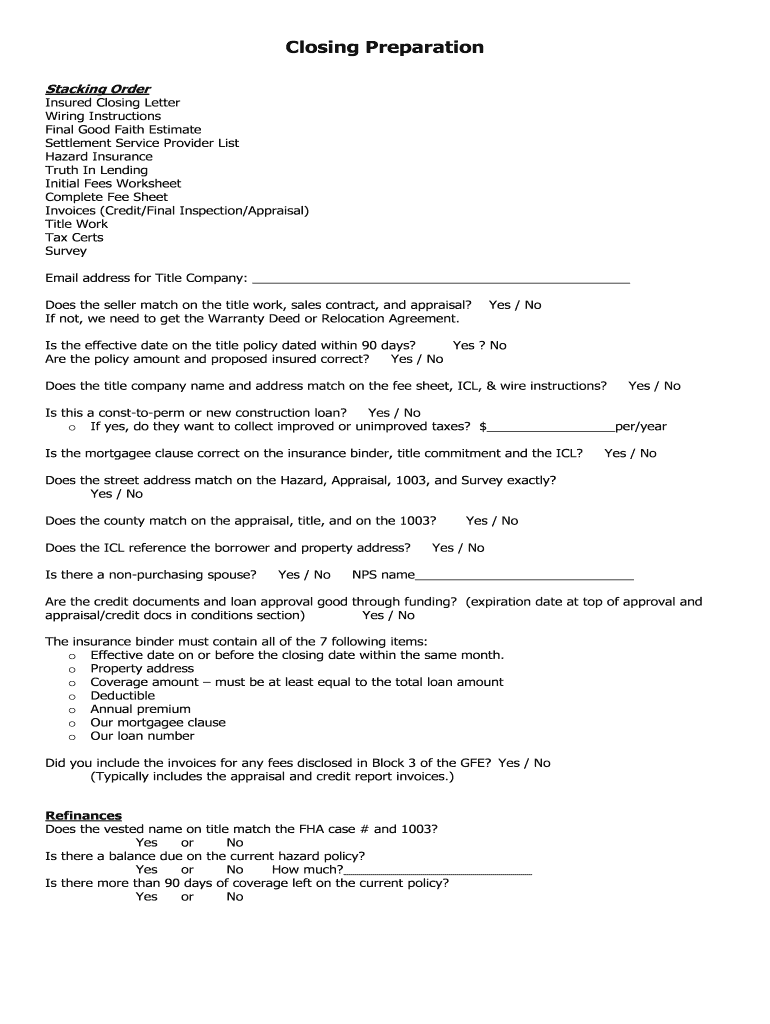







Definition and Purpose of Closing Preparation
Closing preparation in real estate transactions involves the comprehensive set of actions required to finalize the sale or transfer of a property. It entails preparing necessary legal documents, ensuring compliance with regulations, and confirming the accuracy of inputs from involved parties. Often culminating in the "closing day," this process ensures that all terms of the contract are met to the satisfaction of both buyers and sellers. Closing preparation is crucial for mitigating risks and ensuring that the property transfer is legally binding and free of disputes.
Essential Steps in Completing Closing Preparation
-
Document Collection and Review:
- Gather key documents such as the Insured Closing Letter, Wiring Instructions, Title Insurance policies, and Property Survey.
- Review each document for accuracy, ensuring details like property description and party names are consistent across all paperwork.
-
Property Inspection and Appraisal:
- Conduct a thorough property inspection and appraisal to assess the property's condition and value.
- Resolve any discrepancies or issues identified during inspections that might impact the closing process.
-
Financial and Legal Coordination:
- Finalize all financial arrangements, including mortgage approval and the settlement of any outstanding expenses.
- Verify compliance with relevant property laws and local ordinances.
Key Elements of Closing Preparation
-
Title Search and Insurance:
- Conduct a title search to confirm the seller's legal ownership.
- Obtain title insurance to protect against any potential claims or disputes regarding ownership.
-
Loan and Financing Documents:
- Complete and review loan funding disclosure documents.
- Ensure all terms and conditions of the mortgage are clearly understood and documented.
-
Final Walkthrough:
- Schedule a final walkthrough to check that agreed-upon repairs or improvements have been made.
- Confirm that appliances and other fixtures are intact and as per agreement.
Important Terms Related to Closing Preparation
- Escrow: A neutral third party responsible for holding funds during the transaction until all conditions are met.
- Closing Disclosure: A detailed account of the loan terms and closing costs that must be delivered at least three days before closing.
- Prorations: Adjustments related to property tax, utilities, and other expenses shared between buyer and seller based on the transaction date.
Legal Use and Compliance in Closing Preparation
- Closing preparation must adhere to the Fair Housing Act and ensure non-discriminatory practices in the transaction process.
- Compliance with the Real Estate Settlement Procedures Act (RESPA) is required to ensure transparent disclosure of settlement costs.
- Legal compliance extends to accurate reporting of transaction details to applicable government entities and adherence to state-specific land transfer laws.
State-Specific Rules in Closing Preparation
Closing procedures and requirements can vary significantly between states, with differences in aspects such as:
- Documentary Requirements: Certain states have unique forms and disclosures that must be filed in a property transaction.
- State Taxes and Fees: Variances in transfer taxes, recording fees, and other transaction-related costs.
- Attorney Involvement: States such as New York and South Carolina require legal representation at real estate closings.
Required Documents for Closing Preparation
- Purchase Agreement: The primary document outlining the terms and conditions of the transaction.
- Loan Application and Approval: Documentation relevant to the buyer's financing.
- Disclosure Forms: Includes seller's disclosures and lead paint disclosures where applicable.
- Deed Documents: Legal documents that signify the transfer of property ownership.
Examples From Closing Preparation Scenarios
- Residential Property Sale: The seller ensured all contractual repairs were completed before the final walkthrough, and discrepancies in the property line identified in the survey were resolved to avoid closing delays.
- Commercial Real Estate: Coordination between multiple stakeholders, including lending institutions and legal advisors, facilitated a smooth transaction with all zoning laws and commercial use regulations confirmed prior to closing.
Who Typically Uses Closing Preparation
In a typical real estate transaction, several parties engage in the closing preparation process:
- Buyers and Sellers: Primary stakeholders concerned with ensuring a smooth transfer of property title.
- Real Estate Agents: Assist with coordination of tasks and ensure all parties meet contractual obligations.
- Attorneys and Legal Advisors: Oversee legal compliance and manage any title or contract disputes.
Examples of Using Closing Preparation
- Residential Buyer: A family purchasing their first home focusses on understanding the closing disclosure document to budget appropriately for closing costs.
- Real Estate Investor: An investor completing due diligence steps uses closing preparation to assess potential rental income adjustments against expected expenses and profit margins.
These scenarios emphasize the multifaceted aspects of closing preparation, illustrating its critical role in successful property transactions.




