




Definition & Meaning
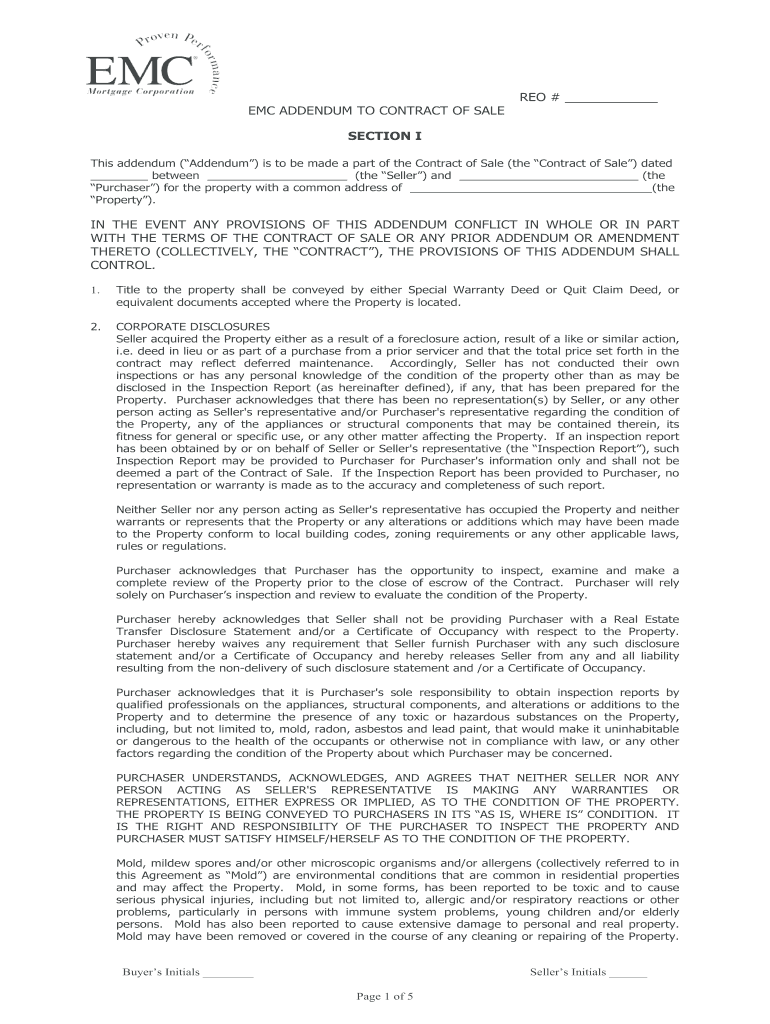
The EMC Addendum to Contract of Sale is a supplemental document that outlines specific terms and conditions associated with the sale of a property. It serves as an integral part of the main sales contract, highlighting additional stipulations that the buyer and seller have mutually agreed upon. Primarily, it details the conditions under which the property is sold, usually 'as is,' meaning the seller offers no guarantees about the property's state. This includes disclaimers about potential issues like mold or lead-based paint. This form is pivotal in ensuring transparency and agreement on additional terms that are outside the scope of the original contract.
Key Elements of the Document
- Property Condition: Specifies that the property is sold without warranties from the seller regarding its current state.
- Inspection Responsibilities: Details obligations relating to property inspections and who bears the responsibility.
- Financial Terms: Clarifies the financial responsibilities, including repairs and tax-related obligations.
How to Use the EMC Addendum to Contract of Sale
Using the EMC Addendum involves a series of steps that ensure all parties agree to the terms laid out in the document.
- Review the Main Contract: Begin by examining the primary Contract of Sale to understand the baseline terms.
- Identify Necessary Additions: Determine what additional terms need to be included, such as specific repairs or financial stipulations.
- Complete the Addendum: Fill out the addendum, making sure all necessary terms are clearly detailed.
- Obtain Signatures: Both the buyer and the seller must sign the addendum for it to be valid, thereby agreeing to the additional conditions.
Practical Examples
- Contingencies: If the buyer wants the sale contingent on a successful inspection, this would be included in the addendum.
- Financial Adjustments: If the seller agrees to cover certain closing costs, these terms should also be stated here.
Important Terms Related to EMC Addendum to Contract of Sale
Understanding several key terms is essential when working with the EM Addendum.
- 'As Is': Refers to selling the property without the seller providing any warranties on its condition.
- Indemnification: A provision that protects parties from certain liabilities.
- Lead-Based Paint Disclosure: Required information about lead paint for homes built before 1978.
Clarification and Examples
- Contested Taxes: Deals with any disagreements over tax evaluations; sellers often retain the right to contest assessed values.
- Inspection Clauses: Clearly outline who is responsible for inspecting the property and how findings will be handled.
State-Specific Rules for the EMC Addendum to Contract of Sale
State laws can significantly impact how the EMC Addendum is applied. It is crucial to familiarize yourself with local regulations to ensure compliance.
- Lead-Based Paint Disclosures: Some states have stringent requirements for disclosing information about lead-based paint.
- Inspection Periods: States may vary in terms of allowed duration for inspections and subsequent negotiations.
- Indemnification Clauses: Different states have unique laws relating to indemnification in real estate deals.
Examples
- California: Emphasizes buyer protections, requiring detailed disclosures.
- Texas: May have different rules about contested taxes and seller rights.
Who Typically Uses the EMC Addendum to Contract of Sale?
This document is commonly used by real estate agents, buyers, and sellers during the property sales process.


Typical Users Include:
- Real Estate Professionals: Assist clients in negotiating terms and understanding the document's implications.
- Buyers: Use the addendum to request or enforce certain conditions as part of the purchase.
- Sellers: Clarify any terms that fall outside the main contract, protecting their interests.
Steps to Complete the EMC Addendum to Contract of Sale
This process can be broken down into clear, actionable steps:
- Gather Required Information: Ensure you have all details needed, such as names, property addresses, and specific terms.
- Draft the Addendum: Clearly articulate any additional terms or requirements.
- Review with Parties Involved: All parties should thoroughly review and understand the document.
- Sign and Date the Addendum: Ensure both parties sign, indicating acceptance of terms.
Recommendations
- Thoroughly Understand Terms: Make sure all parties fully understand each term included.
- Legal Consultation: Consider consulting with legal professionals to ensure all terms are enforceable.
Legal Use of the EMC Addendum to Contract of Sale
The EMC Addendum holds legal weight and is a binding part of the sales agreement. This means that any violation of its terms can be legally contested.
Legal Considerations
- Contractual Obligations: Once signed, both parties must adhere to the specified conditions.
- Dispute Resolution: Ensure there is a clear process outlined for resolving potential disputes.
- Enforceability: Confirm that all terms comply with state and federal laws to ensure they can be legally enforced.
Disclosure Requirements
The EMC Addendum must include specific disclosures to comply with federal and state laws. This typically involves providing information about any environmental hazards associated with the property.
Common Disclosure Types
- Environmental Hazards: Particularly for properties built before 1978, where lead-based paint hazards are a concern.
- Physical Condition: Any known issues with the property's condition that could affect the buyer's decision.
By understanding these components of the EMC Addendum to Contract of Sale, parties involved in a property transaction can better manage their responsibilities and protect their interests.