






Definition & Meaning
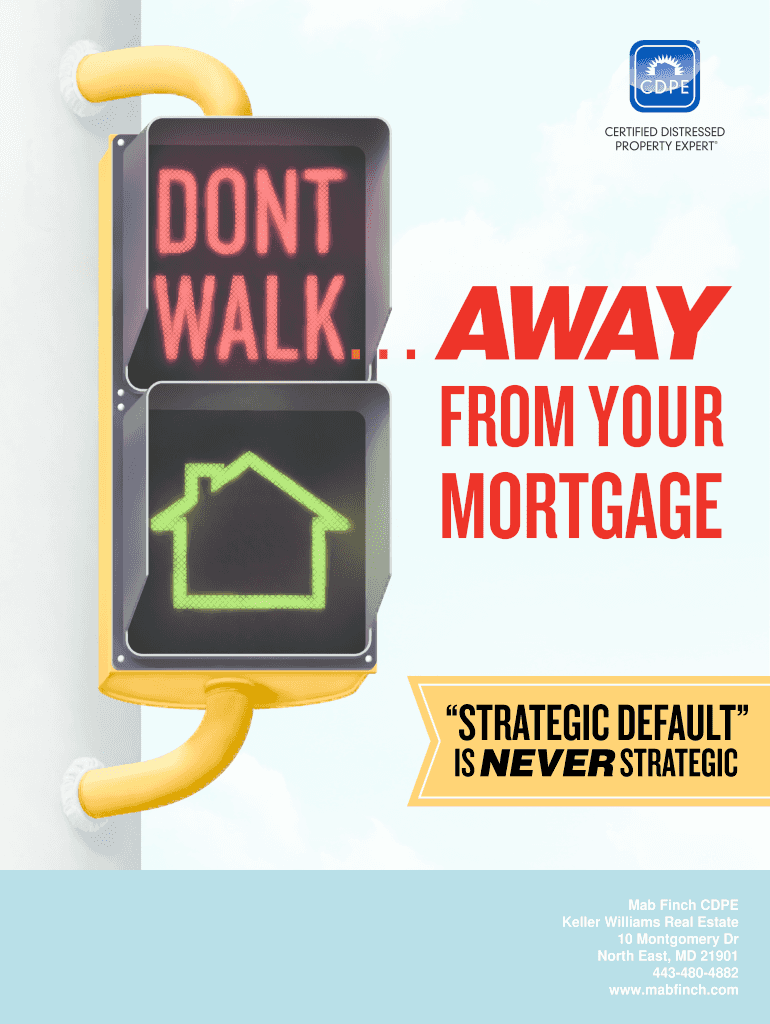
Strategic default, in the context of Keller Williams Realty, refers to the deliberate decision by a homeowner to stop making mortgage payments despite having the financial ability to continue doing so. This decision is often made when the homeowner owes more on the property than its current market value, making the mortgage an unattractive financial burden. At Keller Williams Realty, experts often caution against this course of action due to the significant negative impacts it can have on one's credit score and future financial opportunities. Homeowners are encouraged to explore alternative solutions before opting for a strategic default, as it is not considered the most viable option for financial difficulties.
Important Terms Related to Strategic Default - Keller Williams Realty
Understanding the terminology associated with strategic default is crucial for homeowners considering this option:
- Underwater Mortgage: When the outstanding balance on a loan is higher than the property's market value.
- Negative Equity: Another term for an underwater mortgage, highlighting the negative asset position.
- Credit Score Impact: The reduction in creditworthiness resulting from a strategic default.
- Foreclosure: The legal process initiated by a lender to take possession of a property due to unpaid mortgage obligations.
- Short Sale: Selling a property for less than the outstanding mortgage amount with the lender's approval, often considered a preferable alternative to strategic default.
Alternatives to Strategic Default
Before pursuing a strategic default, homeowners are advised to consider various alternatives that Keller Williams Realty agents often recommend:
- Loan Modification: Adjusting the terms of the mortgage to make monthly payments more manageable.
- Forbearance Agreement: Temporarily pausing or reducing payments with lender approval during financial hardships.
- Short Sale: Selling the property with lender consent at a reduced market rate to avoid foreclosure.
- Deed in Lieu of Foreclosure: Voluntarily transferring property ownership to the lender, bypassing the foreclosure process.
These options often entail less severe consequences than a strategic default and should be explored with the guidance of a real estate professional.
Key Elements of the Strategic Default - Keller Williams Realty
Several components are critical when considering a strategic default:
- Current Market Analysis: Understanding property values and potential future appreciation should inform the decision.
- Financial Assessment: A comprehensive review of one's financial situation, including income stability and future homeownership goals.
- Credit Implications: Analyzing the impact on credit scores and access to future credit facilities.
- Legal Considerations: Awareness of state laws regarding defaults and the possibility of deficiency judgments.
- Consultation with Experts: Engaging with financial advisors, real estate professionals, and legal counsel to understand the full scope of consequences.
Who Typically Uses Strategic Default - Keller Williams Realty
Strategic default is most commonly used by homeowners who:
- Have residences suffering significant depreciation, leading to substantial amounts of negative equity.
- Face long-term financial instability, making continued mortgage payments untenable.
- Possess other investment opportunities that outweigh the benefits of maintaining the current mortgage.
Real estate agents at Keller Williams Realty advise these individuals to fully understand the repercussions before making a decision.
Legal Use of the Strategic Default - Keller Williams Realty
The legal ramifications of a strategic default vary by state:
- Recourse vs. Non-Recourse States: In recourse states, lenders may pursue deficiency judgments. Non-recourse states limit lenders to only reclaiming the property.
- State-Specific Legislation: Some states provide homeowners with more protections and rights during foreclosure processes.
- Tax Implications: Forgiven debt may sometimes be considered taxable income, requiring careful examination of IRS guidelines.
Homeowners should consult with a real estate attorney familiar with state-specific laws before proceeding with a strategic default.
State-Specific Rules for the Strategic Default - Keller Williams Realty
Different states have unique regulations governing strategic default and foreclosure processes:
- California: Notably a non-recourse state, adding certain protections for homeowners.
- Florida: Allows deficiency judgments, underscoring the importance of understanding local foreclosure regulations.
- Arizona: Laws limit lenders from pursuing homeowners post-foreclosure for certain residential properties.
Exploring these nuances with Keller Williams Realty can help homeowners make informed decisions tailored to their state's regulatory landscape.
Examples of Using the Strategic Default - Keller Williams Realty
Practically, strategic default might be considered by:
- Homeowners with Investment Properties: For secondary residences suffering market depreciation.
- Retirees: Who have relocated and can't sell the previous residence at a viable price.
- Financially Robust Individuals: Who prioritize alternative investments or debt payments over preserving their current mortgage.
Agents at Keller Williams Realty work to provide in-depth consultations, offering insights into the practicality and repercussions based on individual scenarios.