






Definition and Purpose of "Civil Forms - Northern District of California - U.S. Courts"
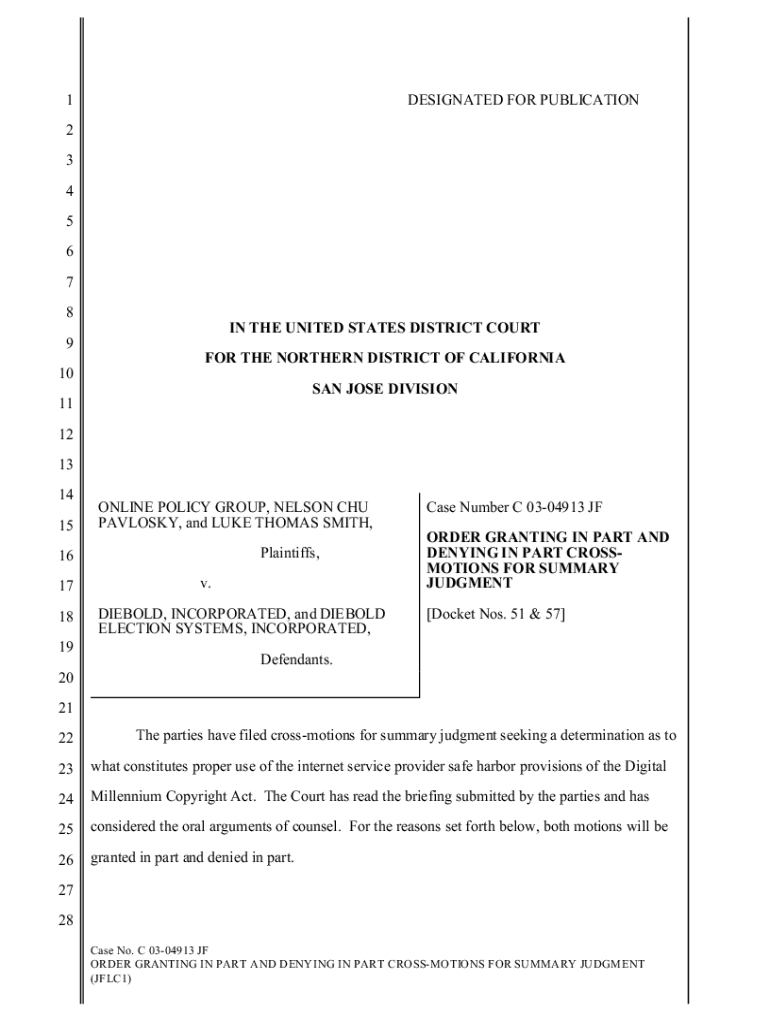
Civil forms used in the Northern District of California U.S. Courts serve as standardized documents necessary for the initiation and management of civil legal proceedings within the jurisdiction. They cover various functions, including complaints, motions, petitions, affidavits, and civil cover sheets. Understanding these forms is critical for effectively navigating the legal requirements of civil litigation within this specific federal district.
Key Functions of Civil Forms
- Initiating Proceedings: Forms are used to commence a lawsuit by filing a complaint or a petition.
- Managing Cases: Other forms help manage ongoing litigation, such as scheduling orders and discovery requests.
- Resolution: There are forms for settlements and summary judgments that help parties formally conclude legal matters.
These documents ensure that all parties involved in a case comply with procedural rules and legal standards specific to the Northern District.
How to Use the Civil Forms - Northern District of California - U.S. Courts
Using civil forms involves several critical steps to ensure proper legal consideration. Each form often comes with detailed instructions which should be reviewed thoroughly to adhere to procedural requirements.
Steps for Effective Use
- Identifying the Correct Form: Determine which form corresponds to the specific action needed in your case, like filing a motion or complaint.
- Completing the Form: Carefully fill out all required sections, providing clear and concise information in line with the accompanying guidelines.
- Filing Procedures: Submit the completed form to the appropriate court clerks, ensuring adherence to filing deadlines and fee requirements.
These steps ensure compliance with court protocols and aid in the smooth progression of a case.
How to Obtain the Civil Forms - Northern District of California - U.S. Courts
Civil forms can be accessed through various means, depending on user convenience and access to resources.
Options for Acquisition
- Online Access: Forms are available for download from the Northern District of California’s official court website.
- In-Person Retrieval: Visit the court clerk’s office to obtain hard copies directly.
- Legal Libraries: Many legal libraries within California also provide access to federal court forms.
Ensuring easy access to these forms is vital for litigants in preparing their civil cases efficiently and accurately.
Steps to Complete the Civil Forms - Northern District of California - U.S. Courts
Completing these legal forms accurately is crucial as errors can lead to delays or dismissal of legal actions.
Detailed Steps
- Gather Necessary Information: Before filling out the form, compile all relevant case details, such as party names, case numbers, and legal representatives.
- Complete All Required Fields: Fill in every mandatory section without leaving blanks unless otherwise specified.
- Review and Proofread: Carefully review the form for errors or omissions, ensuring that all information aligns with case facts.
- Sign and Date: Always sign and date the document where required to authenticate its submission.
Adherence to these steps can help avoid common pitfalls associated with form miscompletion.
Who Typically Uses the Civil Forms - Northern District of California - U.S. Courts
These forms are primarily used by parties engaging in civil litigation within the federal judicial system of the Northern District of California.


Common Users
- Attorneys and Legal Representatives: Lawyers often handle the preparation and submission of these forms as part of their representation duties.
- Self-Represented Litigants: Individuals not employing legal counsel must understand how to use these forms independently.
- Court Officials: Judges and clerks reference these forms to make procedural decisions and manage case dockets.
Identifying the user group helps tailor form instructions and accessibility options to meet varied legal needs.

Important Terms Related to Civil Forms - Northern District of California - U.S. Courts
Familiarity with specific terminology is vital for understanding and completing civil forms correctly.
Key Terms
- Plaintiff: The party initiating the lawsuit.
- Defendant: The party being sued or accused in the case.
- Jurisdiction: The court's authority to hear a case.
- Affidavit: A written statement confirmed by oath for use as evidence.
Understanding these terms enhances clarity and accuracy when interacting with judicial forms.
Legal Use of Civil Forms - Northern District of California - U.S. Courts
These forms must be used in accordance with legal standards and procedural rules of the federal court system.
Legal Standards Compliance
- Federal Rules of Civil Procedure: Forms align with these national rules, ensuring uniformity across federal court filings.
- Local Court Rules: Specific local amendments or variations require adherence to tailored procedural requirements of the Northern District.
By following these legal protocols, parties assure the validity and legitimacy of their form submissions.
Key Elements of the Civil Forms - Northern District of California - U.S. Courts
Understanding the vital components of each form aids in proper completion and submission.
Critical Components
- Case Information: Detailed sections for case numbers, party names, and descriptions of actions.
- Relief Sought: Specific sections where litigants describe the legal relief or action they are requesting.
- Signatures and Dates: Mandatory fields for signature and date as confirmation of authenticity and timeliness.
These elements are essential for communicating the necessary details to the court effectively.
State-Specific Rules for Civil Forms - Northern District of California - U.S. Courts
While these forms are used in federal court, they sometimes intersect with specific state regulations or nuances.
Important State Considerations
- Local Variations: Some procedural elements may differ based on California state laws or regional judicial practices.
- Filing Fees: State-specific guidelines might influence fee structures or waivers available to low-income litigants.
Understanding these rules is critical for aligning federal filings with state procedural standards and requirements.