
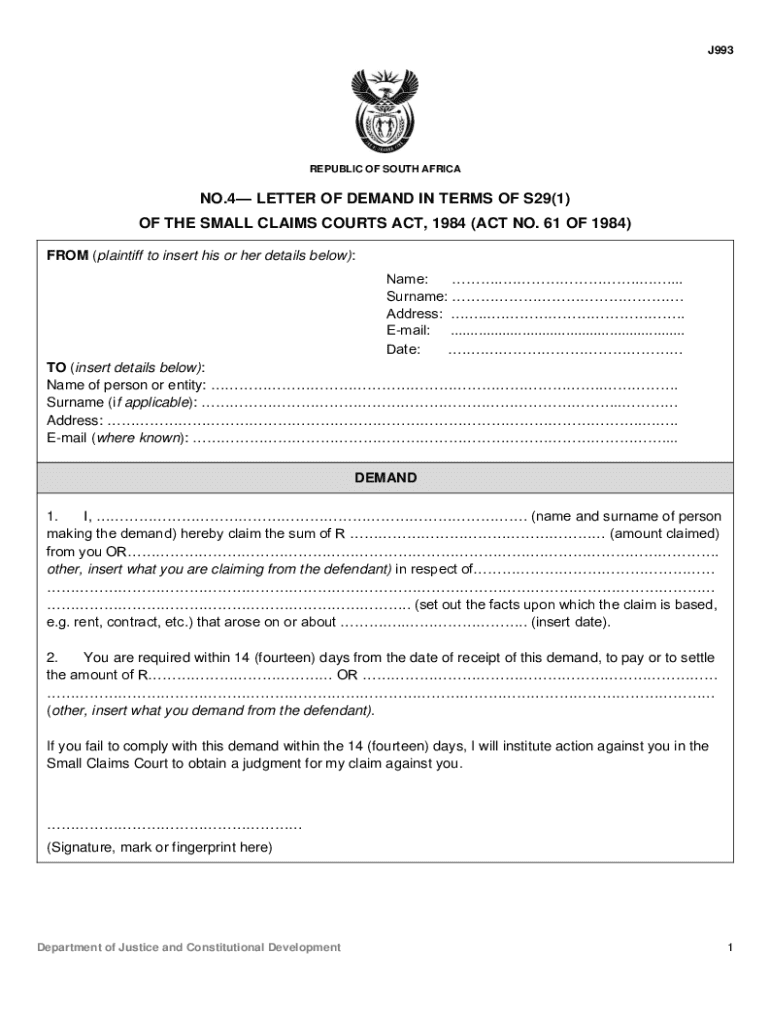







Definition and Purpose of the Letter of Demand in Terms of S29(1) of the Small
The Letter of Demand in terms of S29(1) of the Small Claims Courts Act, 1984, serves as a formal request by a plaintiff to a defendant to settle a monetary claim. It is a precursor to initiating legal action in a Small Claims Court. This document outlines the specifics of the financial claim, including the amount, and provides the defendant with a stipulated time frame, typically 14 days, to respond or make the necessary payment to avoid further legal proceedings.
How to Use the Letter of Demand in Terms of S29(1) of the Small
-
Identify the Claim Details: Before drafting the letter, clearly define the amount owed and the basis for the claim. Ensure all relevant details are accurate and complete.
-
Drafting the Letter: Use a professional format to write the letter, including the plaintiff's and defendant's contact information, a detailed description of the debt, and the deadline for response.
-
Include Instructions for Payment: Clearly state the methods and means by which the defendant can make the payment to settle the claim.
-
Send the Letter: Deliver the letter to the defendant through a method that provides proof of delivery, such as certified mail.
Steps to Complete the Letter of Demand in Terms of S29(1) of the Small
-
Gather Relevant Information: Collect all documents that support the claim, including invoices, contracts, and any correspondence with the defendant.
-
Fill in the Required Details: Complete the letter with all necessary information clearly and concisely. Double-check for accuracy.
-
Review Legal Requirements: Verify that the letter adheres to legal stipulations under the Small Claims Courts Act, including the correct reference to S29(1).
-
Seek Legal Advice if Necessary: For complex cases, consult with an attorney to ensure the letter is valid and enforceable.
Key Elements of the Letter of Demand in Terms of S29(1) of the Small
-
Plaintiff and Defendant Information: Full names, addresses, and contact details.
-
Claim Amount: Clearly specified total amount being demanded.
-
Reason for Demand: A detailed explanation of why the amount is owed.
-
Response Timeframe: A specific deadline by which the defendant should respond or settle the claim.
-
Consequences of Non-Compliance: A statement indicating the intention to take legal action if the claim is not addressed.
Legal Use of the Letter of Demand in Terms of S29(1) of the Small
The letter acts as a formal notification that legal action may be forthcoming if the demand is not met. It is essential in demonstrating to the court that the plaintiff attempted to resolve the matter amicably before pursuing litigation. This preventative measure can also serve as evidence in court proceedings should the need arise.
Who Typically Uses the Letter of Demand in Terms of S29(1) of the Small
-
Individuals: Especially those owed smaller sums of money who wish to avoid the costlier and more complex traditional legal processes.
-
Small Businesses: Enterprises seeking to recover debts efficiently and with minimal legal costs.
-
Legal Professionals: Attorneys representing clients in small claims matters.


Important Terms Related to the Letter of Demand in Terms of S29(1) of the Small
-
Plaintiff: The person or entity making the claim.
-
Defendant: The party from whom the payment is demanded.
-
Small Claims Court: A court that handles civil disputes involving limited monetary claims without the need for legal representation.
-
Demand for Payment: The request for settlement of the specified amount.
Penalties for Non-Compliance
Failing to respond to the letter can lead to legal action in Small Claims Court. This may include a court order requiring the defendant to pay the claimed amount and possibly additional court costs or interest. Non-compliance could further lead to damage to the defendant's credit rating or other repercussions.




