





Definition and Meaning of Form Online
The term "form online" refers to a digital version of a traditional paper form that can be completed and submitted electronically. These forms are widely used across various sectors, including government, business, education, and healthcare, to streamline processes and improve efficiency. Online forms can include fields for text input, checkboxes, dropdown menus, and electronic signatures, allowing for dynamic and interactive data collection. The convenience of accessing and submitting forms via the internet makes them an integral part of modern administration and communication.
How to Use the Form Online
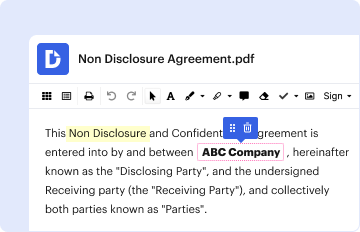
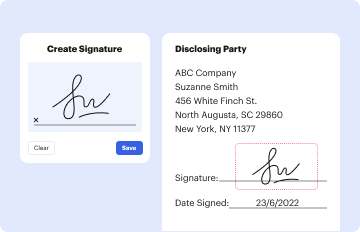
To use a form online, start by accessing the form on a designated website or platform, such as DocHub, which provides tools for editing and completing forms. Once you open the form, you can begin by entering information into the provided fields. Depending on the form's purpose, you may be required to fill out text boxes, select options from dropdown menus, or check relevant boxes. DocHub also allows you to sign the document electronically, ensuring that your submission is legally recognized. After entering all the necessary information, you can review your entries for accuracy before submitting the form online.
Steps to Complete the Form Online
- Access the Form: Navigate to the website or platform hosting the form. Use a compatible device, such as a PC, tablet, or smartphone, to open the form.
- Fill in Personal Information: Enter your personal details, such as your name, address, and contact information. Ensure accuracy to avoid delays.
- Provide Required Data: Complete any sections specific to the form's purpose, such as answering questions or describing circumstances.
- Use Form Fields: Utilize text boxes, dropdowns, and checkboxes as instructed. Pay attention to any asterisks indicating mandatory fields.
- Sign the Form: Use tools like DocHub to add your electronic signature, validating your submission.
- Review for Errors: Double-check your inputs for correctness and completeness, correcting any mistakes.
- Submit the Form: Follow the instructions provided to submit the completed form online. Save a copy for your records if possible.
Why Should You Form Online?
Filling out forms online offers several advantages over traditional paper forms. It significantly reduces processing time by allowing instant submission and immediate receipt by the intended recipient. Online forms can also decrease errors, as they often include automated checks or prompts to ensure all necessary fields are completed. Additionally, they enhance accessibility and convenience, as users can fill them out from any location with internet access. Utilizing forms online also supports environmental sustainability by reducing paper consumption.
Important Terms Related to Form Online
- Electronic Signature: A digital signature used to sign documents and forms electronically, legally binding like a handwritten signature.
- Form Fields: Sections of the form designated for user input, including text fields, checkboxes, and dropdown menus.
- Submission Deadline: The final date by which an online form must be submitted to be considered valid.
- Data Validation: Aprocess ensuring that the information entered into form fields adheres to specified rules, reducing input errors.
- User Interface: The layout of the online form, including navigation, design, and functionality enabling user interaction.
Key Elements of the Form Online
Online forms typically consist of several critical components to facilitate their completion and submission:
- Title and Instructions: Clearly labeled titles and instructions guide users on how to complete the form.
- Form Fields: Areas where users provide their information, which may include various input types like text or selection options.
- Navigation Buttons: Tools to progress through multiple pages of a form, such as "Next," "Previous," or "Submit."
- Error Notifications: Alerts highlighting any form completion issues, ensuring accurate and complete data entry.
- Security Measures: Protections such as encryption to ensure the confidentiality and integrity of the user's information.
Legal Use of the Form Online
In the United States, online forms are legally recognized in the same manner as paper documents, provided they include an electronic signature. The ESIGN Act gives electronic signatures the same legal standing as traditional handwritten signatures, ensuring that electronically submitted forms are binding. This legal framework enables businesses, institutions, and governments to transition to online forms for various applications, including contracts, applications, and agreements, simplifying processes and ensuring compliance with legal requirements.
State-Specific Rules for the Form Online
While online forms are broadly accepted across the U.S., individual states may have specific regulations or requirements that govern their use. These variations can affect aspects such as signature verification, storage regulations, or confidentiality requirements. For instance, certain states may require additional proof of identity before accepting an electronic signature on official documents. It is essential to familiarize yourself with local regulations to ensure compliance when completing or submitting forms online.
State-by-State Differences
Various states may interpret or apply regulations concerning online forms differently. For example, some states might have unique requirements for notarization or witnessing of online form signings. Additionally, states may have distinct data security laws that influence how personal information collected through online forms should be protected or stored. Users and organizations should research and comply with relevant laws in their jurisdiction to ensure proper adherence to state-specific regulations.