






Definition and Meaning
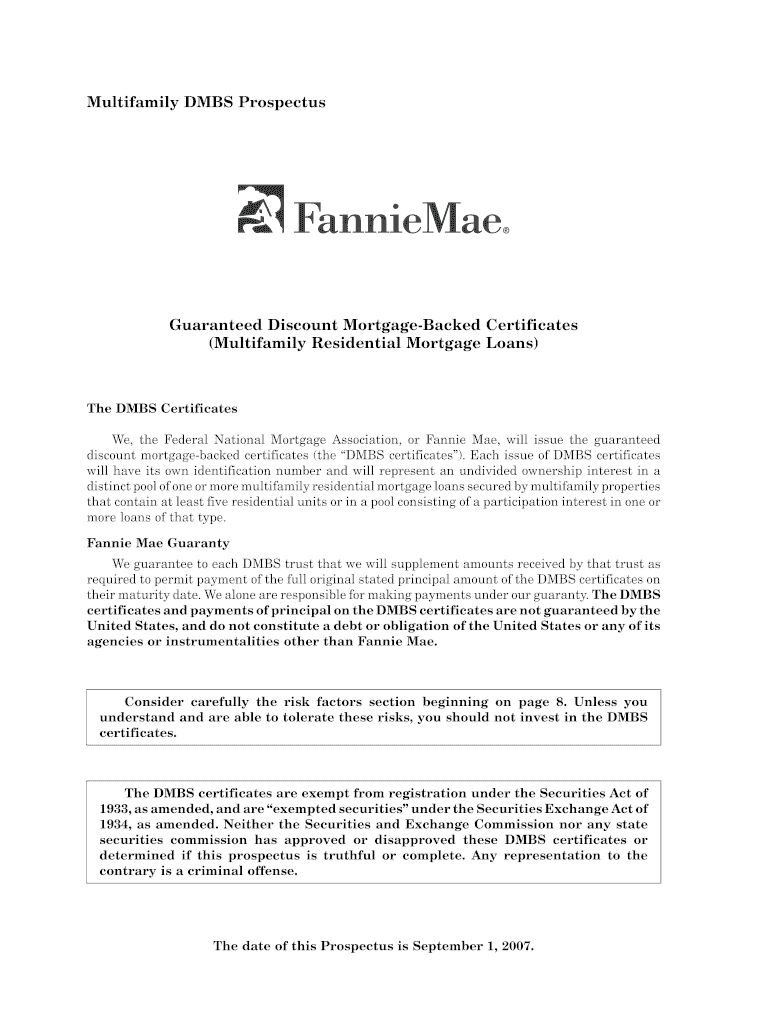
The "September 1, 2007 (DMBS) - Fannie Mae" outlines the issuance of Guaranteed Discount Mortgage-Backed Certificates by Fannie Mae. These certificates represent ownership interests in pools of multifamily residential mortgage loans. This form primarily serves as a prospectus, detailing the characteristics, structure, and associated risks of these certificates. Although Fannie Mae guarantees these certificates, they are not backed by the U.S. government, highlighting the importance of understanding the separate risks involved from governmental securities.
Key Elements of the Form
Understanding the key elements of the "September 1, 2007 (DMBS) - Fannie Mae" is essential for potential investors. The form outlines the characteristics of the mortgage loans involved, including their duration, interest rates, and risk factors. Additionally, it provides information on servicing arrangements, detailing how these loans are managed and maintained. Another critical area is the tax implications, which guides investors on how these securities influence their tax filings.
How to Use the Form
Users typically utilize the "September 1, 2007 (DMBS) - Fannie Mae" to assess the investment potential of DMBS. By reviewing the certificate's structure and Fannie Mae's guarantees, investors can evaluate how well these certificates fit into their portfolios. The form serves as an informational tool, providing all the necessary guidelines, financial statistics, and historical data needed to make informed investment decisions.
Steps to Complete the Form
To effectively engage with the form, investors should follow a structured approach:
- Review the Prospectus: Carefully read through the form to understand the terms and conditions.
- Analyze the Risk Factors: Examine the section detailing potential risks to make aware investment decisions.
- Consult a Financial Advisor: Engage with a financial professional to interpret complex components of the document.
- Evaluate Against Investment Goals: Align the details of the DMBS with personal or organizational financial objectives.
- Finalize Investment: After thorough analysis and consultation, decide whether to proceed with investing in these certificates.
Who Typically Uses the Form
The primary users of the "September 1, 2007 (DMBS) - Fannie Mae" are institutional and individual investors seeking to diversify their portfolios with mortgage-backed securities. Financial advisors and investment consultants also frequently utilize this prospectus to guide their clients through the investment process with informed recommendations based on detailed financial data and industry trends.


Legal Use of the Form
The legal use of this form centers around its role as a formal declaration of the terms and conditions involved in the issuance of the DMBS by Fannie Mae. It acts as a legal document binding both Fannie Mae and the investor to the outlined agreements and conditions, ensuring transparency and accountability in financial transactions. Compliance with securities law and regulations is imperative when using this form.
Examples of Using the Form
Consider a scenario where a financial institution is planning to expand its investment in mortgage-backed securities. By using the "September 1, 2007 (DMBS) - Fannie Mae," they can evaluate how the specifics of these securities align with their risk tolerance and investment strategy. The detailed insights into loan characteristics and servicing arrangements provided in the prospectus inform sound decision-making.
Required Documents
When using the "September 1, 2007 (DMBS) - Fannie Mae," it's essential to have all related documentation, such as financial statements, previous investment records, and an identification of all parties involved in the transaction. These documents are crucial for corroborating the information in the prospectus, ensuring that all parties have a clear understanding of their obligations and rights.
Filing Deadlines and Important Dates
It is crucial to keep track of any specified deadlines associated with the issuance of the DMBS. Missing these dates can impact the investment process, potentially leading to missed opportunities or financial penalties. Investors should adhere to the stated timelines for actions such as submission of documents and confirmation of participation.
Digital vs. Paper Version
The "September 1, 2007 (DMBS) - Fannie Mae" may be accessed in both digital and paper formats, providing flexibility for users. Digital versions offer the convenience of easy access and distribution, enhancing efficiency in handling and reviewing documents. Conversely, traditional paper versions still serve those who prefer physical copies for record-keeping or in settings where digital access is limited.
Form Submission Methods
Although primarily informational, any related documentation or engagement arising from this form's use should be completed through appropriate submission methods. These methods may include digital uploads via secure platforms or traditional mailing services for organizations preferring hard copies, ensuring that all transactions are documented appropriately.
Who Issues the Form
Fannie Mae is responsible for issuing the "September 1, 2007 (DMBS) - Fannie Mae." As a leading entity in the mortgage securities market, Fannie Mae provides extensive detail through these forms, ensuring comprehensive disclosure of financial information, structured approaches, and risk factors consistent with regulatory standards.
Business Types that Benefit Most
Investment firms, banks, and real estate agencies primarily benefit from engaging with the "September 1, 2007 (DMBS) - Fannie Mae." These businesses, deeply immersed in financial markets, find value in the structured information and attractive investment avenues offered by mortgage-backed securities, enhancing diversification and income opportunities in their portfolios.