






Definition and Meaning of Obtaining Access to Fannie Mae’s Non-Eligible and Principal Reduction Eligible Lists
Obtaining access to Fannie Mae's Non-Eligible and Principal Reduction Eligible Lists is essential for servicer staff who need accurate information for decision-making related to mortgage loans. These lists help in identifying loans that do not meet specific criteria for eligibility and those potentially qualified for principal reduction. The lists play a critical role in managing loan servicing processes, offering a structured approach to categorizing and processing loans based on their eligibility status.
How to Use the Obtaining Access to Fannie Mae’s Non-Eligible and Principal Reduction Eligible Lists
The lists are designed to streamline operations for servicers, guiding them in assessing which loans qualify for particular programs. Servicers can utilize this information to prioritize their workflow, ensuring that eligible loans receive the appropriate level of attention and resources. Steps include downloading the list through the Technology Manager and integrating the data into loan management systems for real-time decision-making.
Specific Use Cases
- Loan Eligibility Analysis: Determine loans that are eligible for specific programs.
- Resource Allocation: Effectively distribute resources based on eligibility criteria.
- Compliance Monitoring: Ensure loans are serviced in accordance with program guidelines.
Steps to Obtain Access to the Lists
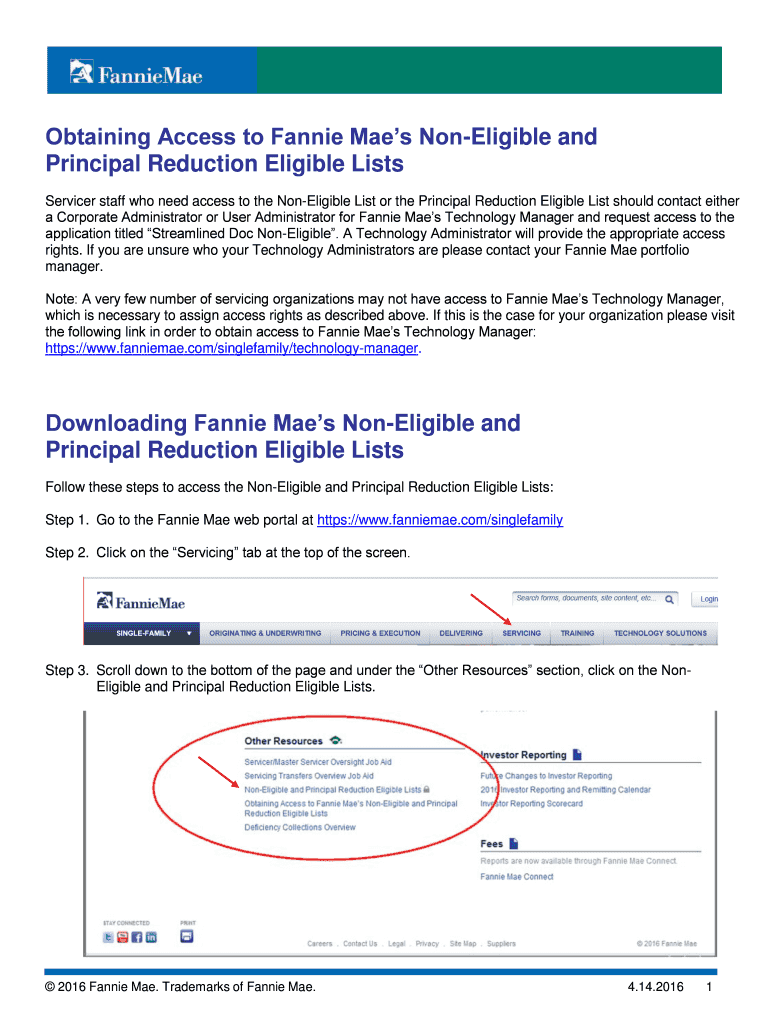
Gaining access requires utilizing the Fannie Mae web portal and the Technology Manager. The process includes a series of steps to authenticate your credentials and secure access to these sensitive documents.
- Authenticate Identity: Use existing credentials or create a new account through the Technology Manager.
- Access the Portal: Log in to the Fannie Mae web portal.
- Request Lists: Navigate to the relevant section for obtaining lists and submit a request.
- Download Files: Upon approval, download the lists for integration into your systems.
Practical Example
- Accessing the Portal: After logging in, use the navigation bar to locate the option for list requests, ensuring you select the current version for up-to-date information.
Key Elements of the Lists
The lists consist of varied components necessary for comprehensively understanding loan statuses. These elements aid in ensuring precise data handling and decision-making within loan servicing applications.
- Loan Identifiers: Unique numbers or codes for each loan.
- Eligibility Criteria: Specific guidelines or metrics that list non-compliant loans.
- Reduction Potential: Information on possible principal reductions under current programs.
- Status Indicators: Provide real-time information on loan compliance status.
Important Terms Related to Fannie Mae’s Non-Eligible Lists
The terminology used in the documentation is vital for proper understanding and execution of duties related to the lists. Familiarity with these terms enhances clarity and effectiveness when assessing loan data.
- Non-Eligible Loan: A loan that does not meet the criteria for certain servicing programs.
- Principal Reduction Eligible: Indicates loans that may qualify for a reduction in principal balance.
- Technology Manager: The online system used for accessing and managing Fannie Mae’s resources.
Application Process and Approval Timeline
Starting the application process for accessing these lists involves navigating institutional systems and adhering to Fannie Mae's protocols for secure information retrieval. Understanding the approval timeline helps set expectations and manage workflows effectively.
Application Steps
- Submit Application: Through the Technology Manager, submit your access application.
- Review Period: Expect a review time which could vary depending on the request and completeness of submitted information.
- Approval Notification: Post-review, receive an approval or feedback for corrections.
Expected Timelines
- Application Processing: Typically ranges from a few days to a week. Delays can occur based on queue volumes.
State-Specific Rules for Access
While processes for accessing these lists are generally uniform, slight variations may exist based on state-specific requirements and regulations. Understanding these nuances is crucial for compliance and effective processing.
- Access Permissions: Certain states might have additional permissions required for access.
- Compliance Checks: Additional compliance checks may be mandatory, depending on local regulatory frameworks.
Examples of Using the Lists in Practice
Real-world scenarios help illustrate the lists' utility, showcasing how servicers can optimize loan management and compliance through practical applications.
- Scenario 1: Using the list to review loans eligible for upcoming Fannie Mae initiatives, ensuring compliance and readiness for potential audits.
- Scenario 2: Implementing the lists to prioritize resources effectively, focusing attention on principal reduction candidates to enhance financial outcomes for both borrower and lender.
Eligibility Criteria for Access
Eligibility to access these lists requires adherence to certain criteria aimed at safeguarding sensitive information. Servicers must verify these conditions before attempting access.
- Role-Based Requirements: Specific roles within a servicing institution may be required to request access, typically involving managerial or compliance positions.
- Authentication Processes: Applicants need to undergo robust authentication to ensure sensitive information is managed securely.
By meticulously following these structured guidelines, servicers can professionally manage their loan portfolios, adhering to Fannie Mae's standards and regulations, and thereby optimizing their operational efficiency and compliance integrity.