



Definition and Meaning of the Declaration of Domestic Partnership
The Declaration of Domestic Partnership is a legal document that allows partners to formally acknowledge their relationship status outside of marriage. This document is often utilized by couples who live together and share a domestic life but are not legally married. It serves various purposes, including qualifying partners for certain benefits traditionally reserved for married couples, such as medical and dental coverage, housing rights, and family leave policies.
A domestic partnership declaration typically includes information about the partners involved, such as their names and contact details, and outlines the terms of the partnership. This might include responsibilities for shared financial obligations and the process to notify relevant parties in cases of change in status, such as dissolution of the partnership. By providing a formal recognition of their relationship, partners ensure that their partnership is legally acknowledged and protected.
Eligibility Criteria for the Declaration of Domestic Partnership
To file a Declaration of Domestic Partnership, partners must meet specific eligibility requirements. Selection criteria may vary by jurisdiction but commonly include the following:
- Both partners must be adults (usually 18 years or older).
- Neither partner should be married to someone else or in another domestic partnership.
- The partners must live together in a long-term, committed relationship.
- They should share financial responsibilities and a domestic life.
- The partners should not be closely related by blood in a way that would prevent marriage.
Partners may also need to provide evidence of a joint financial life, such as joint bank accounts or shared lease agreements. Meeting these criteria ensures that the partnership is recognized legally and can qualify the partners for various benefits.


How to Obtain the Declaration of Domestic Partnership
Obtaining a Declaration of Domestic Partnership generally involves a straightforward process that begins with obtaining the form from the appropriate local or state government office. This may be available at the city or county clerk's office or online through the relevant government website.
- Download or request the form: Visit the government office or website to access the form.
- Fill out the necessary fields: Provide all required information, including personal details for both partners.
- Provide supporting documentation: Attach any requested documents, such as proof of joint residence or financial commitments.
- Sign the form: Both partners must sign the form, and it may also require notarization.
- Submit the application: Submit the completed form to the designated office, either in person or online.
Once submitted, there may be a waiting period while the application is processed. Partners are typically notified upon approval, after which they can officially obtain recognition.
Steps to Complete the Declaration of Domestic Partnership
Completing the Declaration of Domestic Partnership involves several steps that ensure accuracy and compliance with legal requirements.
- Collect necessary information: Gather personal and relevant data for both partners, including full names, addresses, and contact details.
- Document evidence of partnership: Compile evidence that demonstrates a shared domestic life, such as bills in both names or joint account statements.
- Complete the form accurately: Carefully fill out the form, ensuring that all fields are completed without omissions or errors.
- Review for accuracy: Double-check all information and ensure the form complies with the required guidelines.
- Seek notarization if required: Have the form notarized if the jurisdiction mandates it.
- Finalize submission: Submit the completed form and accompanying documents to the appropriate office.
Familiarizing oneself with the process helps to reduce delays and ensure that the application process is as efficient as possible.
Important Terms Related to the Declaration of Domestic Partnership
Understanding key terms associated with the Declaration of Domestic Partnership can enhance comprehension of the form's implications.
- Domestic Partner: A partner who shares a committed relationship with another without being legally married.
- Joint Responsibility: The accountability shared by partners in managing financial and domestic obligations.
- Notarization: The process of certifying a document's authenticity by a licensed notary public.
- Affidavit: A written statement confirmed by oath or affirmation, often used as evidence of a partnership.
- Legal Recognition: The official acknowledgment by authorities that a partnership is registered and recognized under the law.
Learning these terms ensures clarity and accuracy when engaging with the partnership filing process.
State-Specific Rules for the Declaration of Domestic Partnership
Domestic partnership laws can differ significantly from state to state, affecting eligibility criteria and the recognition of partnerships.
- Eligibility variances: Certain states may have different age requirements, marital status stipulations, and residency conditions.
- Benefits and Rights: The benefits afforded to domestic partners may vary — some states extend health coverage and property rights, while others may offer limited recognition.
- Regulatory authorities: The office responsible for registering partnerships can differ, with some jurisdictions requiring county-level registration instead of state-level.
Researching specific state laws ensures compliance and maximizes the benefits obtainable from a registered partnership.
Legal Use of the Declaration of Domestic Partnership
The legal application of a Declaration of Domestic Partnership extends to various areas that necessitate formal recognition of a partnership.
- Health Benefits: Partners may qualify for health and dental insurance coverage similar to that of married couples.
- Estate Planning: Partners can make decisions regarding inheritance and power of attorney.
- Parental Rights: In some cases, domestic partners may gain parental rights, such as custody or visitation.
Understanding these legal uses can aid in navigating the nuances associated with domestic partnerships.
Key Elements of the Declaration of Domestic Partnership
Essential elements of the Declaration of Domestic Partnership ensure its completeness and validity.
- Partner Identification: Full names, addresses, and contact details of both partners.
- Statement of Partnership: Declaration of shared commitment and domestic life.
- Witness or Notary Requirement: An official witness requirement to validate authenticity.
- Financial Agreement: Outline of shared financial obligations and asset ownership.
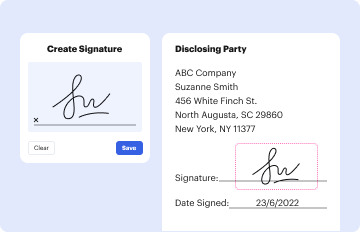
- Signature Section: Space for each partner to sign and affirm the partnership legally.
Including these elements ensures the form's recognition is legally binding and comprehensive.