
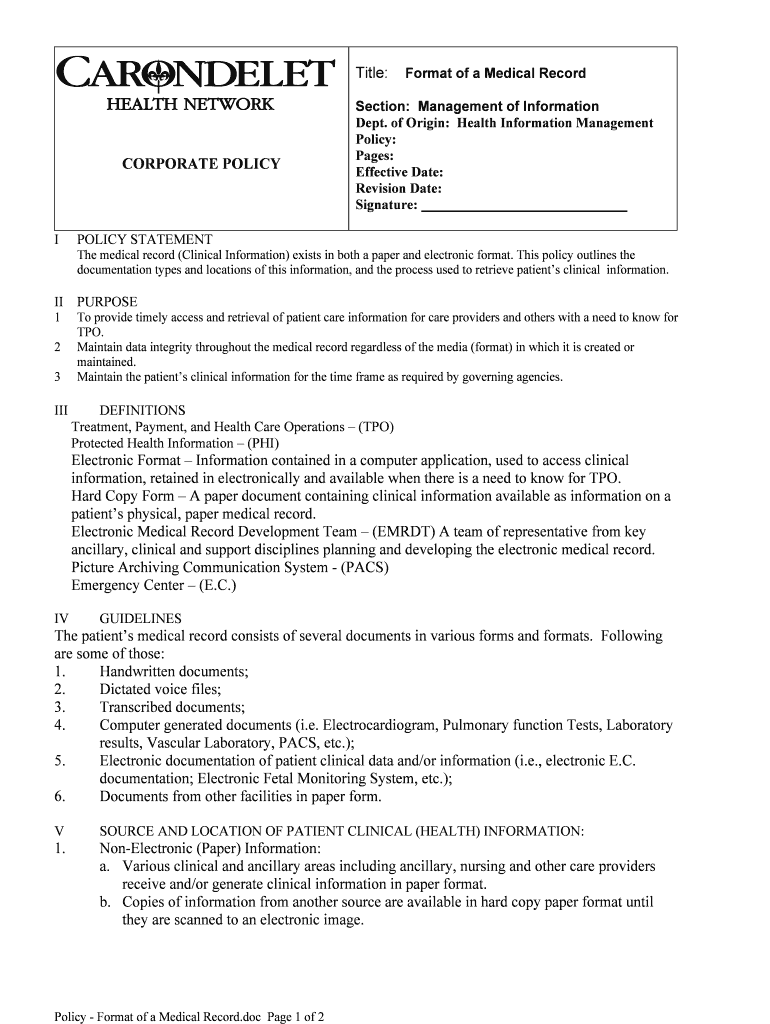







Definition and Importance of the Format of a Medical Record
The "Format of a Medical Record" establishes a standardized framework for documenting patient information, ensuring comprehensive health records. This format includes vital sections such as patient history, laboratory results, treatment plans, and progress notes. Its primary objective is to offer a structured approach that enhances clarity, accuracy, and communication among healthcare providers. Precise documentation in a medical record ensures continuity of care, facilitates clinical decision-making, and aids in legal and compliance matters. By maintaining a standardized format, healthcare institutions can guarantee high-quality service and efficient record-keeping, crucial for patient safety and effective healthcare delivery.
Key Elements of a Medical Record Format
A well-structured medical record format typically encompasses several core components. These elements ensure that all pertinent information is captured and accessible:
- Patient Information: Contains personal details such as name, date of birth, and contact information.
- Medical History: Summarizes past medical conditions, surgeries, allergies, and family history.
- Vital Signs: Records metrics like temperature, blood pressure, and heart rate at each visit.
- Diagnosis and Treatment Plans: Details current diagnoses and prescribed treatments or medications.
- Progress Notes: Clinicians document observations and follow-up actions here.
- Laboratory and Diagnostic Test Results: Includes reports from blood tests, X-rays, and other diagnostic procedures.
These sections work collectively to offer a comprehensive view of a patient's health journey, supporting informed healthcare decisions.
Steps to Complete the Format of a Medical Record
Accurate completion of a medical record format involves systematic documentation. Here are steps typically followed:
- Collect Patient Information: Begin by gathering personal and medical history data during the initial patient intake.
- Record Initial Assessment: Document vital signs and present any symptoms or complaints.
- Update Diagnosis and Treatment: Note any diagnoses and corresponding treatment plans discussed during consultations.
- Document Progress Notes: After every patient interaction, log any changes in condition, treatments administered, or follow-up requirements.
- Include Test Results: Attach and summarize lab and diagnostic results pertinent to the patient's ongoing treatment.
- Review for Accuracy: Ensure entries are accurate and complete to avoid miscommunication and potential errors in care.
Completing these steps meticulously helps maintain an accurate and trustworthy medical record.
Legal Use and Compliance
Medical records must comply with numerous legal requirements to protect patient information and privacy. Under the Health Insurance Portability and Accountability Act (HIPAA) in the United States, healthcare providers must ensure medical records are safeguarded. The format must also support audit trails, documenting access and changes made to the records. Legally, medical records serve as primary evidence in litigations related to patient care, emphasizing the necessity for precise and comprehensive documentation.
State-Specific Rules for Medical Record Formatting
While there are overarching federal guidelines for medical records, each U.S. state may impose additional regulations. These differences can influence aspects such as retention periods, specific data elements required, and electronic storage standards. For example, California mandates the inclusion of certain demographic information beyond federal requirements, while Texas may have specific rules regarding electronic health records. Understanding and adhering to these state-specific regulations is crucial for healthcare providers operating in multiple states, as non-compliance can result in penalties.
Digital vs. Paper Medical Records
The transition from paper to electronic medical records (EMRs) has revolutionized healthcare administration. Digital records offer several advantages over paper, including:
- Enhanced Accessibility: Healthcare professionals can access patient data remotely or across departments.
- Improved Data Security: Digital formats can be encrypted and password-protected, enhancing privacy.
- Streamlined Updates: Easier to amend and update records without physical document handling.
- Reduced Storage Needs: Eliminates the physical space requirements of paper-based systems.
Despite these benefits, adopting digital records involves costs related to implementation and staff training. However, the long-term efficiencies often outweigh initial investments.
Software Compatibility for Managing Medical Records
Medical records management requires compatibility with a variety of software systems to streamline operations. Leading healthcare platforms support integrations with EMR systems for seamless data exchange. For medical institutions, ensuring that software tools such as DocHub are compatible with widely-used systems like Epic, Cerner, and GE Healthcare is imperative. This compatibility ensures efficient data handling, reducing the likelihood of errors while enhancing collaboration among healthcare professionals.
Examples and Real-World Applications
In practice, the format of a medical record can facilitate case management immensely:
- Emergency Situations: Quick access to a patient's medical history can be lifesaving, ensuring that healthcare providers are informed of allergies and existing conditions.
- Chronic Disease Management: Regularly updated records allow for tracking the progress and efficacy of treatment plans over time, crucial for conditions like diabetes and hypertension.
- Patient Transfers: Accurate and comprehensive records enable smooth transitions between healthcare facilities, reducing redundant tests and optimizing patient care.
These examples emphasize the critical role of a standardized medical record format in practical healthcare settings, reinforcing both efficiency and safety.




