
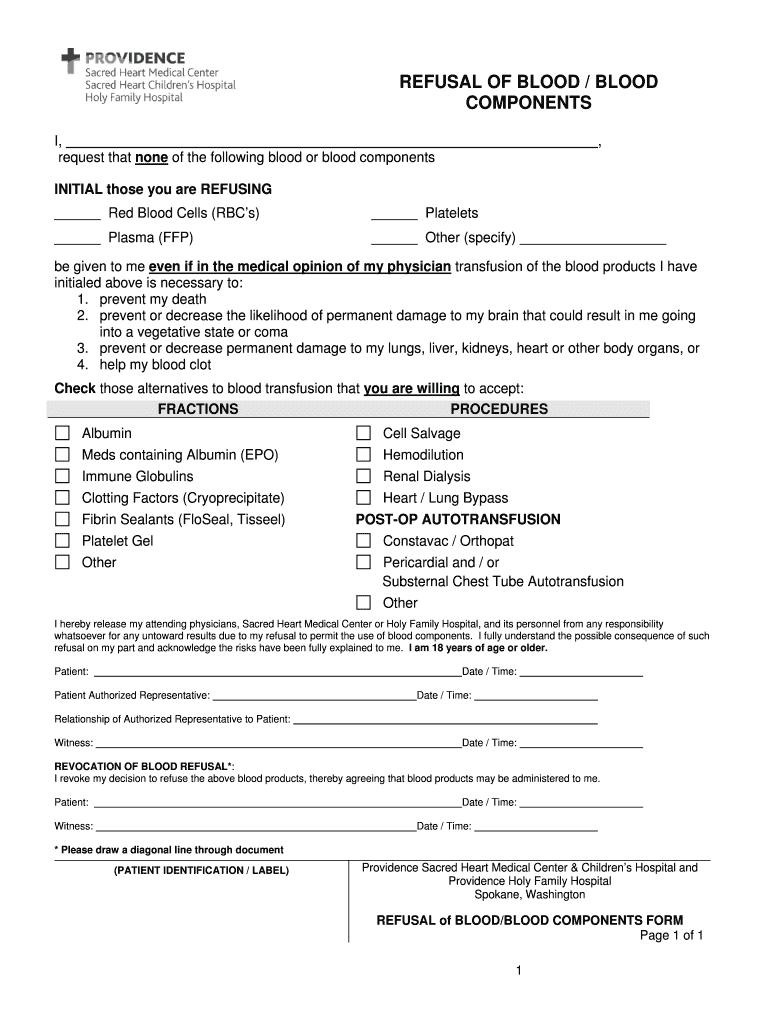







Definition and Purpose of the REFUSAL of BLOOD BLOOD COMPONENTS FORM
The "Refusal of Blood Blood Components Form" is a critical legal document through which a patient formally declines the use of specific blood and blood components during medical treatment, even in scenarios that might threaten their life. This form serves several purposes:
-
Patient Autonomy: The form allows individuals to exercise their rights to control what medical treatments they receive, reflecting their cultural, ethical, or religious beliefs.
-
Legal Documentation: It offers a written declaration that helps protect healthcare providers by recording the patient’s informed decision, which includes releasing medical personnel from liability.
-
Medical Insight: By documenting alternative treatments the patient consents to, the form informs the medical team of possible treatment paths while respecting the patient’s choices.
How to Use the REFUSAL of BLOOD BLOOD COMPONENTS FORM
Utilizing this form requires careful consideration and thorough understanding:
-
Discuss with Healthcare Providers: Engage in conversations with doctors or healthcare professionals to understand the implications of refusing blood components and the potential risks involved.
-
Review Alternatives: Consider and document alternative treatments accepted by the patient after thorough consultation with medical experts.
-
Ensure Clear Communication: Make sure that the patient’s decision is communicated clearly and accurately to all relevant medical staff to prevent misunderstandings during emergencies.
-
Legal Consultation: Consulting with a legal professional to understand the potential impact of signing such a form could provide additional protection and insight.
Steps to Complete the REFUSAL of BLOOD BLOOD COMPONENTS FORM
Completing this form involves meticulous steps to ensure clarity and legality:
-
Patient Information: Input personal details such as name, date of birth, and contact information.
-
Statement of Refusal: Clearly indicate the specific blood products being refused, ensuring there is no ambiguity in the declaration.
-
Alternatives Agreement: List alternative treatments that the patient agrees to accept, ensuring this section aligns with medical advice and patient consent.
-
Acknowledgment of Risks: The patient must read and acknowledge understanding of the potential risks associated with refusing blood.
-
Signature Section: Both patient and a witness (or healthcare provider) must sign the document. The witness ensures the form is completed without coercion.
-
Revocation Clause: Include a section to detail how and when the refusal can be revoked if the patient decides to change their decision.
Legal Use of the REFUSAL of BLOOD BLOOD COMPONENTS FORM
This form has significant legal implications:
-
Binding Document: Once signed, it serves as a binding refusal unless the patient revokes it in writing.
-
Liability Protection: Helps protect healthcare providers from legal consequences related to the administration of blood products contrary to the patient's documented wishes.
-
Compliance with Laws: The use of this form must align with state laws within the U.S., which govern medical treatment and patient rights.
Key Elements of the REFUSAL of BLOOD BLOOD COMPONENTS FORM
This form includes crucial elements:
-
Patient's Decision Making: Explicitly states what components are refused and which alternatives, if any, are acceptable.
-
Liability Clause: Releases medical personnel from responsibility due to the refusal, provided they follow other agreed treatment protocols.
-
Risk Disclosure: Details the inherent medical risks associated with the refusal, ensuring patient awareness and understanding.
Who Typically Uses the REFUSAL of BLOOD BLOOD COMPONENTS FORM
This form is typically utilized by:
-
Individuals with Religious Beliefs: People belonging to faiths like Jehovah’s Witnesses, who follow doctrines that restrict acceptance of blood products.
-
Cultural Preferences: Individuals who have cultural beliefs that influence their medical treatment preferences.
-
Medical Institutions: Hospitals and other healthcare providers use this form to ensure clarity and adherence to patients’ legally stated wishes.


Examples of Using the REFUSAL of BLOOD BLOOD COMPONENTS FORM
Real-world application examples include:
-
Elective Surgeries: Patients anticipating surgery might file this form in advance to ensure their choices are respected in pre-planned procedures.
-
Chronic Illness Management: Those undergoing frequent treatments like dialysis might use this to ensure recurring procedures align with their medical preferences.
-
Emergency Contingencies: Individuals might complete this form to ensure their wishes are respected even when they cannot communicate them due to incapacitation.
State-Specific Rules for the REFUSAL of BLOOD BLOOD COMPONENTS FORM
Rules governing this form can vary by state:
-
Legal Requirements: Some states mandate additional legal counseling or documentation for validity.
-
Health Care Directives: Integration with other advanced healthcare directives or living wills may be necessary for comprehensive medical planning.
-
Recognition and Enforcement: Understanding whether the form is recognized across state lines or in different healthcare facilities is crucial for ensuring it is enforceable.




