






Definition & Meaning
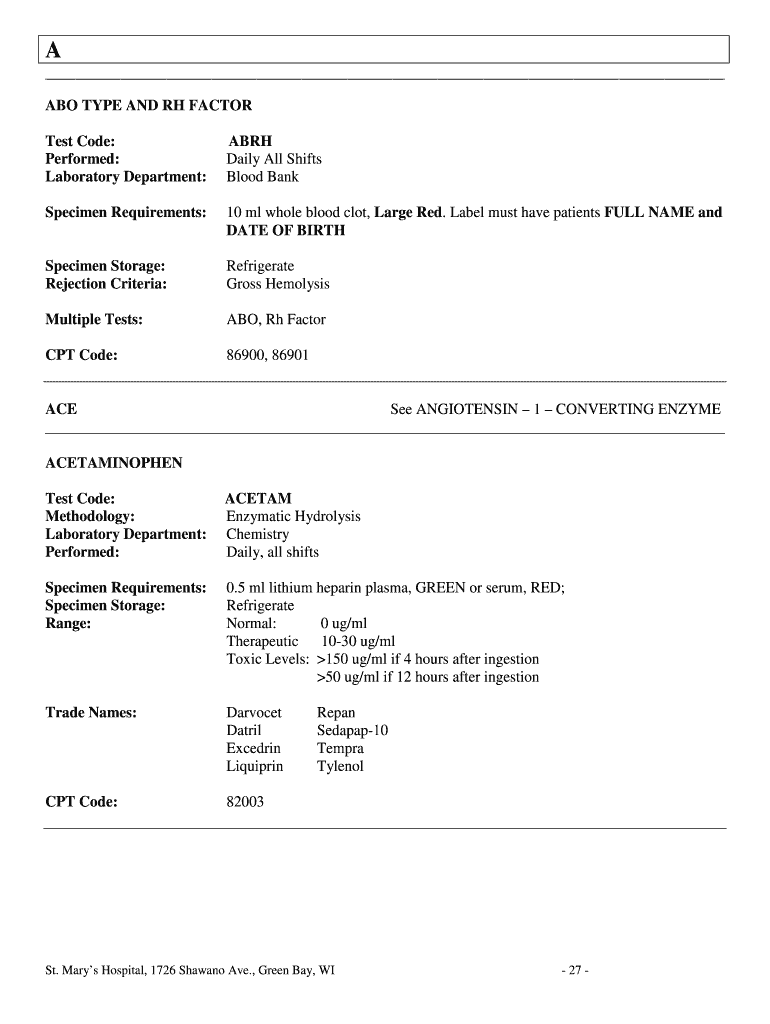
The "ABO TYPE AND RH FACTOR Test Code - St Mary's Hospital - stmgb" refers to a specific laboratory test conducted to determine an individual's blood type and Rh factor. This test is crucial in medical settings as it helps identify the blood group (A, B, AB, or O) and the Rh factor (positive or negative) in the blood. It is often performed prior to surgeries, during pregnancy, or for blood transfusion purposes, ensuring compatibility between the donor and recipient, thereby preventing adverse reactions.
How to Use the ABO TYPE AND RH FACTOR Test Code - St Mary's Hospital - stmgb
To use the ABO TYPE AND RH FACTOR Test Code effectively, healthcare professionals must adhere to specific protocols. These include:
- Collecting the specimen following established guidelines to avoid contamination or degradation.
- Labeling the test sample accurately with patient details and the specific test code "stmgb" for correct identification.
Healthcare providers are required to follow these steps to ensure the test results are precise, ultimately ensuring patient safety during medical procedures relying on blood type information.
Important Terms Related to ABO TYPE AND RH FACTOR Test Code
Understanding specific terms associated with the ABO TYPE AND RH FACTOR Test Code can provide clarity:
- Blood Type: Classifies the presence of antigens on the surface of red blood cells.
- Rh Factor: Denotes the presence (+) or absence (-) of the Rh antigen.
- Serology: The study and diagnostic identification of blood types.
Familiarity with these terms helps in understanding and interpreting the test results accurately, aiding in positive medical outcomes.
Steps to Complete the ABO TYPE AND RH FACTOR Test Code
Execution of the ABO and Rh testing process involves detailed steps:
- Patient Preparation: Obtain informed consent and verify the patient's identity.
- Specimen Collection: Draw blood samples using sterile techniques.
- Labeling: Ensure accurate labeling with patient and test-specific information.
- Testing Process: Conduct the test in accordance with laboratory protocols.
- Documentation: Record results and any anomalies observed during testing.
These steps, when meticulously followed, contribute to the reliability and integrity of the test.
Why Should You ABO TYPE AND RH FACTOR Test Code - St Mary's Hospital - stmgb
Undertaking the ABO and Rh factor test is vital for several reasons:
- Medical Compatibility: Ensures blood transfusion compatibility.
- Risk Minimization: Reduces the risk of hemolytic disease in newborns.
- Pre-Surgical Preparations: Confirms blood type ahead of surgical interventions.
Utilizing this test code allows healthcare providers to confidently proceed with medical interventions that require blood typing information.
Legal Use of the ABO TYPE AND RH FACTOR Test Code
The legal framework surrounding the ABO TYPE AND RH FACTOR Test Code involves compliance with medical and privacy regulations. Ensuring the confidentiality and correct usage of test results is governed by:
- HIPAA Regulations: Protect patient information confidentiality.
- Clinical Laboratory Improvement Amendments (CLIA): Set standards for laboratory testing quality assurance.
Adherence to these regulations is essential to maintain legal, ethical, and professional standards in medical practice.
Key Elements of the ABO TYPE AND RH FACTOR Test Code
The test encompasses several critical components:
- Standardized Protocols: Strict adherence to laboratory protocols.
- Specimen Integrity: Proper handling and processing of blood samples.
- Accurate Reporting: Capturing and documenting clear, comprehensive results.
These key elements ensure the test's effectiveness and utility in medical settings, helping to provide accurate and reliable results.
State-Specific Rules for the ABO TYPE AND RH FACTOR Test Code
While the ABO TYPE AND RH FACTOR Test Code has standard procedures nationwide, some state-specific provisions may apply:
- Reporting Requirements: Variances in how and when test results must be reported to state health departments.
- Regulatory Compliance: States may have additional guidelines for laboratory accreditations and certifications.
Healthcare providers should be aware of these variations to ensure compliance with state-specific legal and medical guidelines.
Who Typically Uses the ABO TYPE AND RH FACTOR Test Code
Medical professionals such as:
- Physicians: Utilize results to plan treatments and interventions.
- Laboratory Technicians: Conduct the test and ensure procedural accuracy.
- Nurses: Assist in specimen collection and patient preparation.
These professionals rely on the ABO TYPE AND RH FACTOR Test Code to facilitate safe and effective patient care, particularly in scenarios involving transfusions and surgeries.