






Definition & Meaning
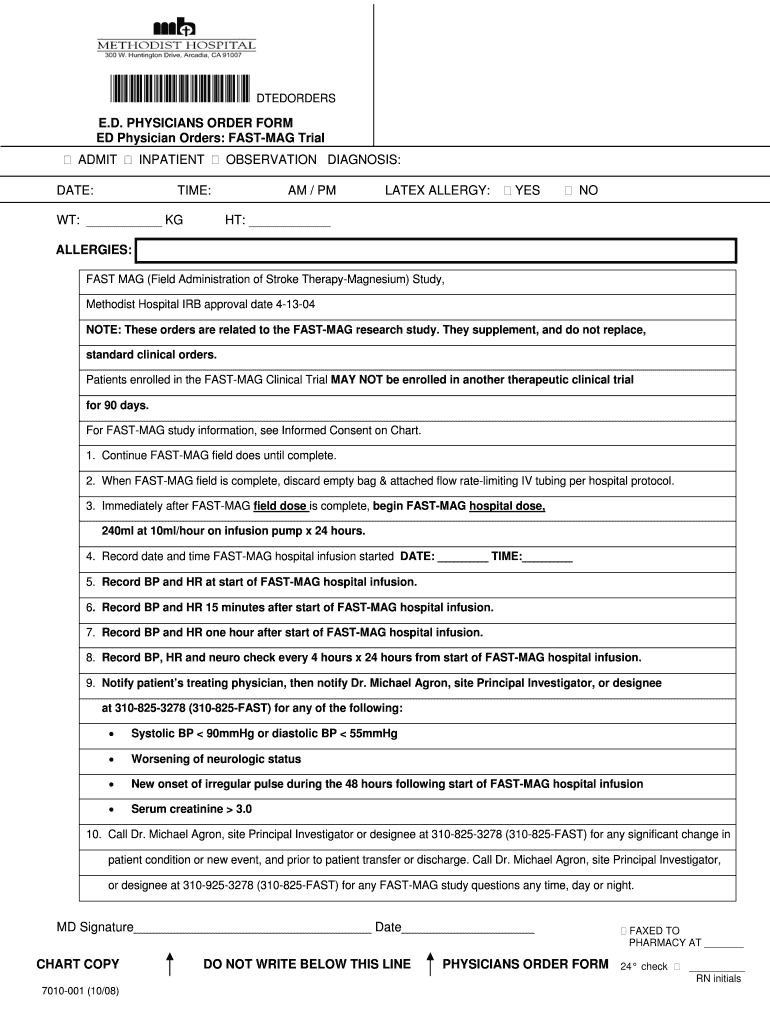
DTEDORDERS is a specialized form used in clinical trials to document and manage physician orders related to the administration of specific therapies, such as the FAST-MAG trial for stroke patients. This form ensures that all medical instructions are properly recorded, compliant with trial protocols, and accessible to the clinical team. DTEDORDERS serves as a vital communication tool between healthcare providers, safeguarding that each step in the treatment plan is accurately captured and executed.
How to Use the DTEDORDERS
Using the DTEDORDERS begins with understanding the specific clinical protocol it supports. Healthcare providers will input patient details, ensuring correct identification. It’s crucial to fill all sections accurately, as incomplete information can affect patient care and trial outcomes. Clinicians will use this form to log orders for therapy, specify dosages, and detail timing for administration. Regular updates to the form might be necessary to reflect patient's progress or any changes in treatment.
Steps to Complete the DTEDORDERS
- Initiate the Form: Start by entering the patient's unique identifiers and personal information.
- Document Therapy Orders: Clearly outline the protocol for magnesium therapy, including dose, schedule, and route of administration.
- Provide Monitoring Requirements: Include detailed instructions on monitoring the patient’s response, noting vital signs or any adverse effects.
- Include Investigator Contact Information: Document the principal investigator's contact details for any clarifications or emergencies.
- Review and Sign: Ensure all details are verified for accuracy and authenticity, then sign off to finalize the entry.
Important Terms Related to DTEDORDERS
- FAST-MAG Trial: A specific clinical study aimed at evaluating the efficacy of magnesium therapy in treating stroke patients.
- Principal Investigator: The lead researcher responsible for managing the trial and ensuring all data, including DTEDORDERS entries, are accurate.
- Adverse Event Reporting: Any negative side effects experienced by the patient must be documented as per trial guidelines.
Key Elements of the DTEDORDERS
- Patient Admission Information: Crucial for tracking the individual enrolled in the trial.
- Therapeutic Protocol Details: Specifies the treatment regimen to avoid deviations that might compromise trial integrity.
- Monitoring Instructions: Vital for ensuring patient safety and enabling prompt response to any emergencies.
Legal Use of the DTEDORDERS
The DTEDORDERS form is used within the legal framework governing clinical trials, ensuring that all treatments administered comply with federal regulations, such as those enforced by the Food and Drug Administration (FDA). By using Uniformity in completing this form allows the clinical trial to withstand legal and ethical scrutiny, providing a clear audit trail of the patient's treatment course.
Examples of Using the DTEDORDERS
In a case study applying the FAST-MAG trial procedures, DTEDORDERS was employed to capture a stroke patient's initial assessment and subsequent magnesium infusion. The form enabled coordination among multiple healthcare providers, ensuring that each member of the treatment team was updated promptly with the latest orders and observations.
Who Typically Uses the DTEDORDERS
DTEDORDERS is primarily used by healthcare professionals involved in clinical trials, including physicians, nurses, and researchers. It facilitates communication across multidisciplinary teams and serves as a reference point for ensuring therapy protocols are strictly adhered to throughout the study duration.


State-Specific Rules for the DTEDORDERS
While the DTEDORDERS is utilized under a national clinical trial, there might be variations in implementation based on state regulations, particularly related to patient consent and data privacy. Practitioners must be aware of and comply with these regulations to ensure the trial's integrity and the protection of participants' rights.
Steps to Obtain the DTEDORDERS
To access the DTEDORDERS, practitioners involved in the clinical trial can often download it from the trial's central digital repository or secure internal databases. Access is typically restricted to authorized personnel to maintain the confidentiality and security of trial information.