




01. Edit your form online
Type text, add images, blackout confidential details, add comments, highlights and more.

Type text, add images, blackout confidential details, add comments, highlights and more.

Draw your signature, type it, upload its image, or use your mobile device as a signature pad.

Send it via email, link, or fax. You can also download it, export it or print it out.
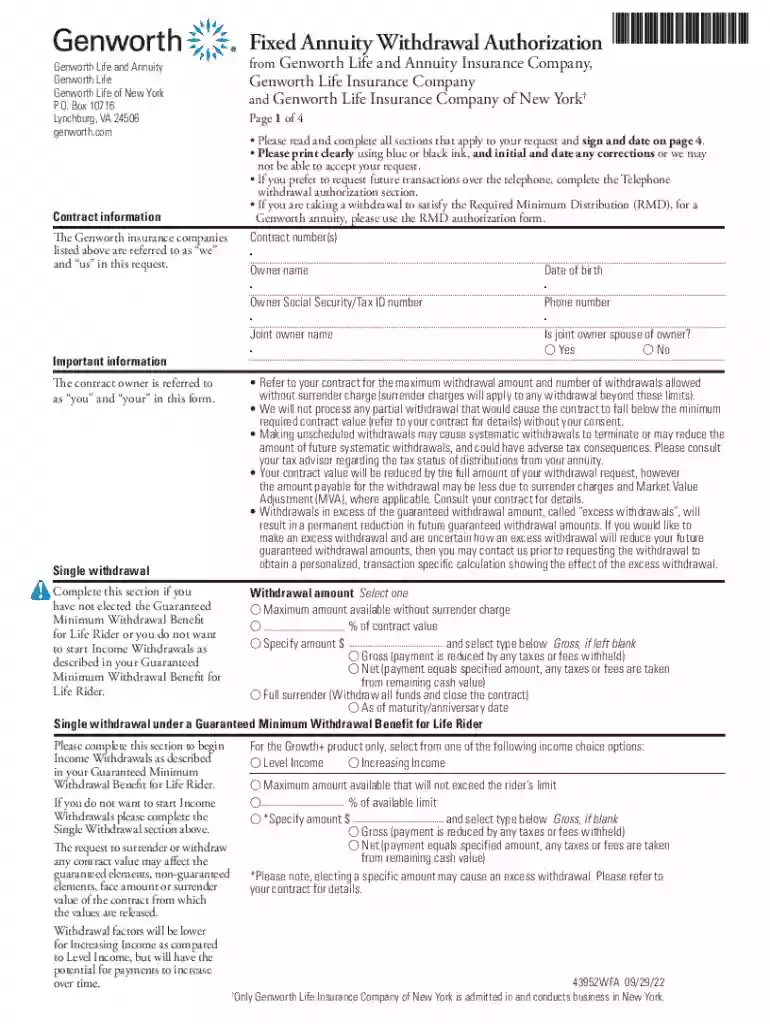
The Fixed Annuity Withdrawal Authorization form is a critical document used by annuity contract owners to facilitate withdrawals from their fixed annuity accounts. This form serves a dual purpose: it acts as a request mechanism for the account owner to access their funds, and it authorizes the insurance company to process these withdrawals. Fixed annuities are long-term insurance products that provide a steady stream of income, and this form is essential for managing these financial instruments effectively.
Using the Fixed Annuity Withdrawal Authorization form involves several carefully structured steps. These steps ensure that both the contract owner and the insurance company adhere to regulatory requirements and maintain the integrity of the withdrawal process.
This step-by-step guide ensures that users can efficiently use the Fixed Annuity Withdrawal Authorization form to manage withdrawals systematically.
Preparation is key when completing the Fixed Annuity Withdrawal Authorization form, and assembling the right documents is essential to streamline the submission process.
By gathering these documents in advance, users can avoid delays and expedite the authorization process.
Filling out the Fixed Annuity Withdrawal Authorization form is a straightforward process that can be broken down into clear steps for ease of completion.
Following these steps ensures efficient handling of the form, minimizing the risk of errors or omissions that could delay the withdrawal process.
Understanding the terminology within the Fixed Annuity Withdrawal Authorization is crucial for effectively navigating the document’s requirements.
Grasping these terms enables users to navigate the form more effectively, ensuring that they understand the implications of their withdrawal requests.
The Fixed Annuity Withdrawal Authorization encompasses several key components that collectively facilitate the request and processing of annuity withdrawals.
Each element plays a vital role in ensuring the comprehensive processing of annuity withdrawals, making them indispensable to the withdrawal authorization process.
The Fixed Annuity Withdrawal Authorization must be utilized in a manner that aligns with both legal guidelines and ethical standards. Legally, the form serves to formally document the contract owner’s request to withdraw, which must conform to federal and state regulations.
By adhering to these legal parameters, users can ensure the lawful and successful completion of their withdrawal authorizations.
When using the Fixed Annuity Withdrawal Authorization, understanding the advantages and limitations of digital versus paper formats is beneficial for making an informed choice.
Each version has its own pros and cons, and the choice largely depends on user preference, access to technology, and the immediacy of the withdrawal needs.
State-specific regulations regarding the Fixed Annuity Withdrawal Authorization can influence how withdrawals are processed and taxed. These regulatory differences may affect the overall strategy for managing an annuity.
Navigating these state-specific dynamics is critical for users to optimize their withdrawals while remaining compliant with all pertinent legal directives.
We've got more versions of the Fixed Annuity Withdrawal Authorization form. Select the right Fixed Annuity Withdrawal Authorization version from the list and start editing it straight away!
At DocHub, your data security is our priority. We follow HIPAA, SOC2, GDPR, and other standards, so you can work on your documents with confidence.






May 2, 2017 the contracts typically permit withdrawal of up to 10% of principal per year without penalty.
VALIC will waive the 20% Fixed Account Plus withdrawal restriction. Withdrawals are allowed from 403(a), 403(b), 401(a), 401(k), governmental 457(b) and 408(a)
NPS final exit delayed? Steps to unblock lump-sum or annuity withdrawal, fix KYC or ASP issues, and escalate via CGMS to NPS Trust and PFRDA.


