






Definition and Meaning
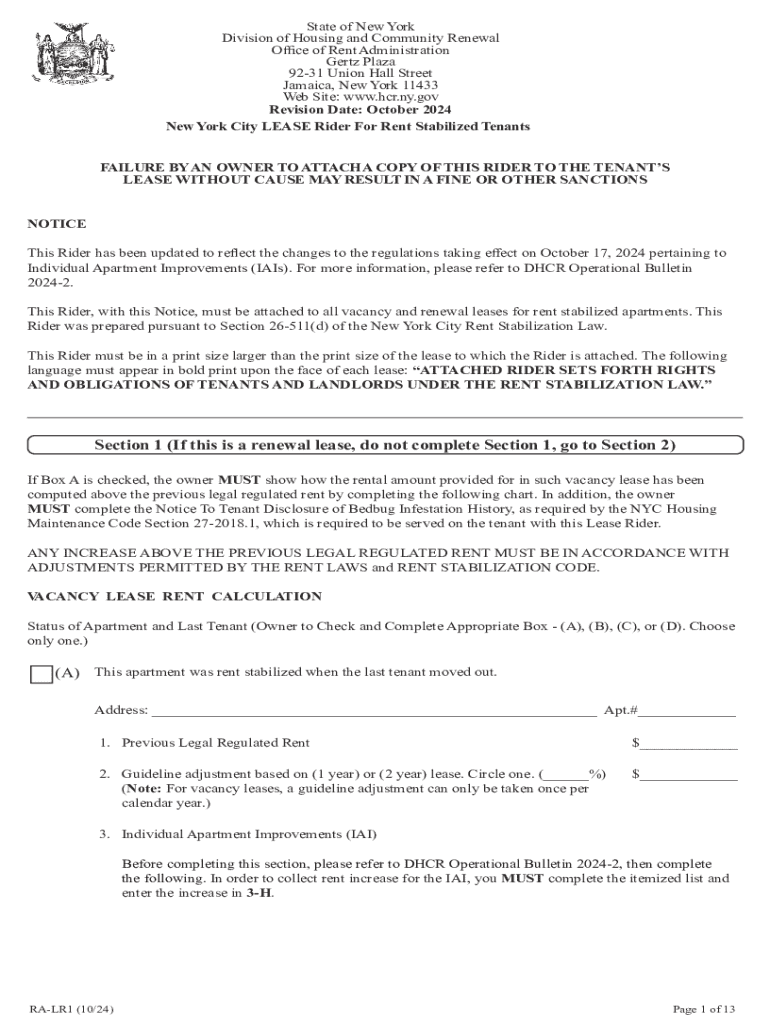
The "Failure by an Owner to Attach a Copy of This Rider to the Tenants" refers to a legal oversight where a property owner or landlord fails to include a necessary rider document with a tenant's lease agreement. This rider is typically an addendum that outlines specific rights and responsibilities affecting the tenant-landlord relationship. In the context of New York City's Rent Stabilized Tenants, such a rider is crucial as it includes provisions regarding rent stabilization laws, rent increases, and other regulatory requirements. This omission can impact tenants' understanding of their legal protections and lease conditions.
How to Use the Rider Form
Using the rider form involves integrating it into the lease agreement process to ensure compliance with local rent laws. Landlords should:
- Incorporate in Lease Documents: Attach the rider to all lease agreements, particularly for rent-stabilized units.
- Understand Content: Familiarize themselves with the legal requirements detailed in the rider to ensure full compliance and transparency with tenants.
- Maintain Copies: Keep accurate records of lease agreements with attached riders for future reference.
- Amend When Necessary: Update the rider when changes in legislation occur or when renewing leases.
By following these steps, landlords can avoid legal issues and improve tenant relations.
Steps to Complete the Form
Completing the form requires comprehensive knowledge of both tenant and landlord responsibilities:
- Read Instructions Thoroughly: Review the rider document instructions for compliance requirements specific to the locality.
- Gather Required Information: Collect tenant and property details necessary for the rider.
- Complete All Sections: Fill out the rider accurately, ensuring that all clauses applicable to tenant rights and landlord obligations are included.
- Review and Verify: Double-check entries for accuracy and legality.
- Attach to Lease Agreement: Securely attach the completed rider to the tenant's lease agreement before finalizing.
Considering tenant rights and regulatory compliance is crucial in this process.
Legal Use of the Rider Form
The legal use of the rider form involves adhering to regional housing laws that govern rent-stabilized properties:
- Mandatory Attachment: Required attachment to lease agreements under the Rent Stabilization Law in New York City.
- Informs Tenants: Clarifies tenant rights and landlord duties under rent regulations.
- Protects Landlords: Shields landlords from potential legal disputes by ensuring compliance with leasing laws.
Failure to use this rider properly can lead to penalties, disputes, or invalidation of lease agreements.
Penalties for Non-Compliance
Landlords who fail to properly attach the rider to a rental agreement can face several consequences:
- Legal Fines: Non-compliance may result in fines or penalties imposed by housing authorities.
- Lease Disputes: Tenants might contest lease terms if protections outlined in the rider are not provided.
- Erosion of Tenant Trust: Can undermine trust, leading to increased scrutiny or legal action by tenants.
- Potential Eviction Challenges: Attempted evictions may be contested if tenants claim ignorance of their rights.
These penalties highlight the importance of this document in maintaining a lawful and clear relationship between tenants and landlords.
Important Terms Related to the Rider Form
Understanding key terms related to this rider is essential for effective use:
- Rent Stabilization: Laws regulating rent increases and lease renewals for certain rental units in New York City.
- Lessee/Lessor: Legal terms for tenant and landlord, respectively, in a lease agreement.
- Eviction Procedures: Legal process for removing a tenant from a rental property.
- Security Deposit Regulations: Rules regarding tenant deposits for damages or unpaid rent.
- Regulatory Compliance: Adhering to laws and regulations related to property rental.
Familiarity with these terms aids in the proper handling and application of the rider form.
Key Elements of the Rider Form
Significant components of the rider form include:
- Tenant Rights: Detailed description of tenant rights under rent stabilization laws.
- Lease Requirements: Specific conditions that must be met throughout the lease term.
- Rent Calculation Methods: Formulas or guidelines for determining permissible rent increases.
- Improvement Provisions: Rules regarding improvements made to the rental property and implications for rent adjustments.
- Renewal Policies: Procedures and conditions for lease renewals.
These elements ensure both landlords and tenants understand and comply with the legal framework governing rent-stabilized leases.
Examples of Using the Rider Form
Real-world scenarios illustrate the practical application of the rider form:
- New Lease Agreement: A landlord prepares a new lease for a rent-stabilized apartment, ensuring a rider is attached to inform the tenant of their rights.
- Lease Renewal: Upon renewal, the landlord updates and reattaches the rider to reflect any legal changes effective from October 17, 2024.
- Tenant Challenge: A tenant disputes a rent increase, citing a missing rider, which leads to successful negotiations or legal settlement ensuring tenant rights.
In each instance, the rider plays a crucial role in guiding interactions and ensuring compliance.
State-Specific Rules for the Rider Form
Although this form is specifically tailored for New York City's rent stabilization program, variations may exist across different states:
- New York Requirements: Explicitly requires the attachment of this rider for rent-stabilized leases.
- State Differences: Other states may have different or additional requirements concerning tenant rights and lease documentation.
- Legal Updates: Periodic revisions to adapt to new housing laws and regulations within the state jurisdiction.
Understanding local legal requirements is crucial for accurate and lawful usage of the rider form.