






Definition & Meaning
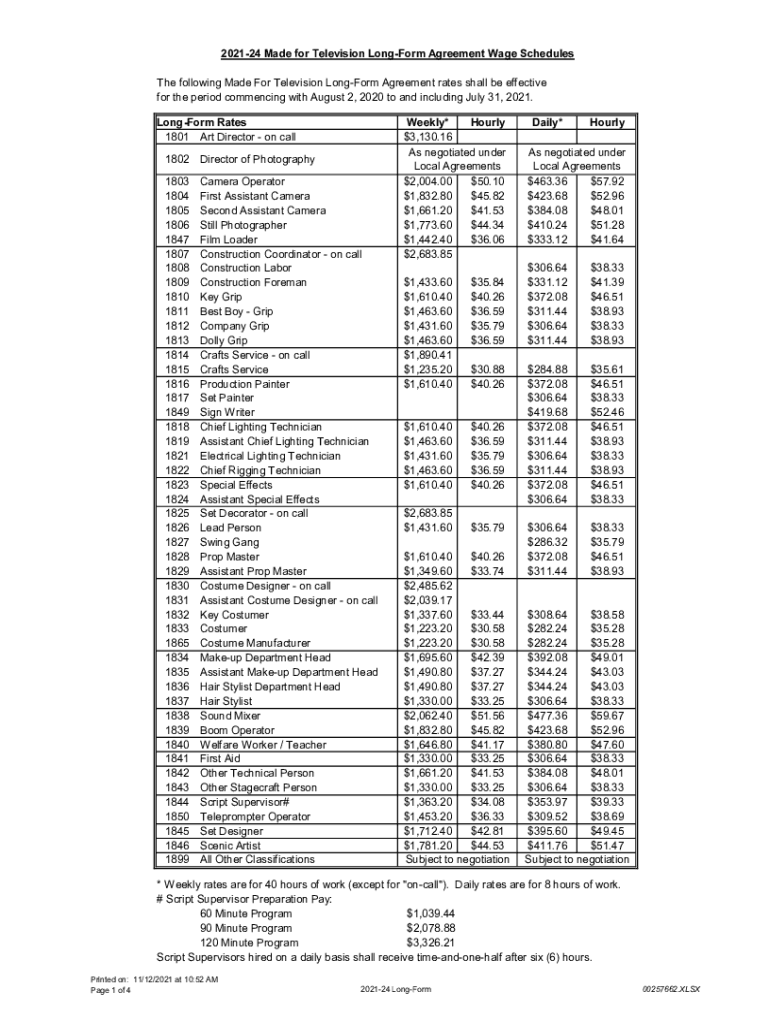
The "2021-24 Made for Television Long-Form Agreement Wage Schedules" refers to a contractual framework that establishes wage rates for various roles involved in television production. This document is vital in the industry as it details the pay scales and compensation structures for technicians, creatives, and other professionals under the long-form agreement effective from August 2, 2020, to July 31, 2024. For those working on made-for-TV productions, this agreement serves as a comprehensive guide to understanding and negotiating wages over a span of several years.
Key Elements of the 2021-24 Made for Television Long-Form Agreement Wage Schedules
The agreement outlines various key elements that define the operational framework for wage distribution:
- Weekly and Hourly Rates: Information on compensation schedules, including weekly and hourly pay for roles like Art Director, Director of Photography, and Camera Operators.
- Role-Specific Variations: Catering to different positions in television production, where roles have unique pay structures.
- Yearly Adjustments: The agreement includes provisions for wage reviews and updates, reflecting market changes or negotiations.
How to Use the 2021-24 Made for Television Long-Form Agreement Wage Schedules
To effectively utilize the wage schedules, follow these steps:
- Identify Your Role: Determine your specific position in the production process.
- Consult the Relevant Section: Access the wage schedule that corresponds to your job role and year.
- Understand Your Pay: Review the hourly or weekly rates applicable to your position.
- Negotiate Accordingly: Use the information to discuss fair compensation with employers or during contractual negotiations.
Why Should You Use the 2021-24 Made for Television Long-Form Agreement Wage Schedules
Employing the wage schedule provides several benefits:
- Ensures Fair Compensation: Offers industry-standard rates, ensuring that professionals receive fair pay.
- Facilitates Negotiation: Helps in informed discussions about pay and contract terms.
- Offers Transparency: Provides clear benchmarks for both employees and employers, fostering a transparent working relationship.
Who Typically Uses the 2021-24 Made for Television Long-Form Agreement Wage Schedules
The wage schedules are primarily used by:
- Television Production Professionals: Including directors, producers, and technical staff such as camera operators.
- HR and Payroll Departments: To implement consistent wage standards across organizations.
- Unions and Employee Representatives: For collective bargaining and negotiation purposes.


Steps to Complete the 2021-24 Made for Television Long-Form Agreement Wage Schedules
While the wage schedule itself is not a form to be completed, understanding its use requires:
- Accessing the Schedule: Obtain the latest version applicable during your contract period.
- Reviewing Detailed Listings: Examine the pay rates and role requirements.
- Engaging with Specialists: If unclear, consulting with union representatives or legal advisors can clarify points regarding wage terms.
Form Submission Methods
There are no direct submission requirements for the wage schedules themselves. However, discussions or negotiations guided by these schedules might involve:
- Digital Submission of Contracts: Utilizing platforms like DocHub for secure handling.
- In-Person Negotiations: Where physical copies of contracts may be discussed and signed.
- Mailing Documentation: For formal agreements linked to wage discussions, especially if digital options aren't feasible.
Important Terms Related to 2021-24 Made for Television Long-Form Agreement Wage Schedules
Understanding these terms can aid in navigating the wage schedules:
- Long-Form Agreement: Refers to extended contracts covering multiple years, standard in complex production environments.
- Rate Differentiation: Varies by position and years of experience, reflecting industry practices.
- Wage Negotiation: The process of discussing salaries and conditions based on schedule stipulations.