






Definition and Meaning
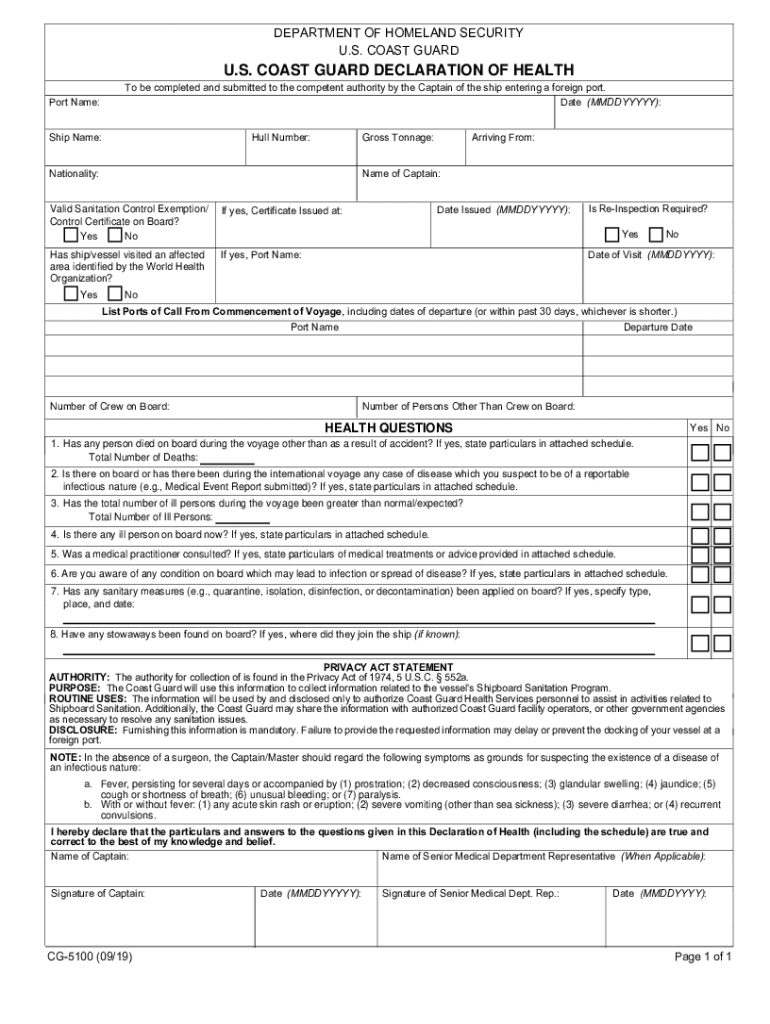
The U.S. Coast Guard Declaration of Health - Defense form is a crucial document completed by ship captains when entering a foreign port. This form collects detailed health-related information about the vessel, including crew health status, instances of disease, and the sanitation measures in place on board. The aim is to provide an accurate assessment of the ship's health environment to authorities, facilitating safe and compliant docking practices while managing public health risks.
How to Use the U.S. Coast Guard Declaration of Health - Defense
To effectively use this form, captains need to gather accurate and comprehensive health data about their vessel. The process starts with verifying the health status of all crew members, checking for any ongoing illnesses or symptoms, and ensuring sanitation protocols have been adhered to. The completed form should then be submitted to port authorities upon arrival at a foreign destination. Accurate reporting is crucial to comply with international maritime health regulations.
Steps to Complete the Form
- Gather Information: Collect health data from all crew members and any passengers currently on board.
- Document Sanitation Measures: Detail recent sanitation activities, such as disinfection routines and waste disposal practices.
- Review Health Incidents: Record any incidents of illness, injury, or unusual health occurrences among crew or passengers.
- Fill in Personal and Vessel Details: Accurately enter all necessary personal information of the captain and vessel identification.
- Sign and Submit: Ensure the form is signed by the captain before submitting it to the port authorities.
Obtaining the U.S. Coast Guard Declaration of Health - Defense
Ship captains can access this form through official U.S. Coast Guard channels or maritime regulatory websites. The form is typically available in PDF format for easy access and printing. It is advisable to check for the latest version to comply with any updated protocols or requirements.
Key Elements of the Form
- Crew Health Details: Information regarding health checks, any symptoms of illness, and recent medical consultations.
- Sanitation Protocols: An outline of measures taken to maintain onboard hygiene, such as frequency of cleaning and disinfecting.
- Incident Reporting: Documentation of any significant health-related events, such as disease outbreaks or quarantine measures taken.
- Vessel Identification: The form must contain accurate vessel information, including name and registration number.
- Captain’s Certification: Confirmation from the captain that the information provided is complete and accurate.
Who Typically Uses the Form
This form is primarily used by ship captains and maritime operations managers. It is also utilized by health and safety personnel involved in shipping logistics. Port health authorities rely on this document to assess health risks associated with incoming vessels and ensure compliance with local and international health regulations.


Legal Use of the U.S. Coast Guard Declaration of Health - Defense
The legal framework surrounding the use of this form is guided by international maritime health laws and national public health policies. Accurate completion and submission of this document are critical for compliance with health regulations that prevent the spread of infectious diseases across borders.
Penalties for Non-Compliance
Failure to submit the U.S. Coast Guard Declaration of Health - Defense form accurately or in a timely manner can result in significant penalties. These may include fines, the vessel being temporarily held at port, or even legal actions against the ship's management. Non-compliance can also lead to denied entry into the port, affecting shipping schedules and operations.
Examples of Using the Form
In practice, a cargo ship arriving from an international route might use this form to declare that all onboard health protocols were observed during the journey. For instance, if a crew member fell ill during transit, the form would detail the symptoms and measures taken, such as quarantine or medical intervention, to prevent spread. These details help port authorities make informed decisions about allowing the ship to dock and interact with the local community.